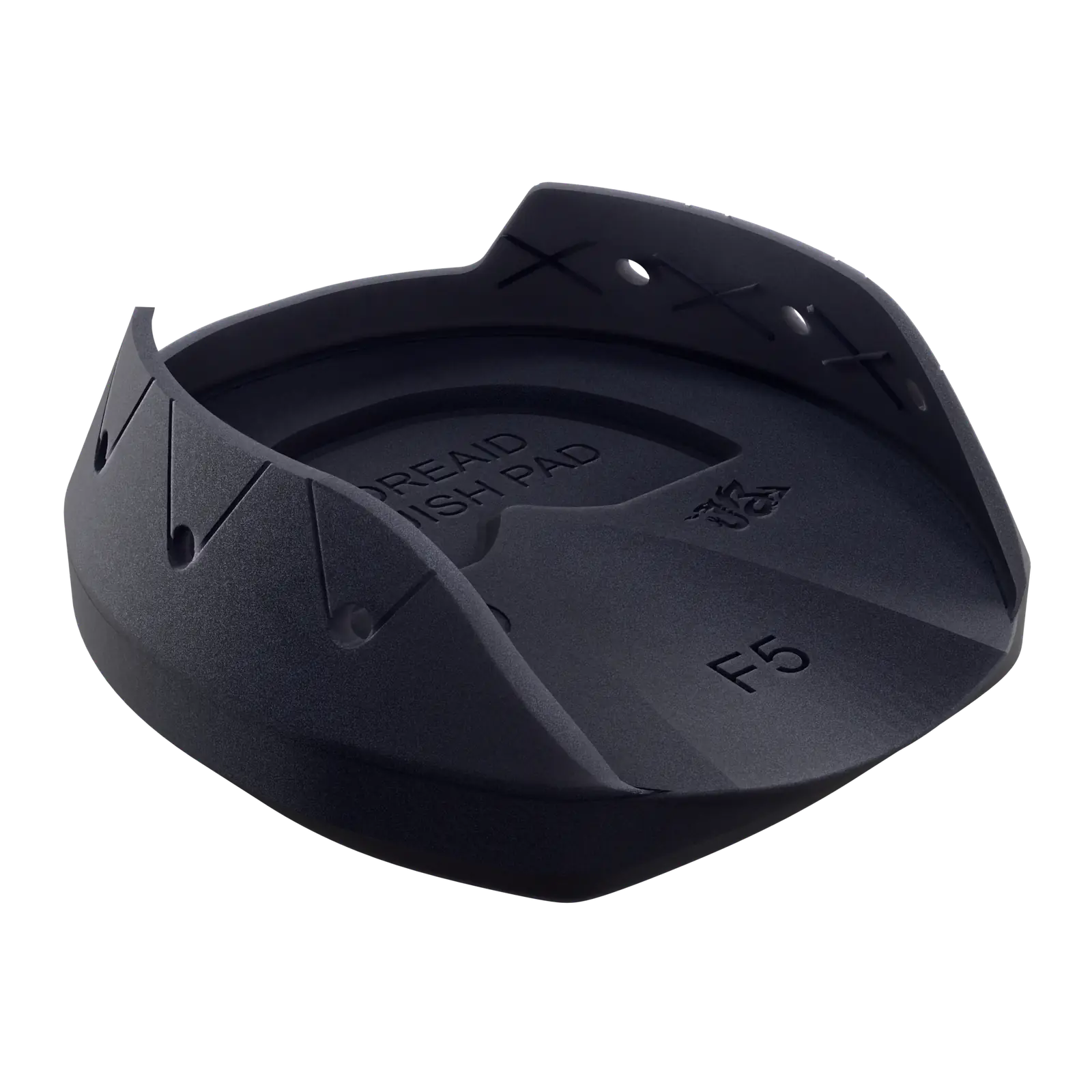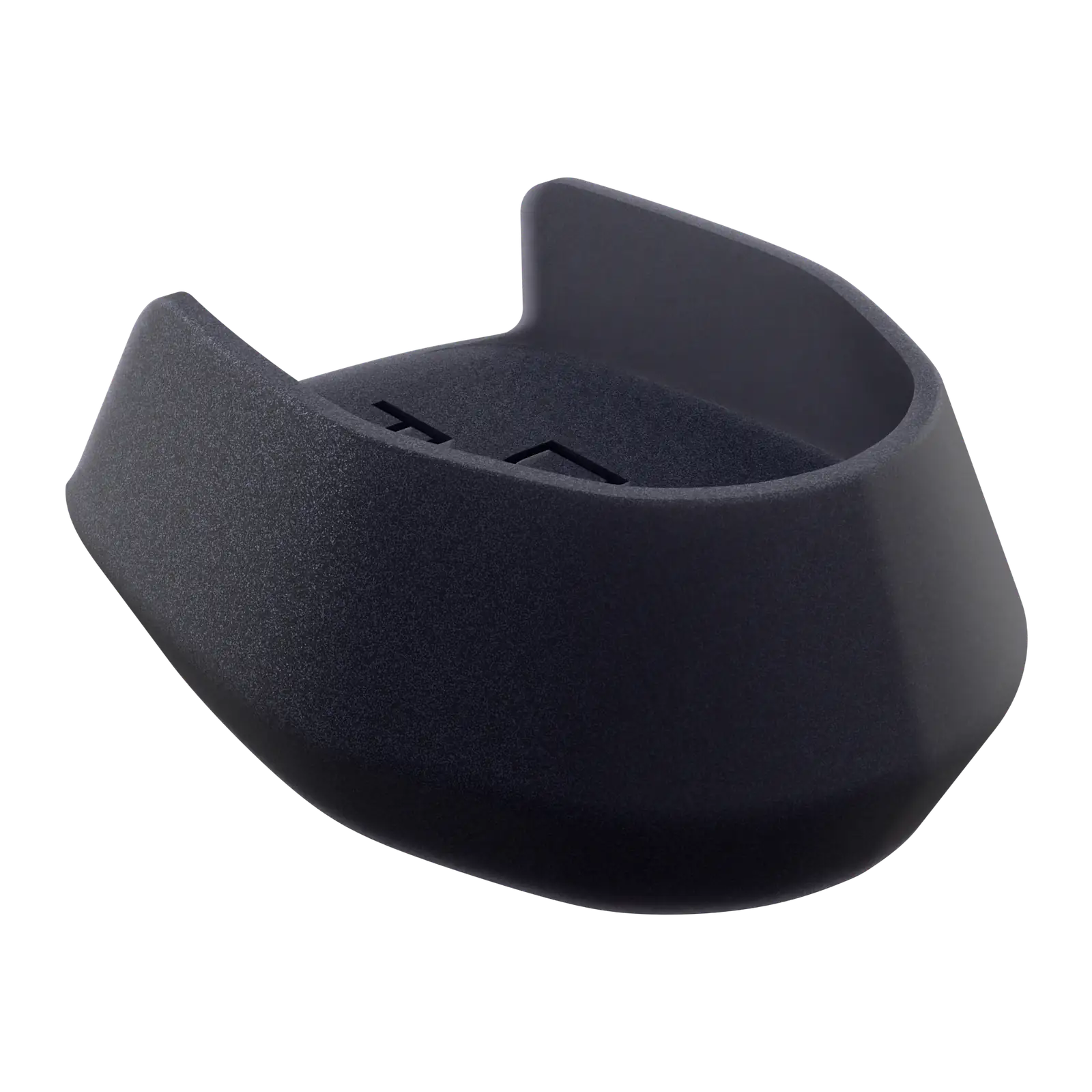

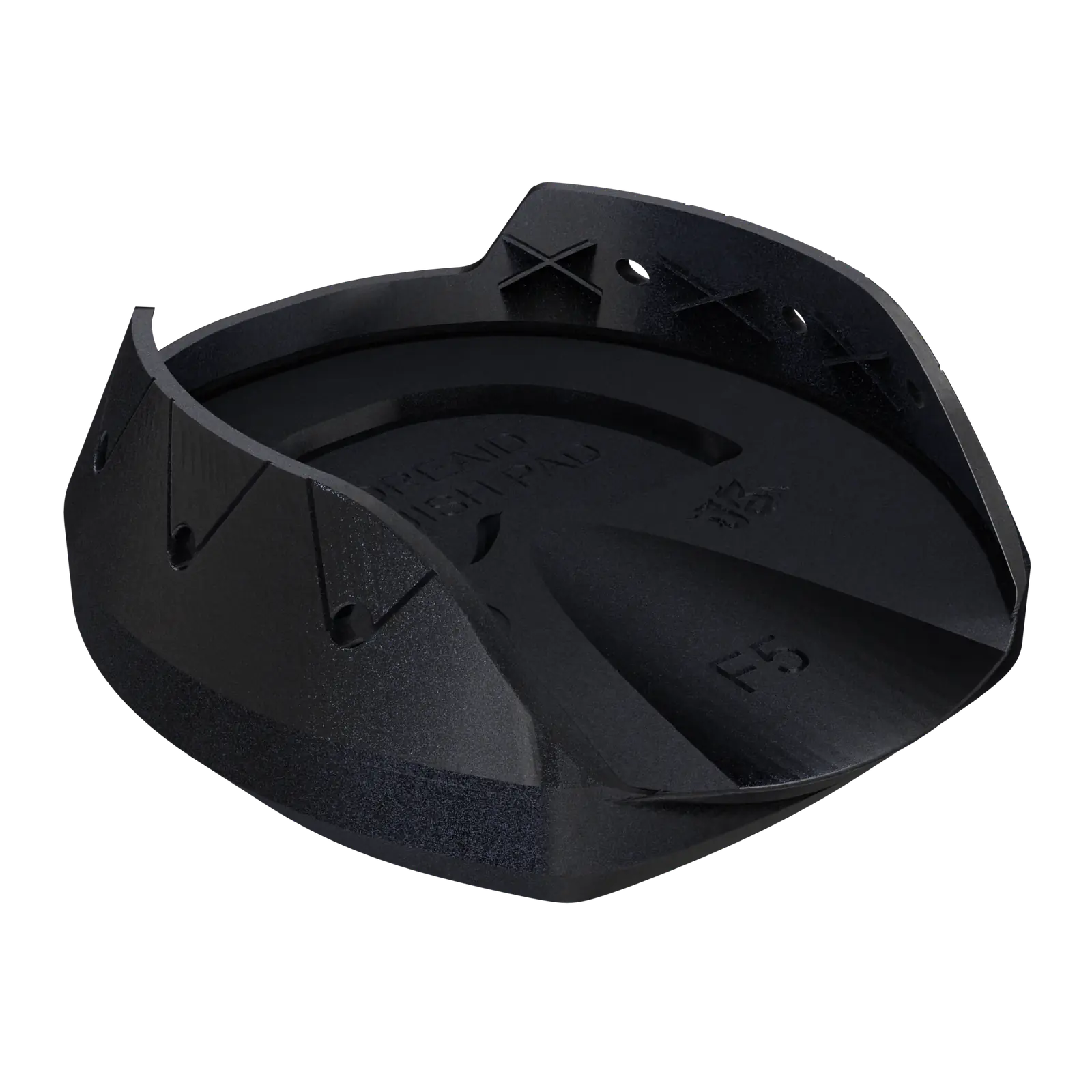
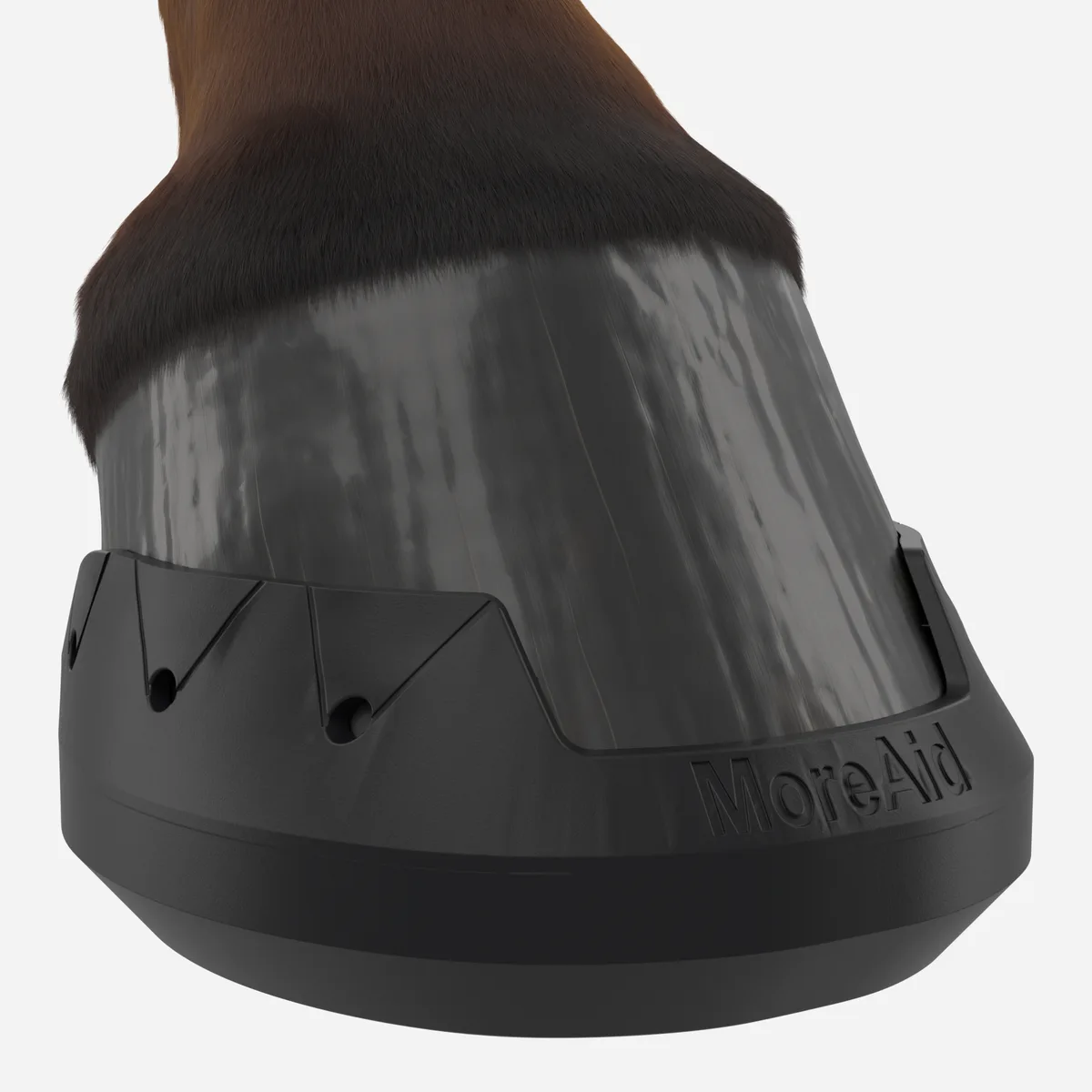
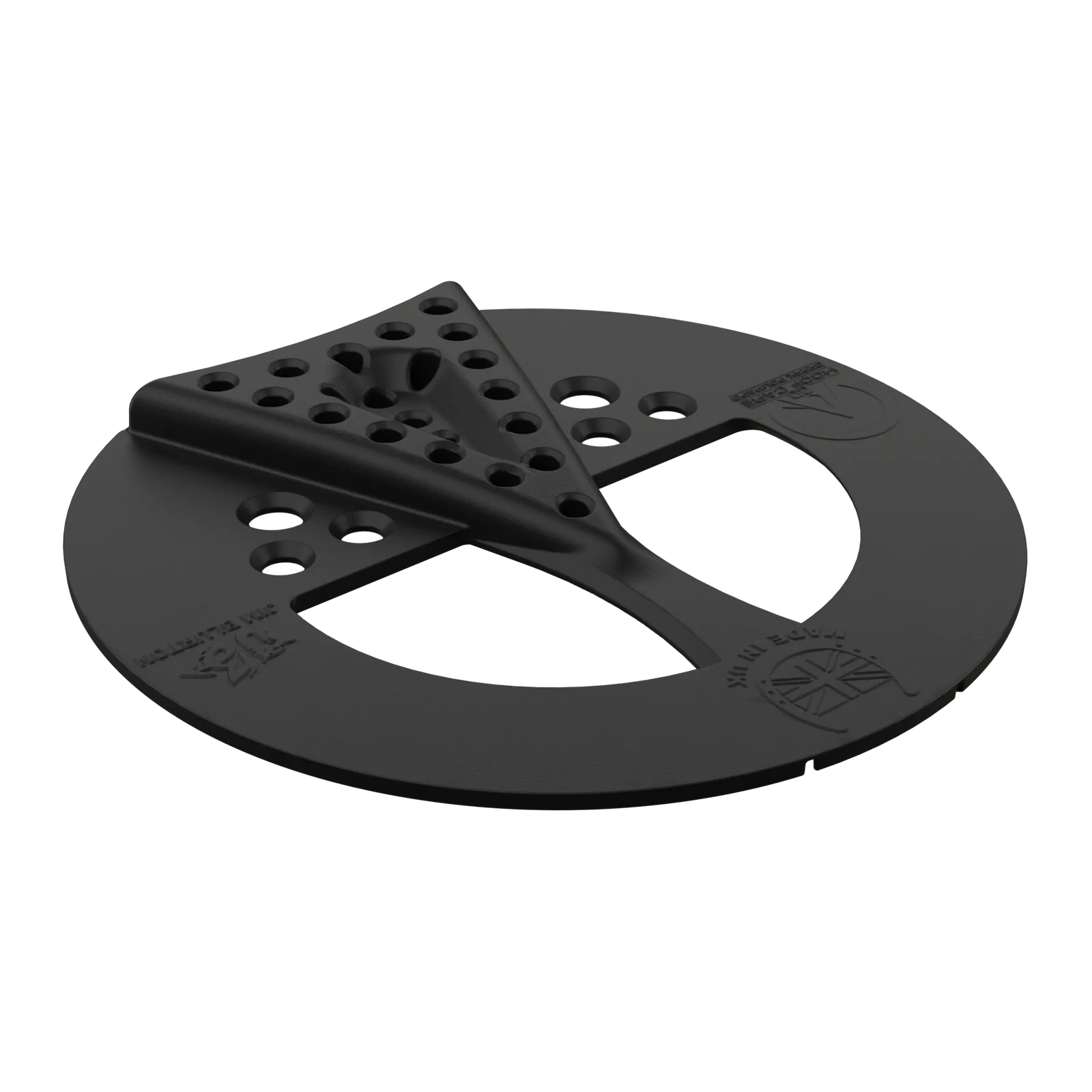
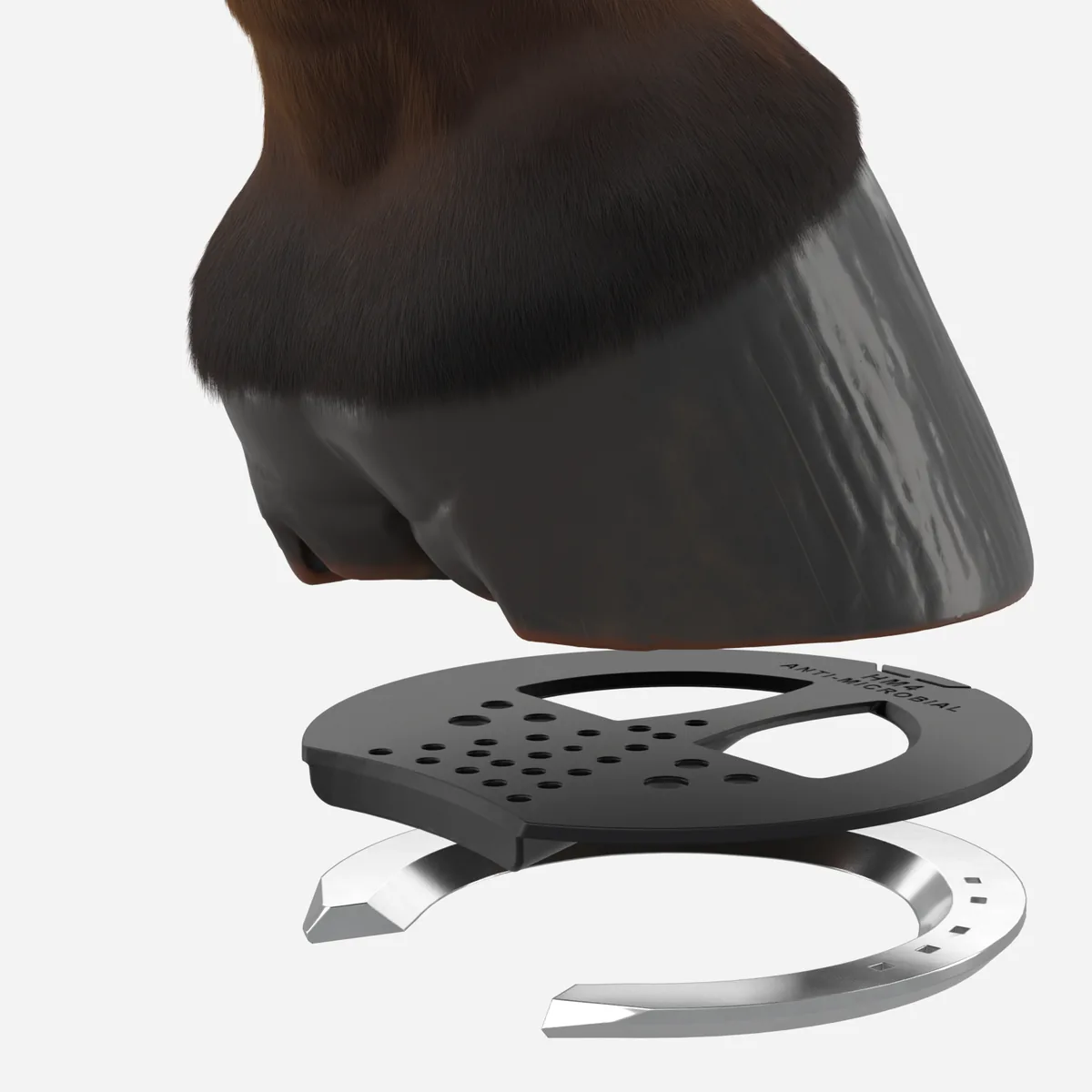
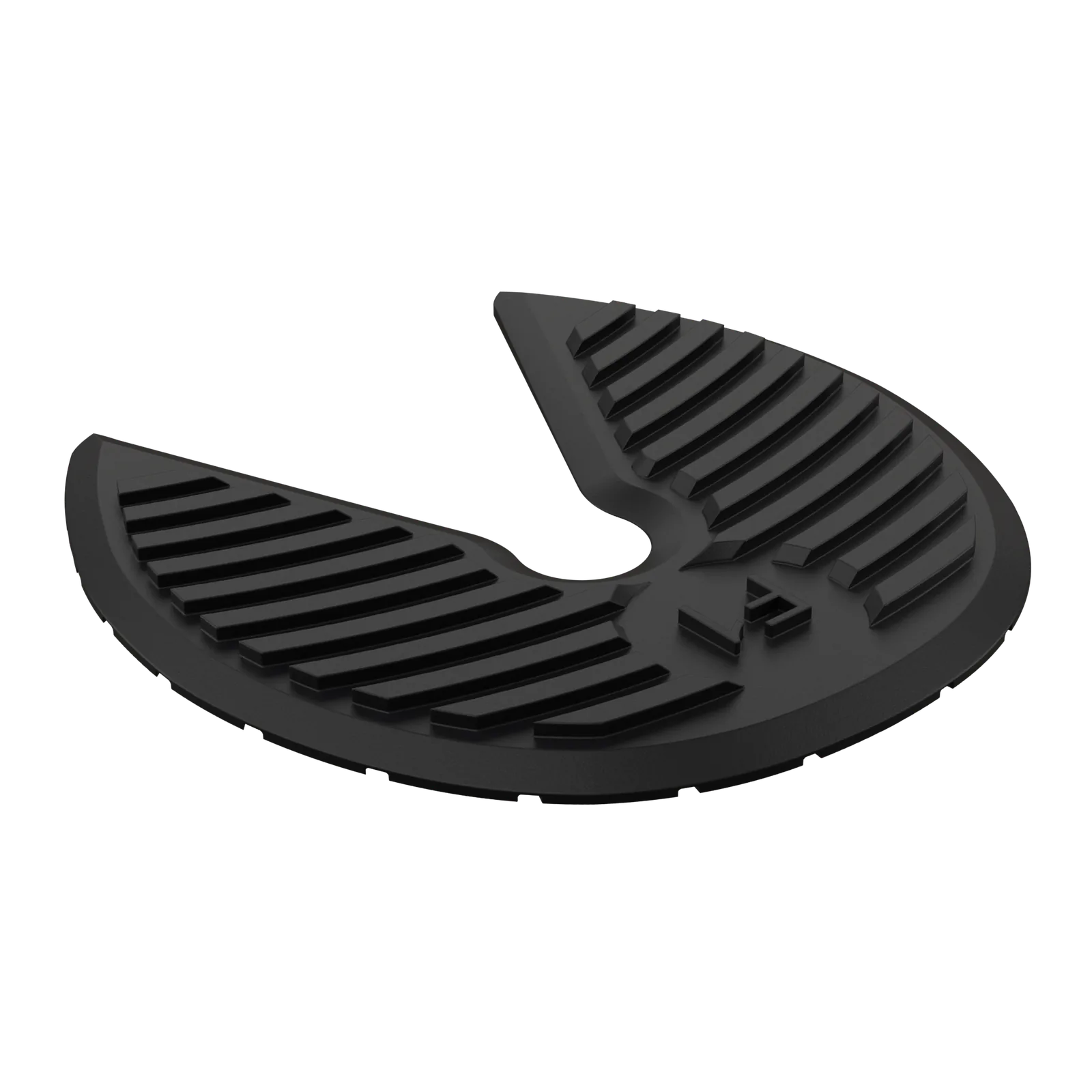
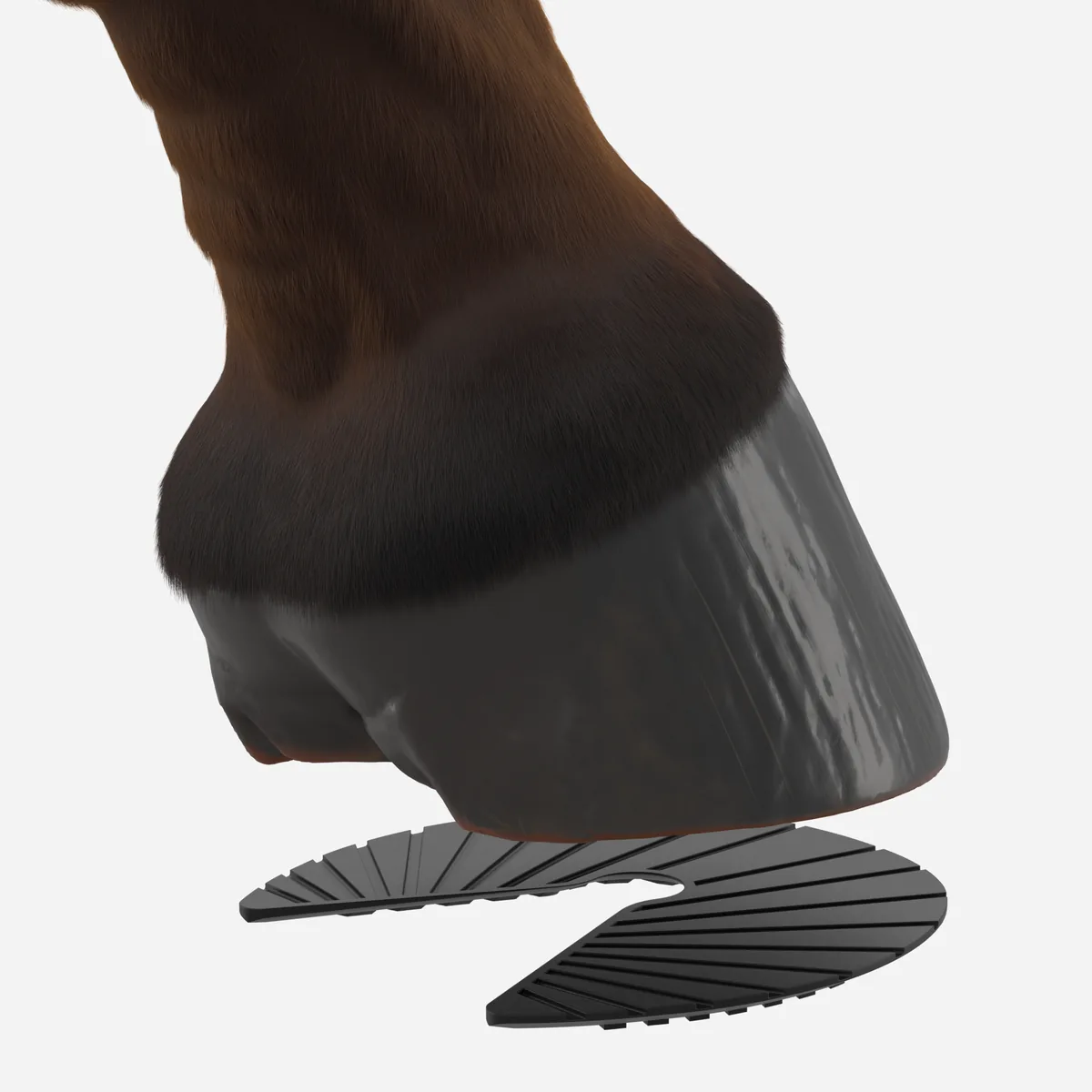
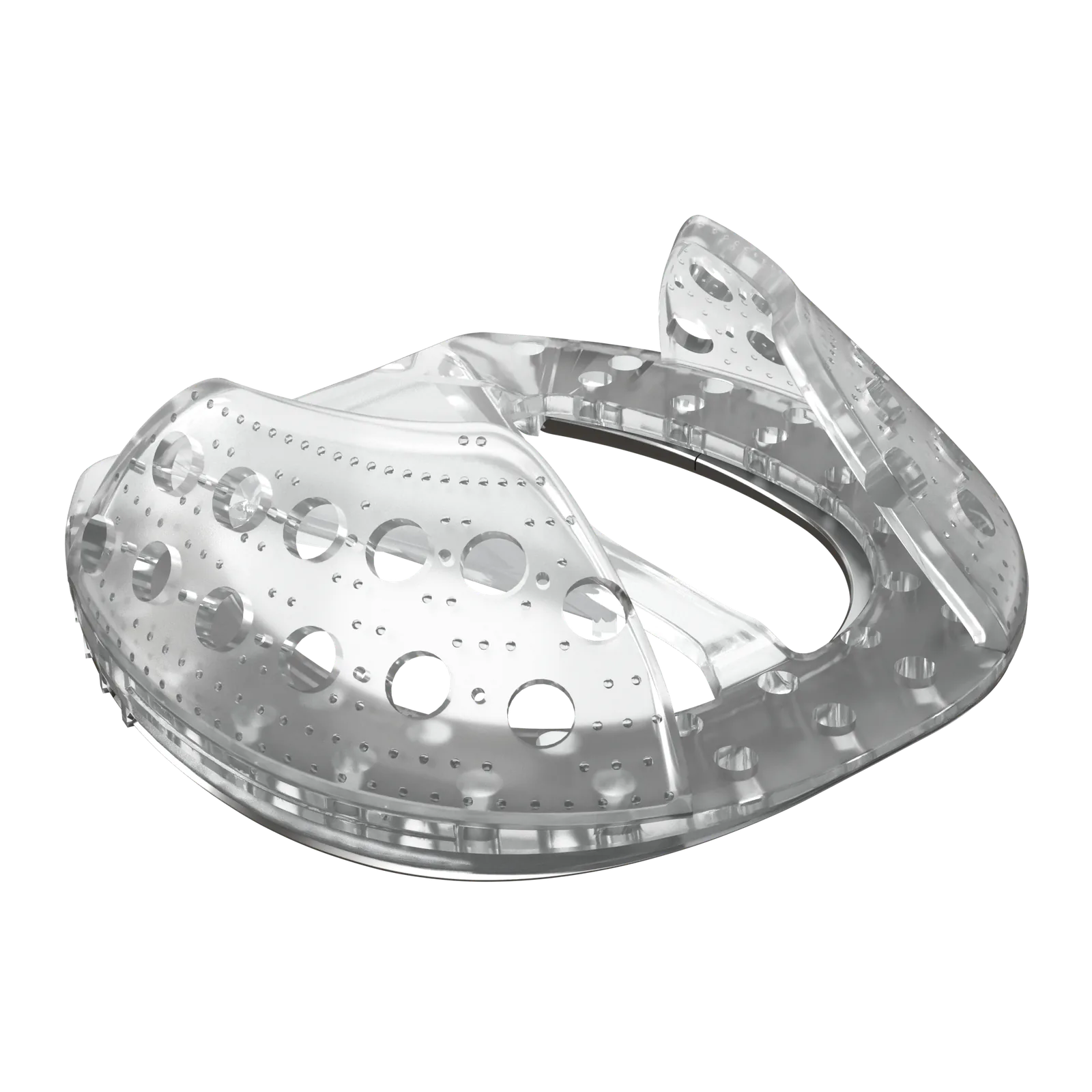
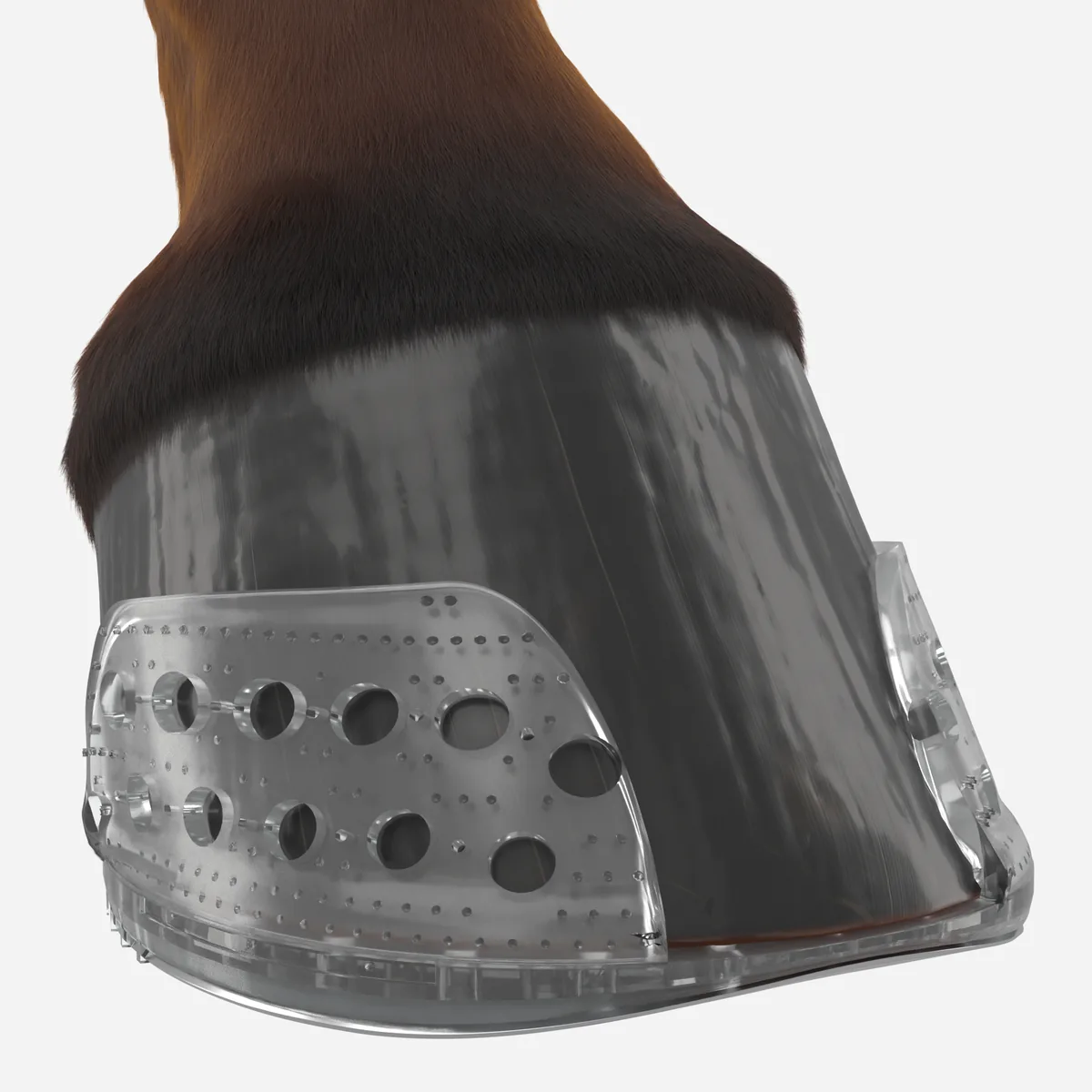
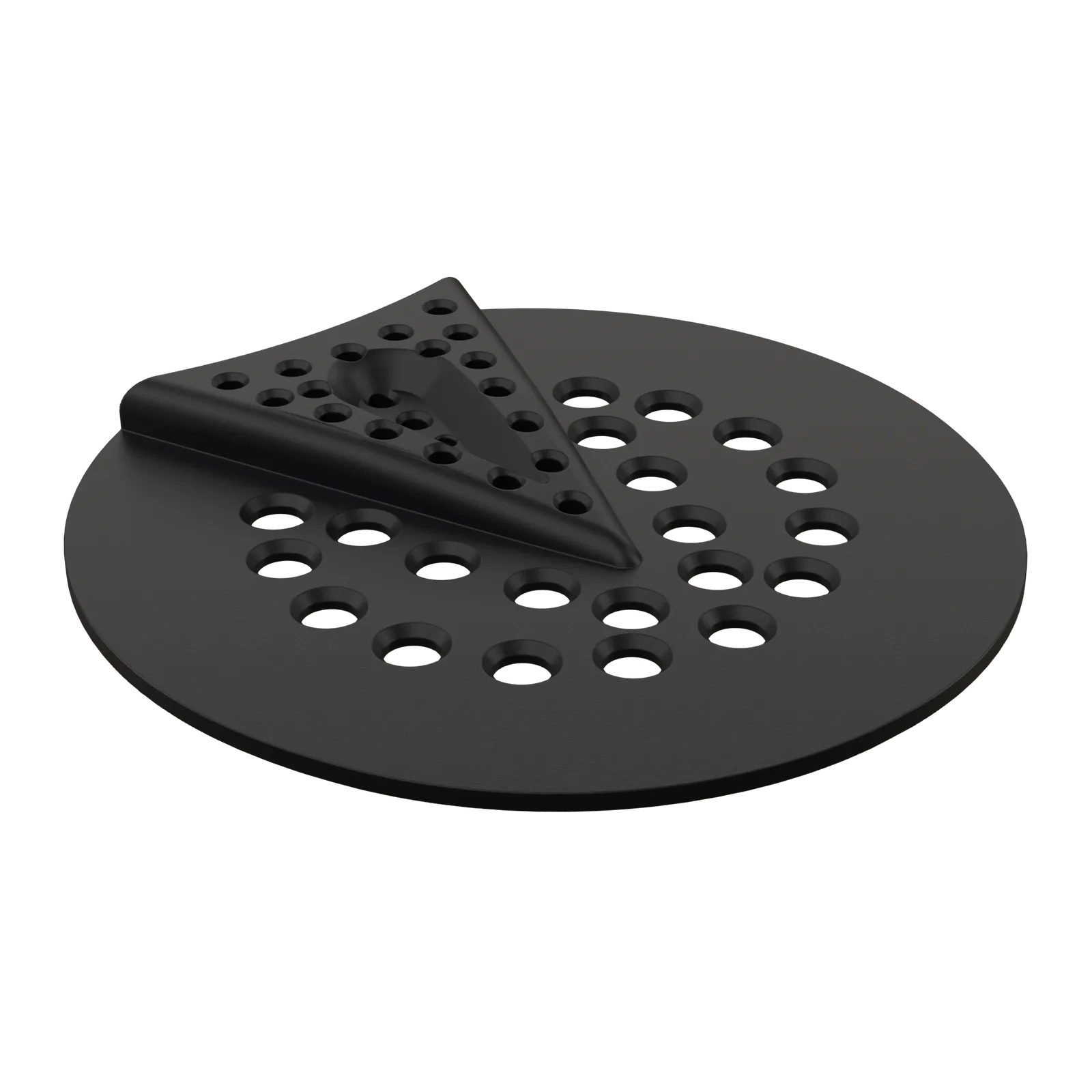
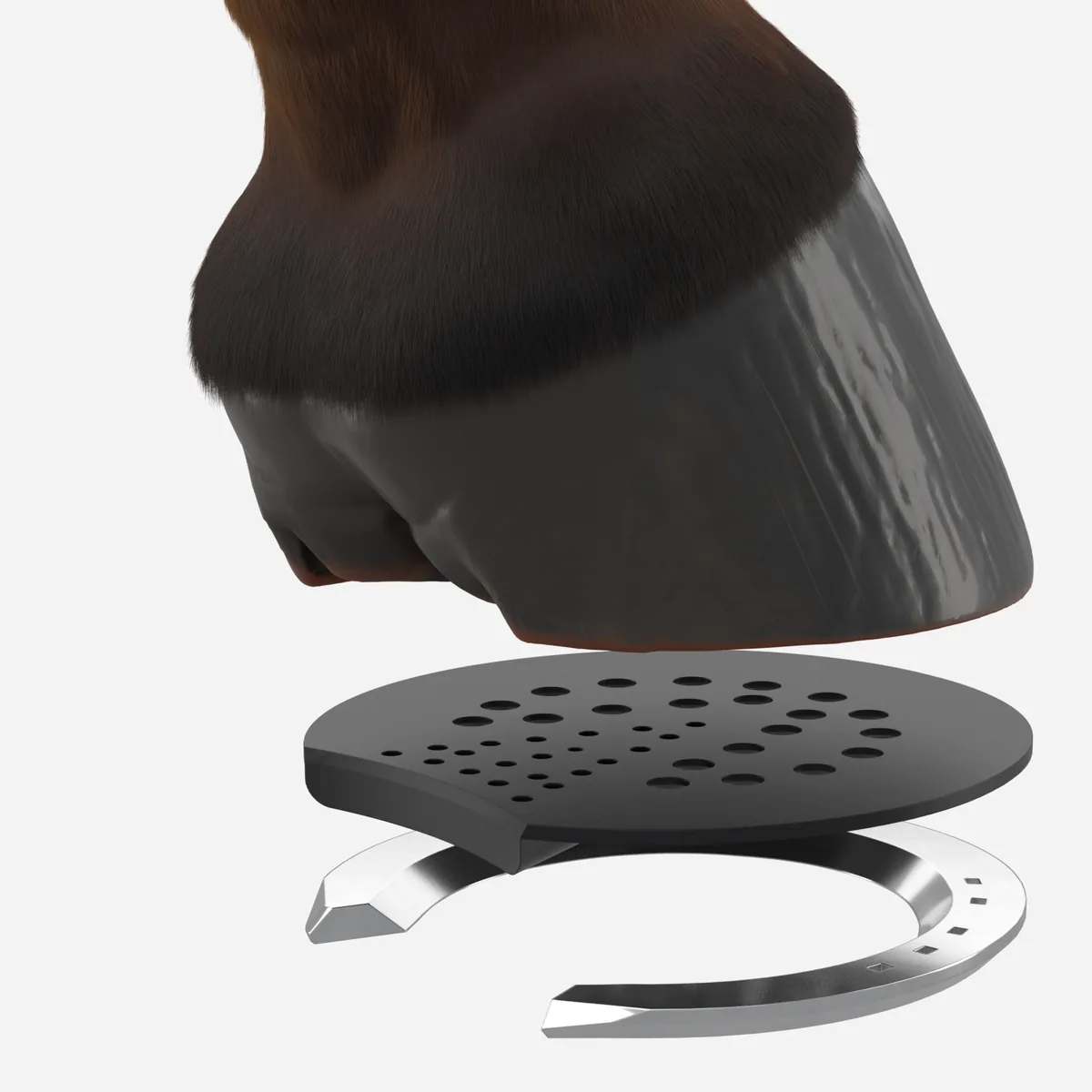
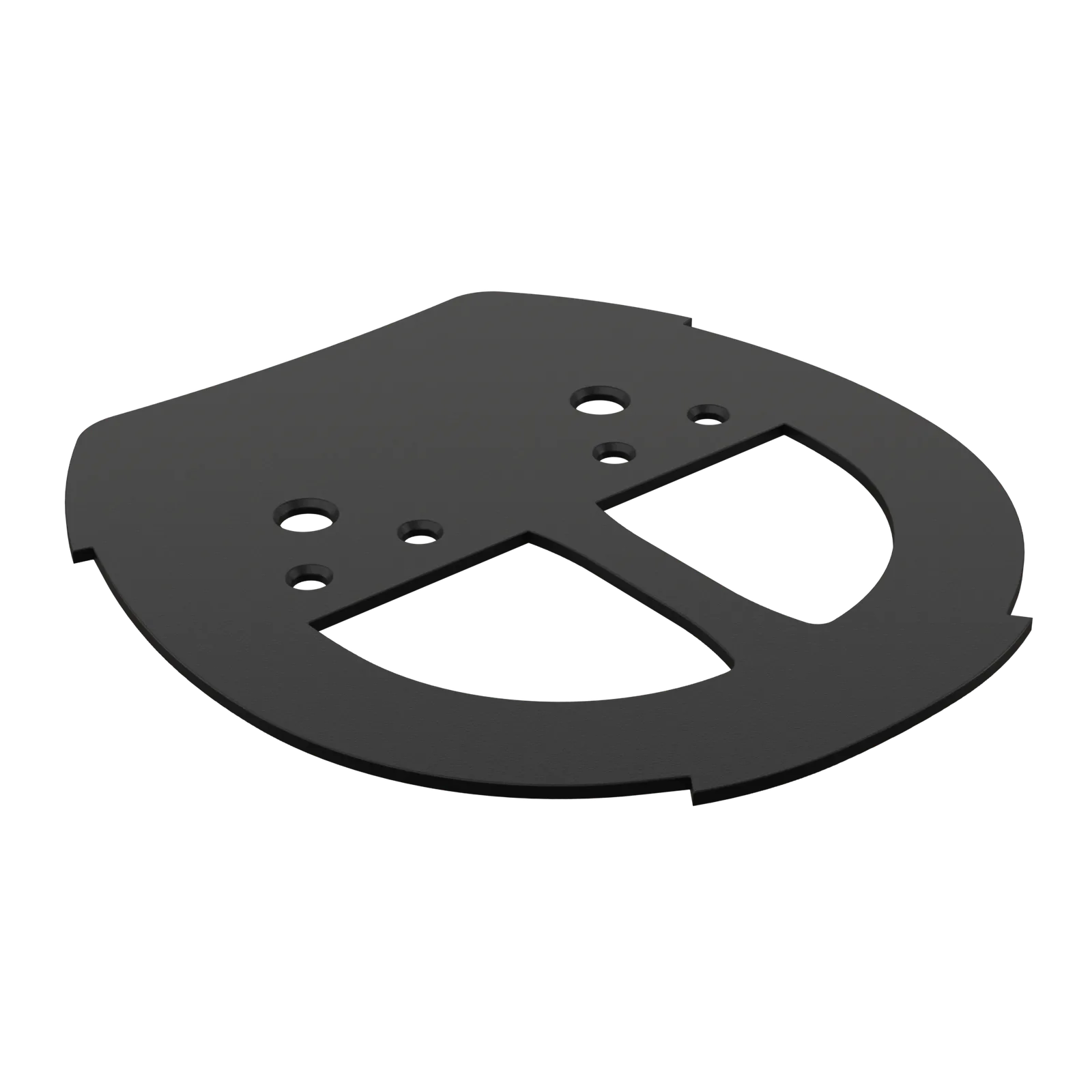
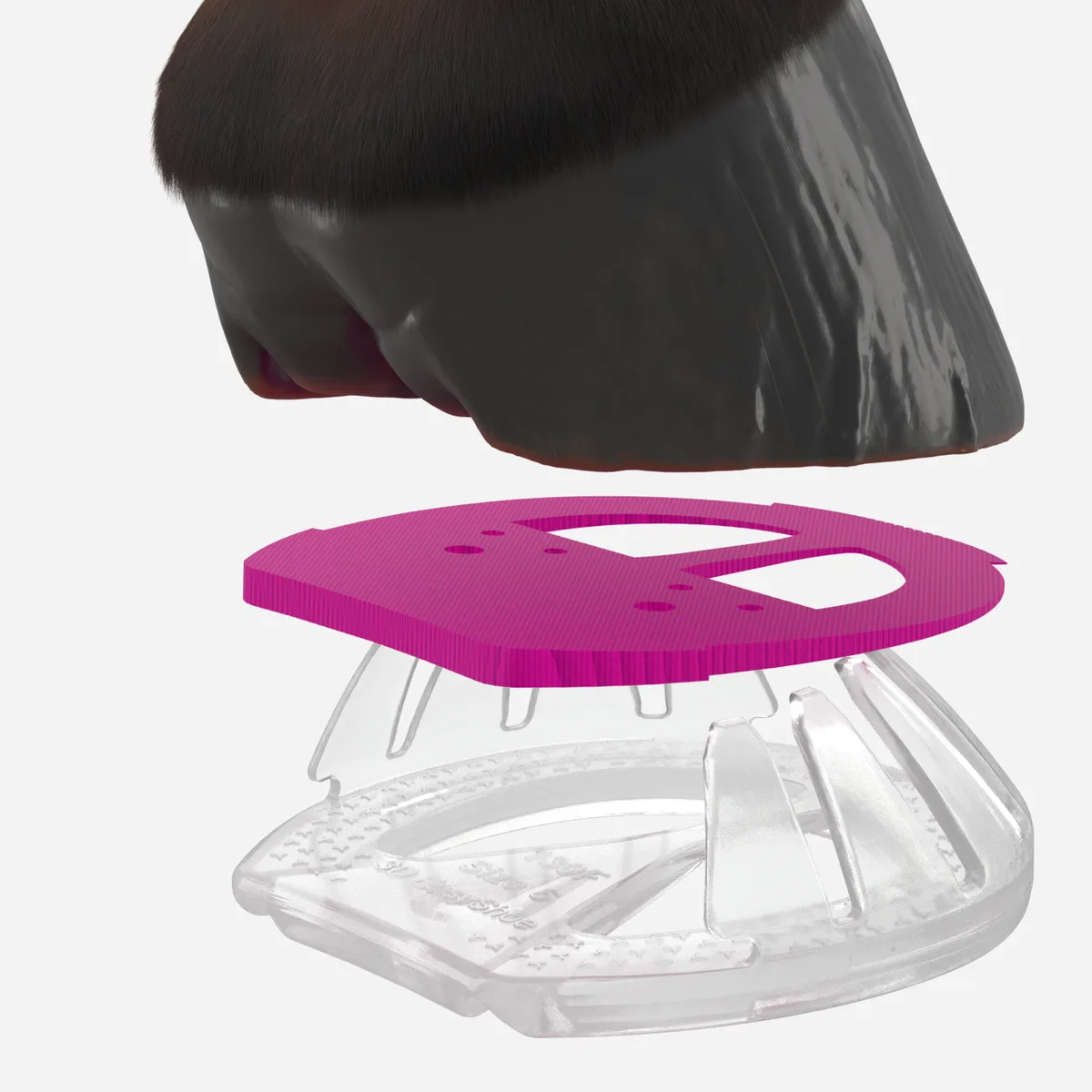
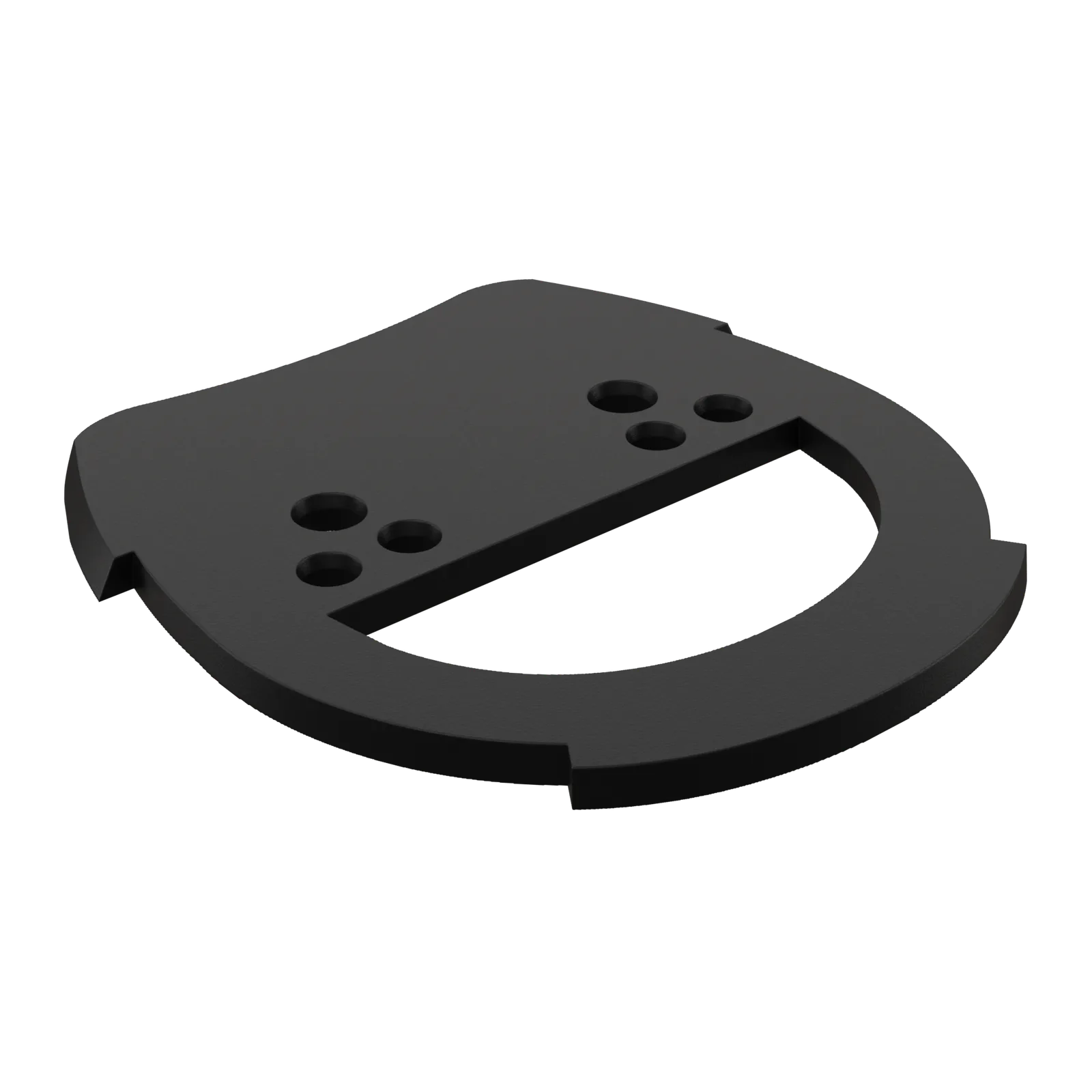
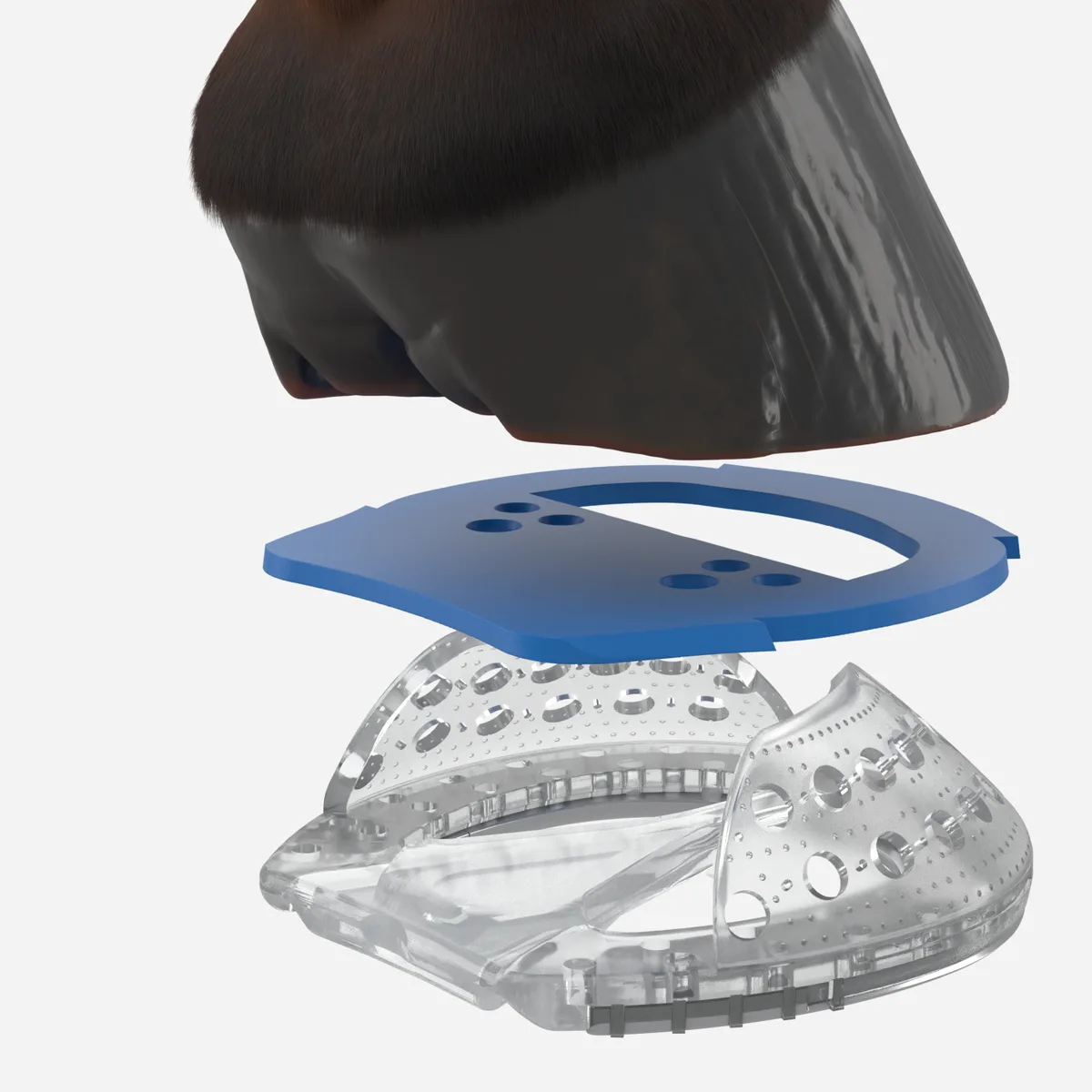
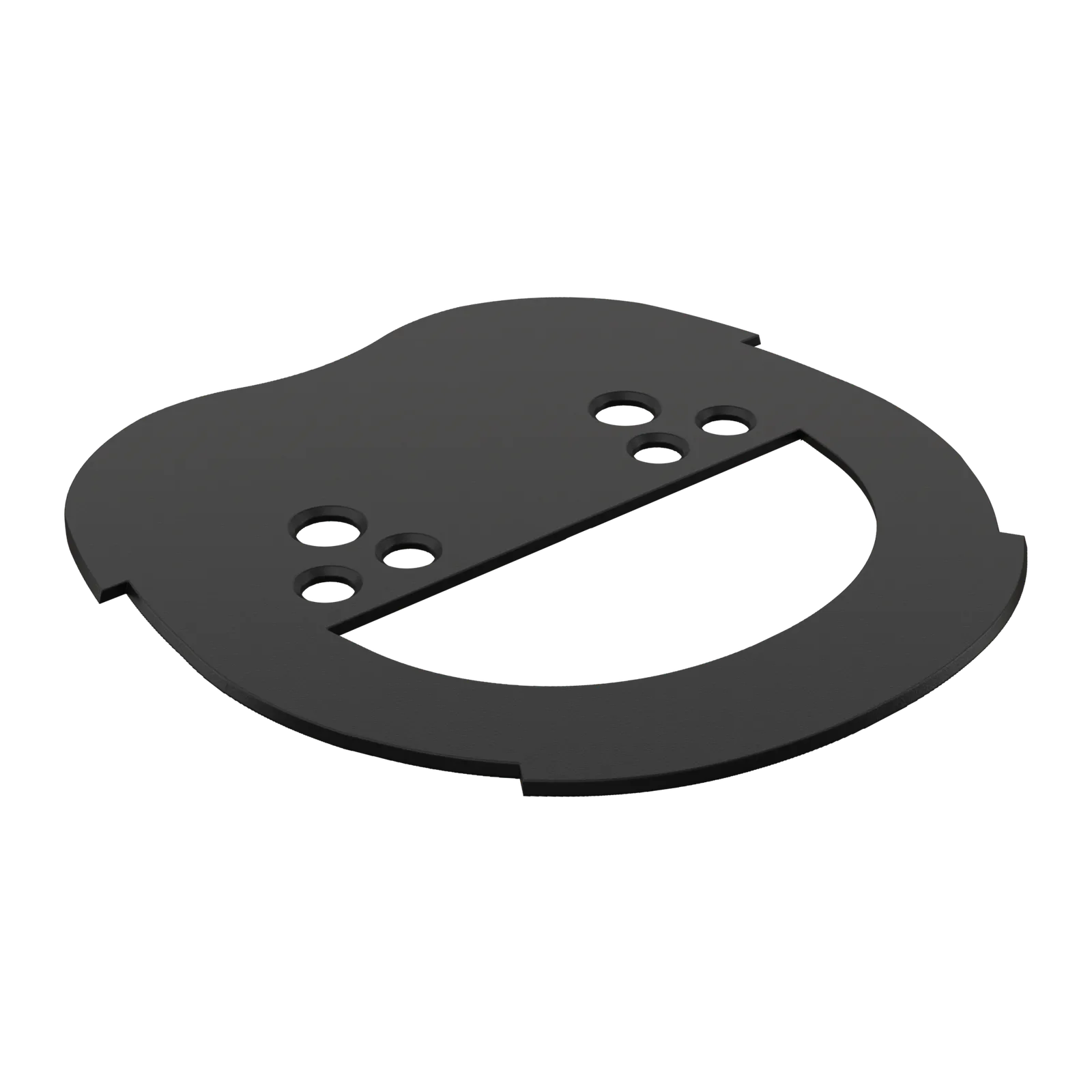
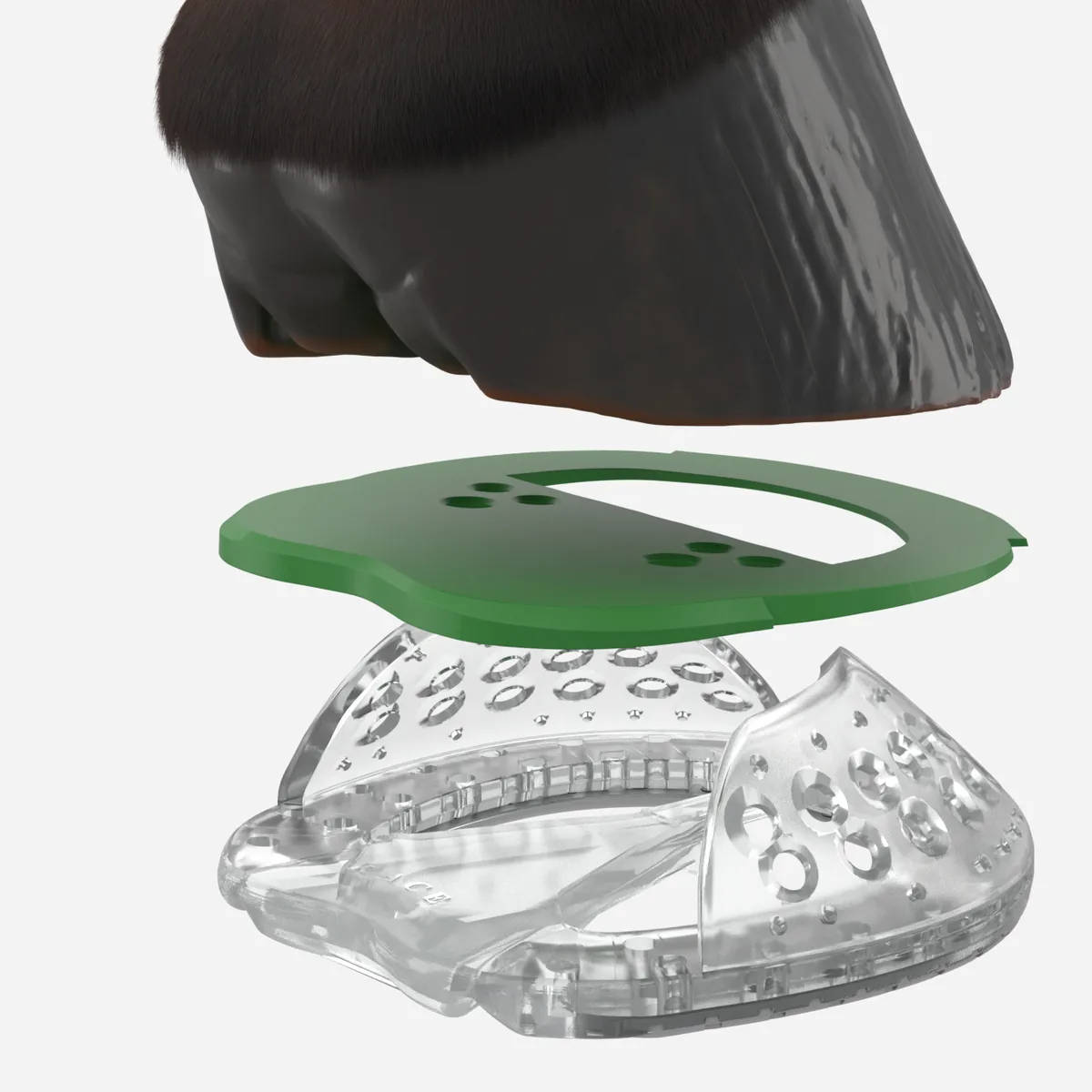
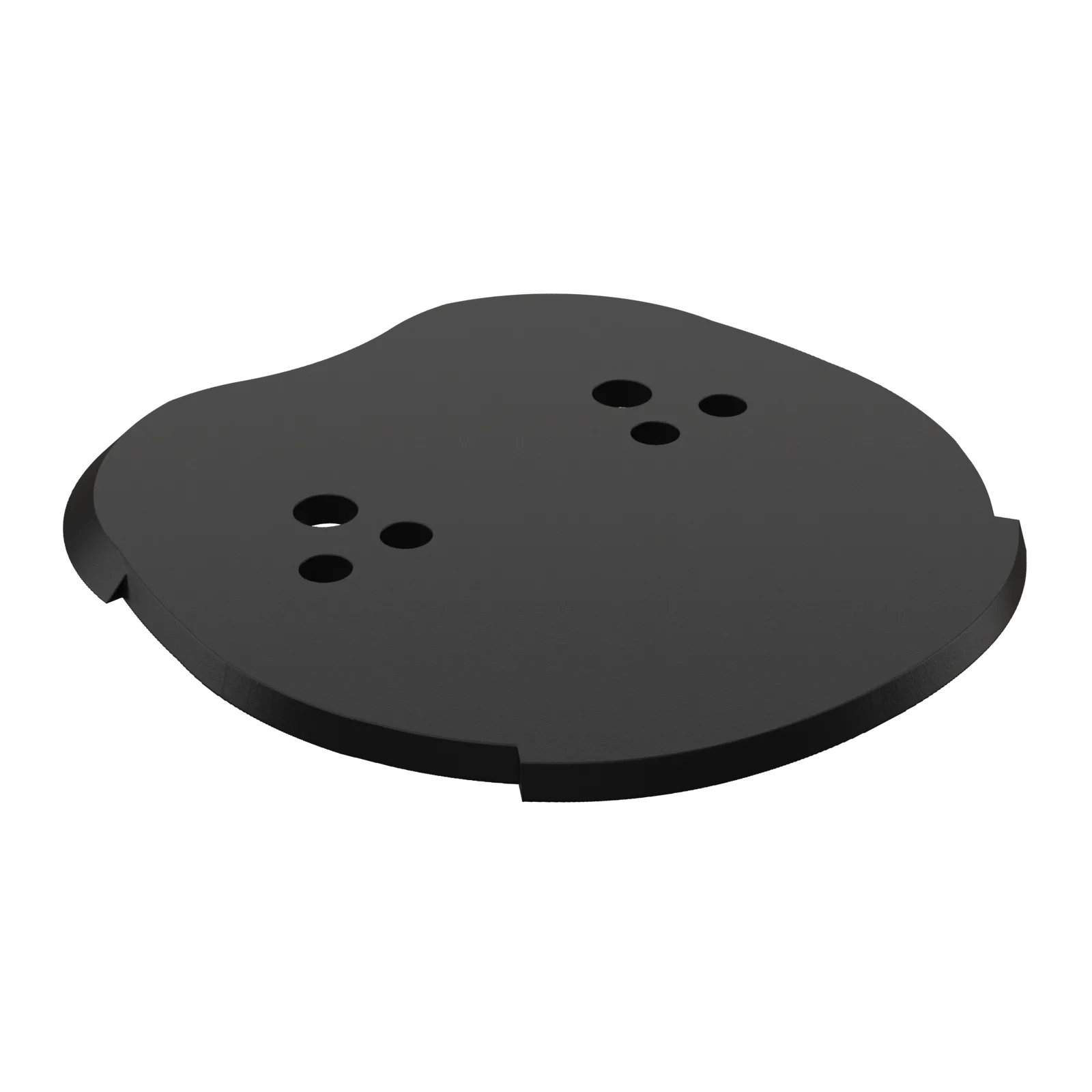
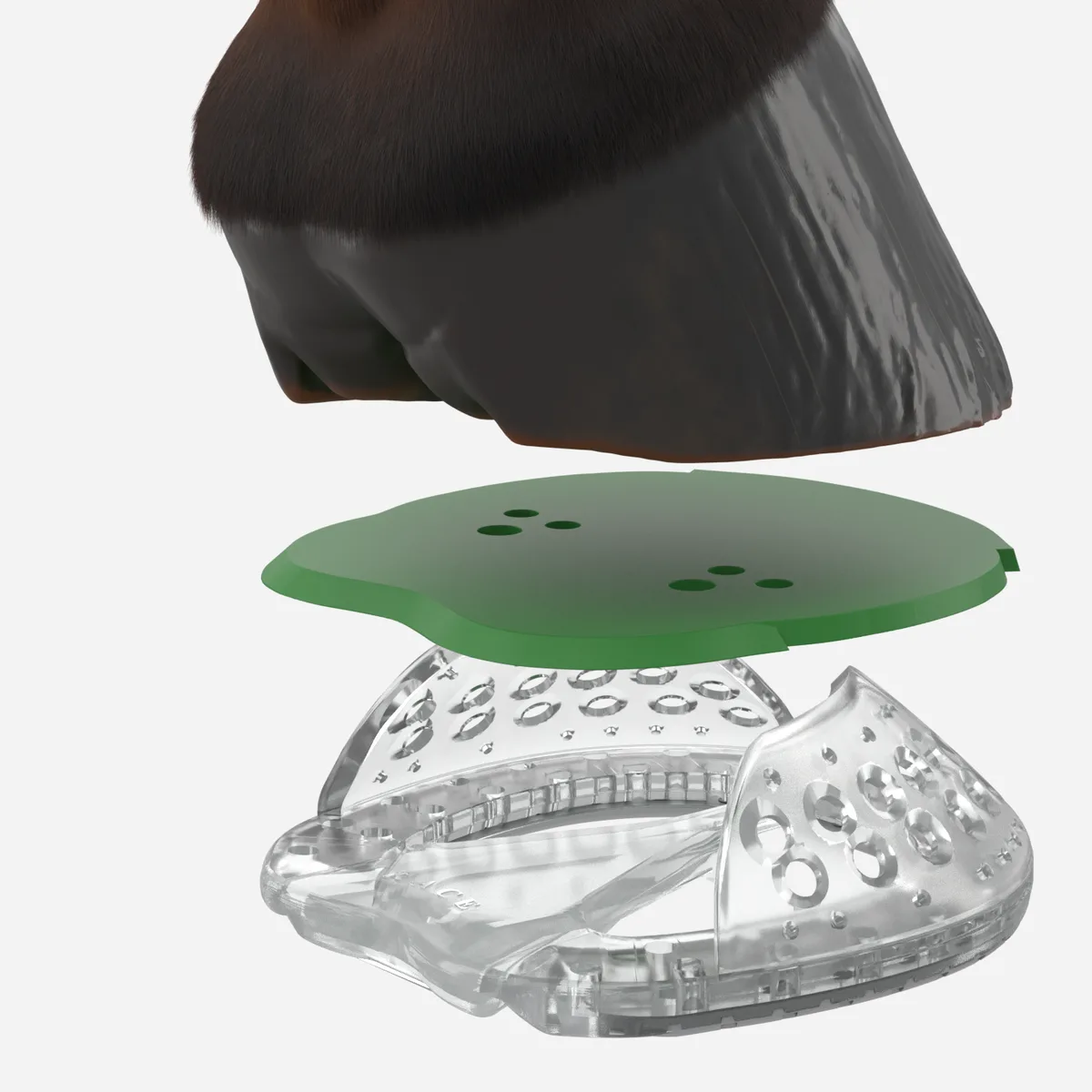
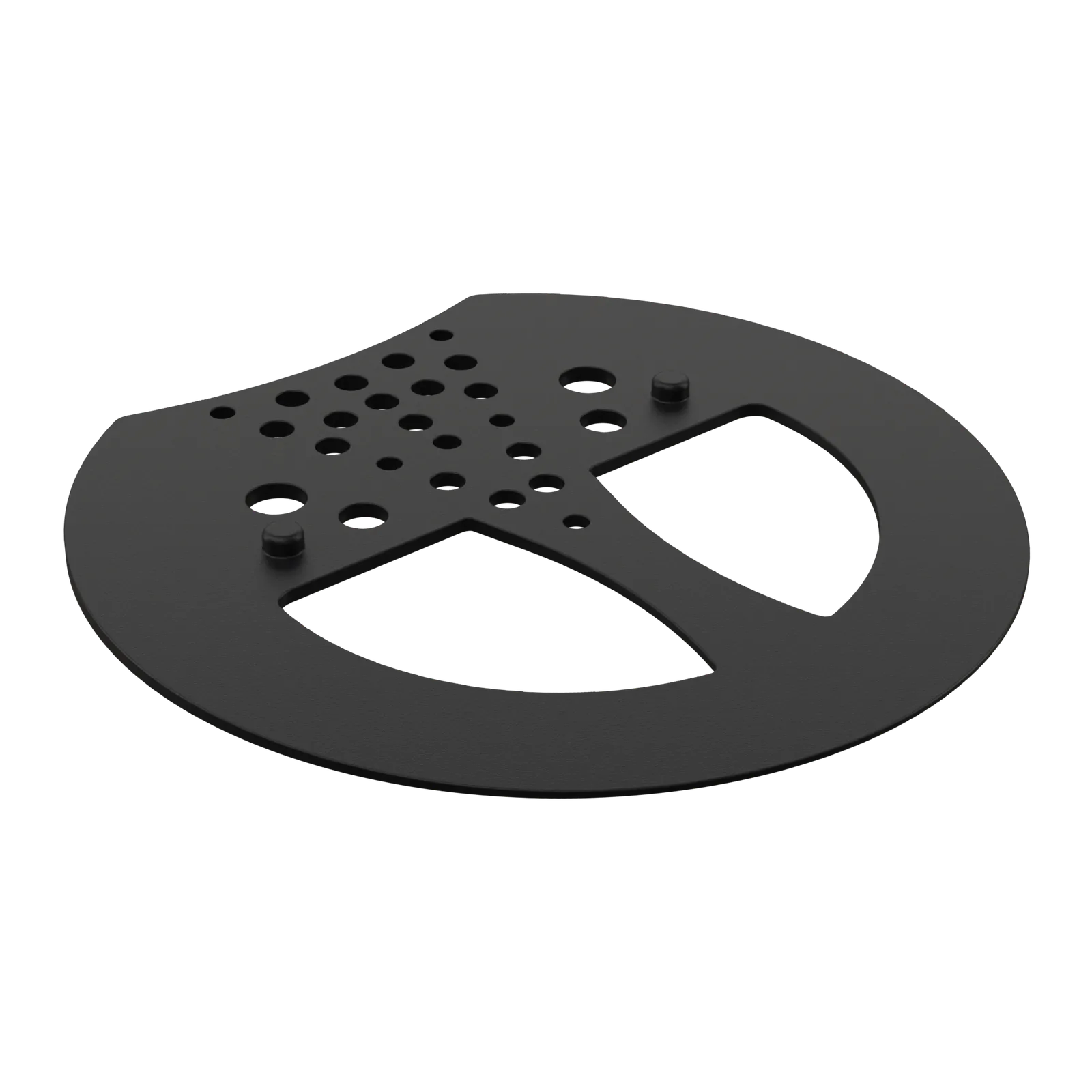
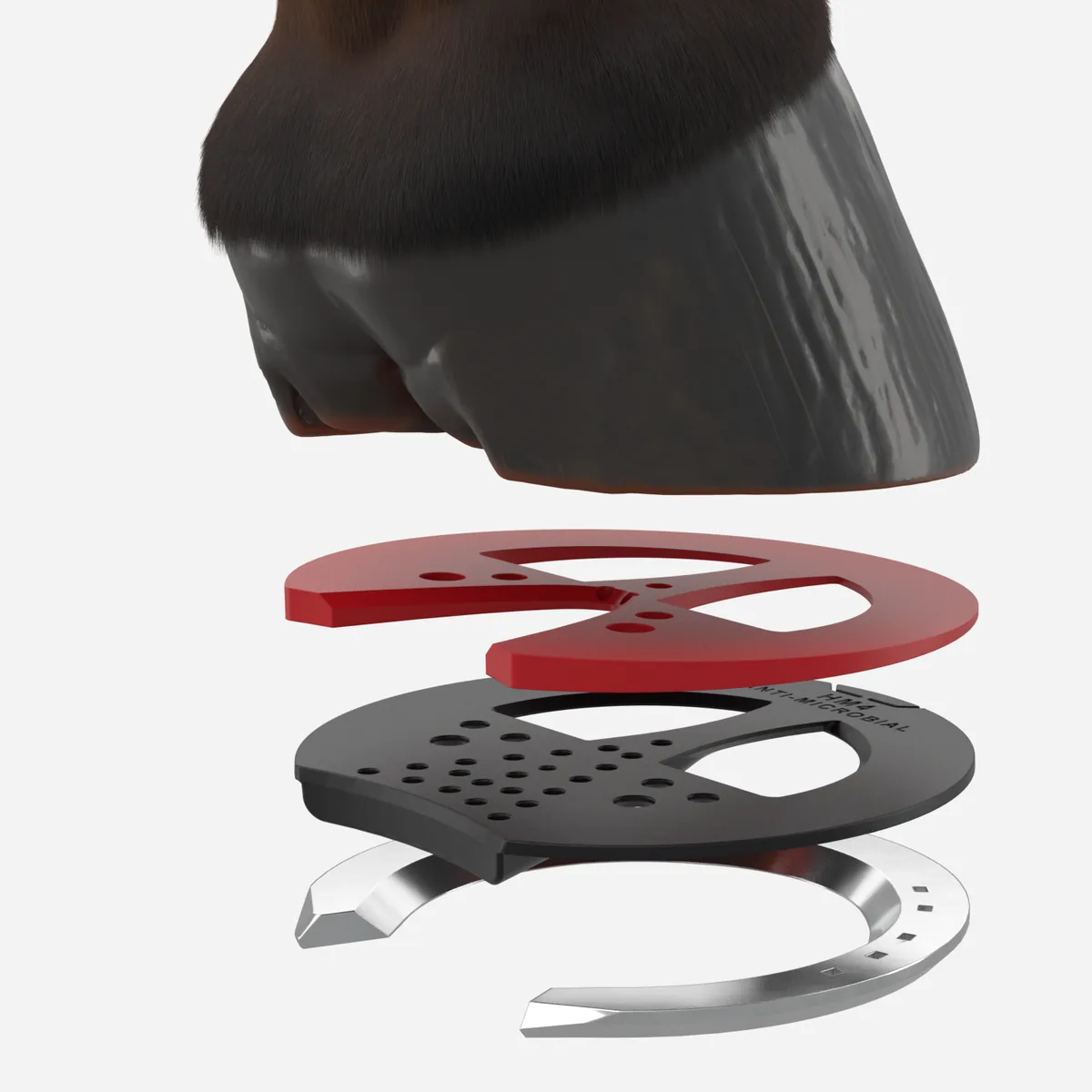
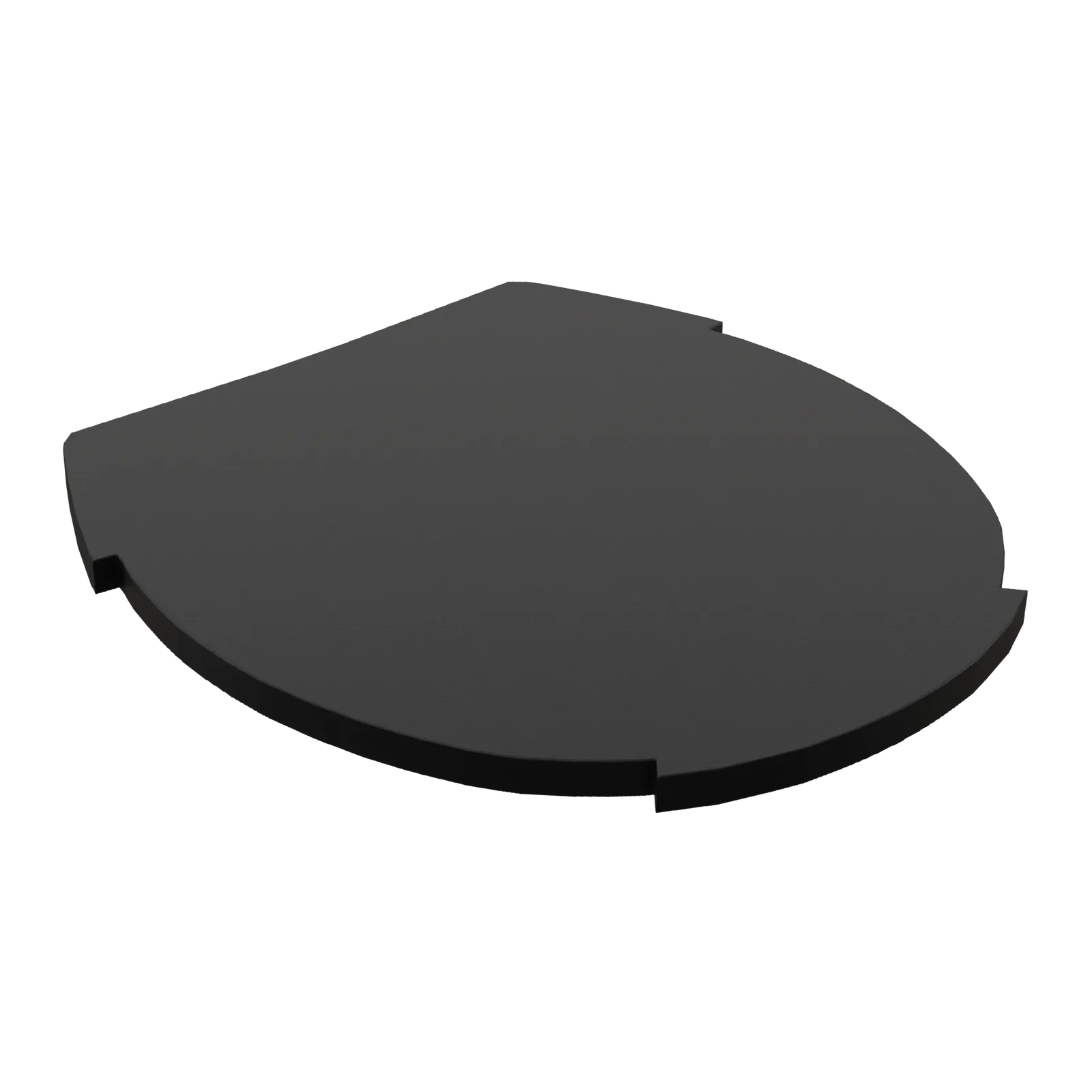
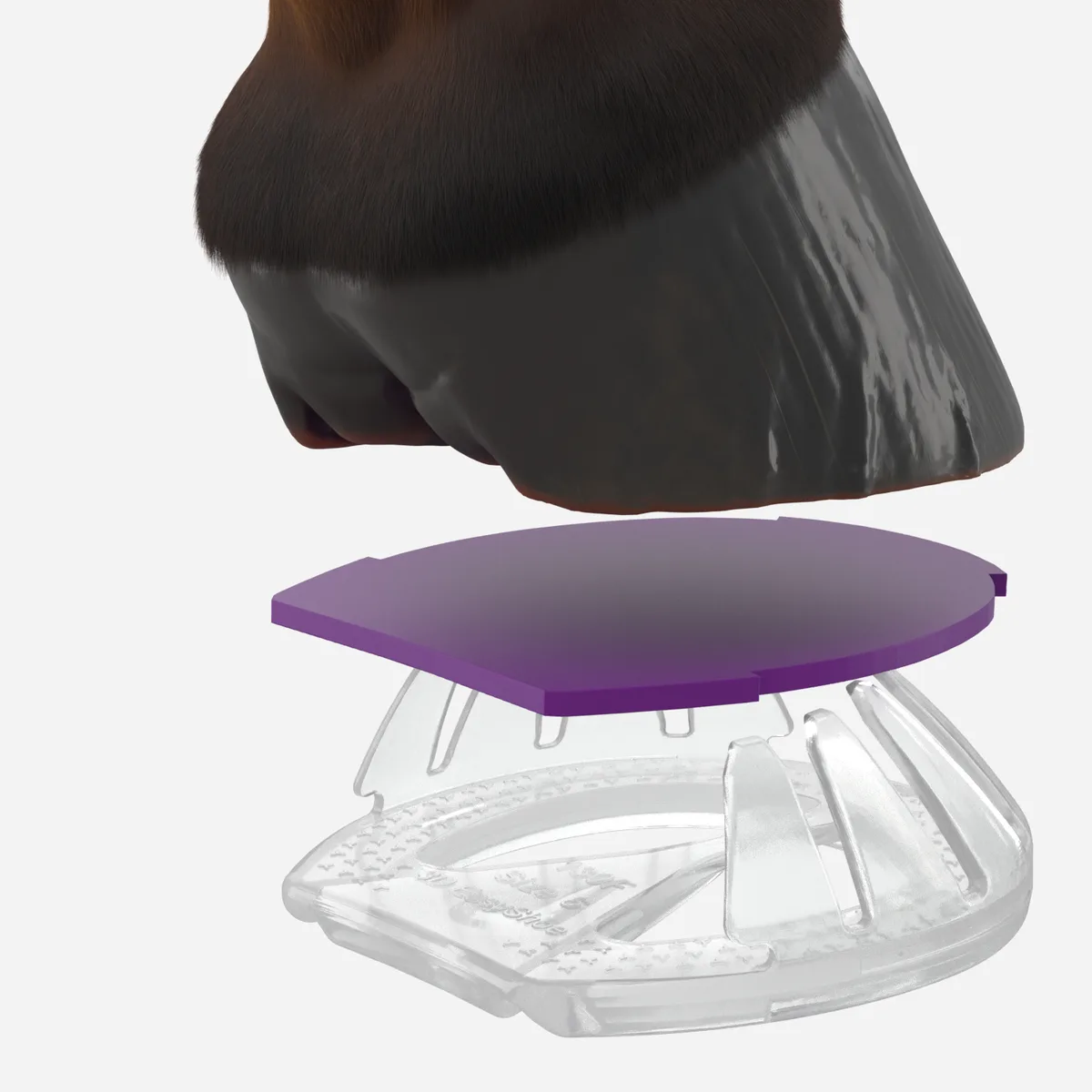




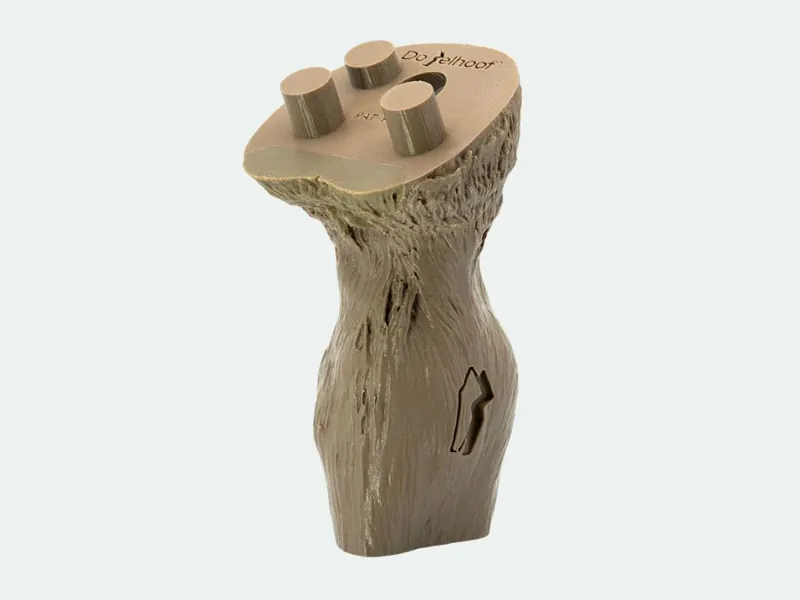
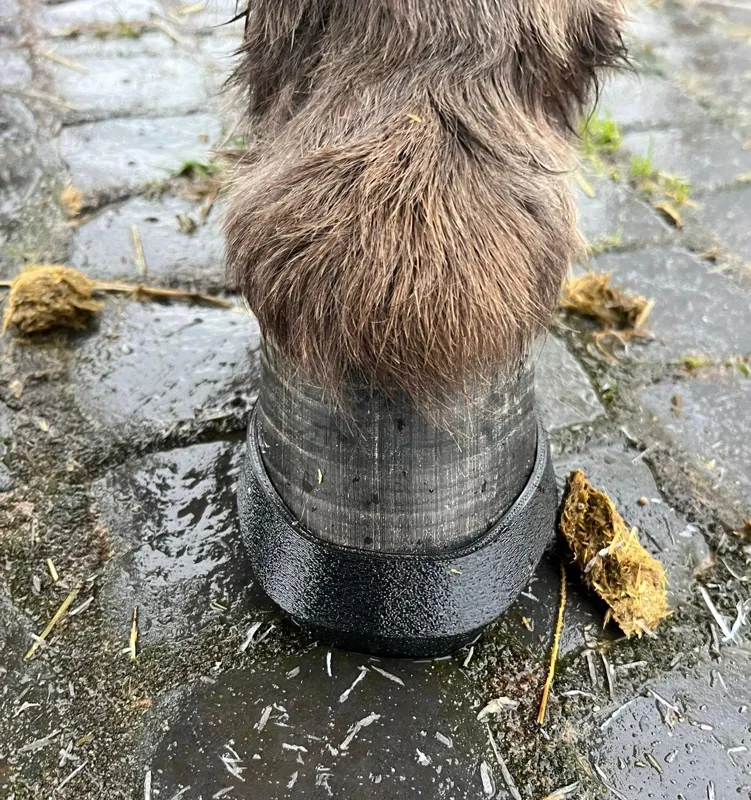
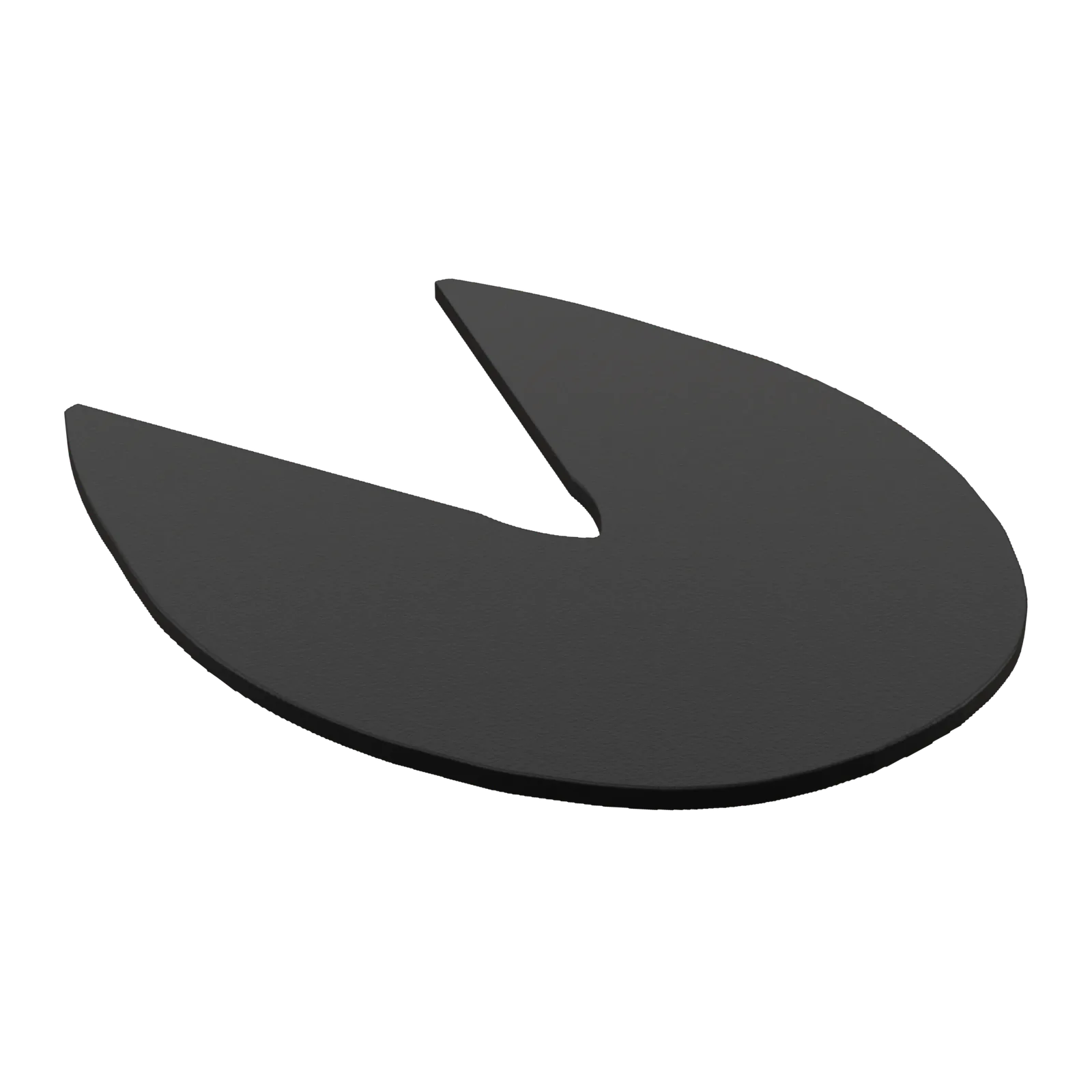
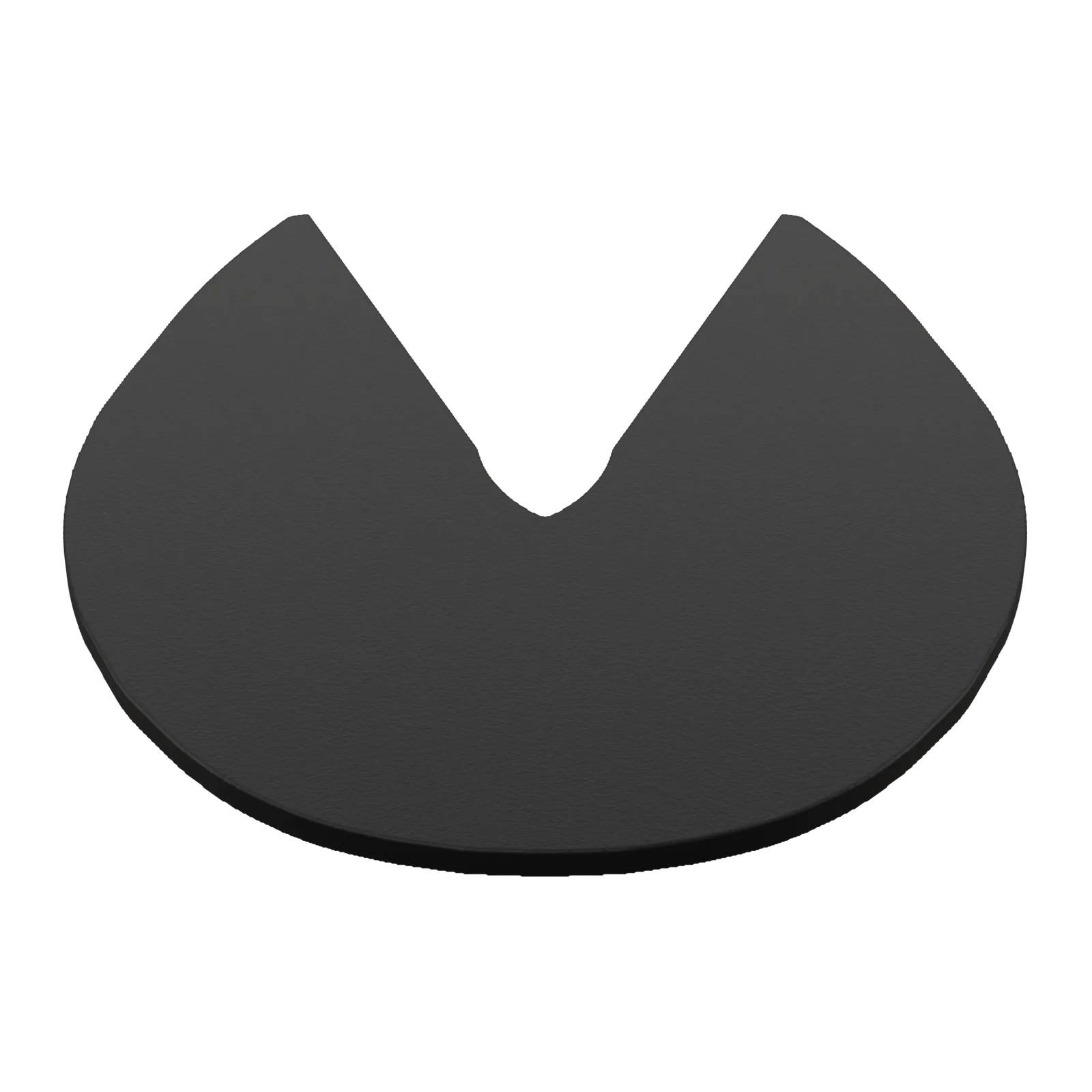
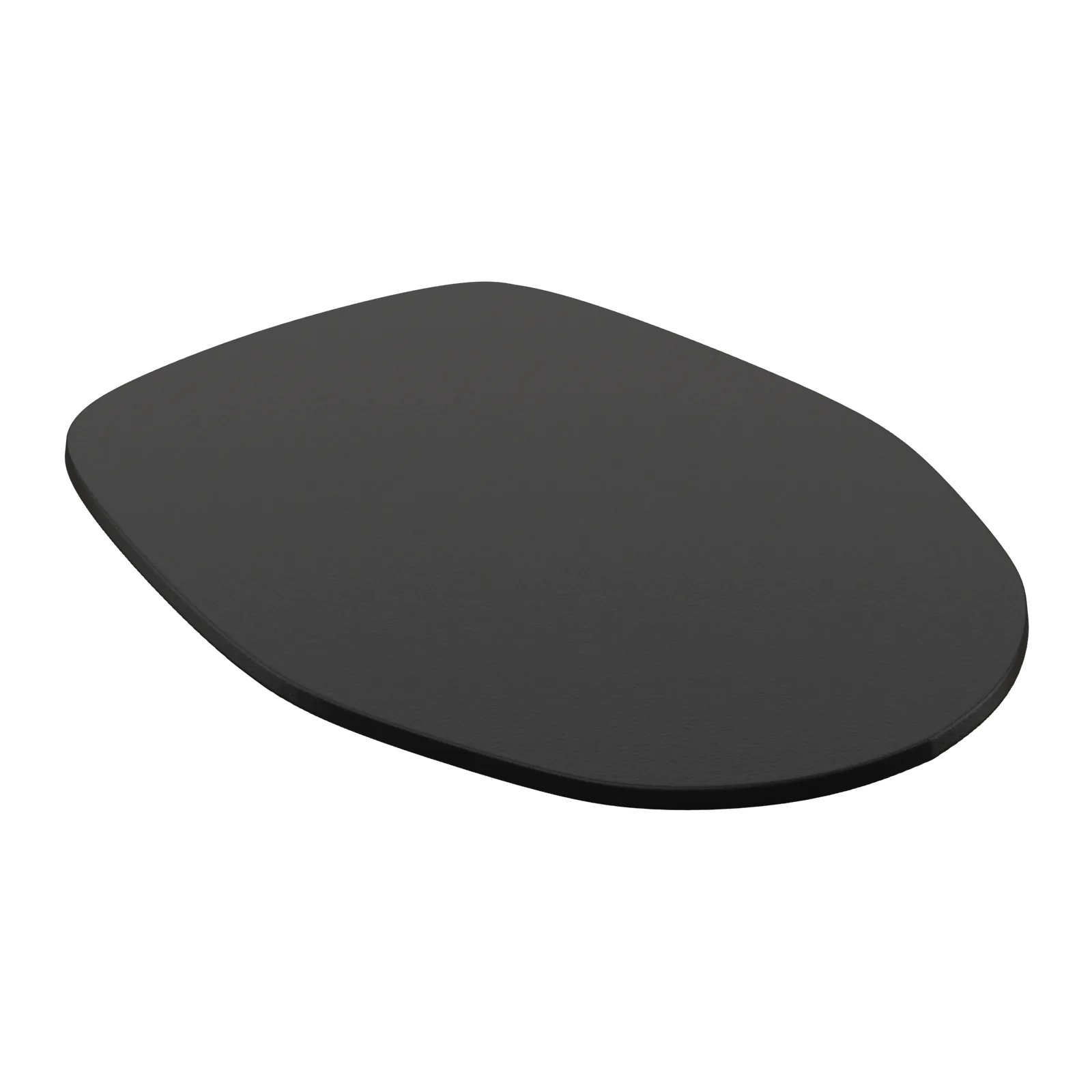

Every week someone posts a photo in the community with a version of the same question. Are these too big? Her hoof measures five inches by five inches and I ordered a size 0. There is a large gap around the top.
It is the most common thing people get wrong, and it is entirely our industry's fault rather than theirs. Sizing conventions differ between manufacturers, the numbers run in different directions depending on the product, and nobody tells you which measurement matters most.
So here is the whole thing in one place.
Take two measurements, freshly trimmed
Measure the foot after the trim, not before. A foot with four weeks of flare on it will measure wider than the foot you are actually fitting, and you will size up unnecessarily.
Width. The widest point of the hoof, measured across the foot. This is usually around the middle of the quarters.
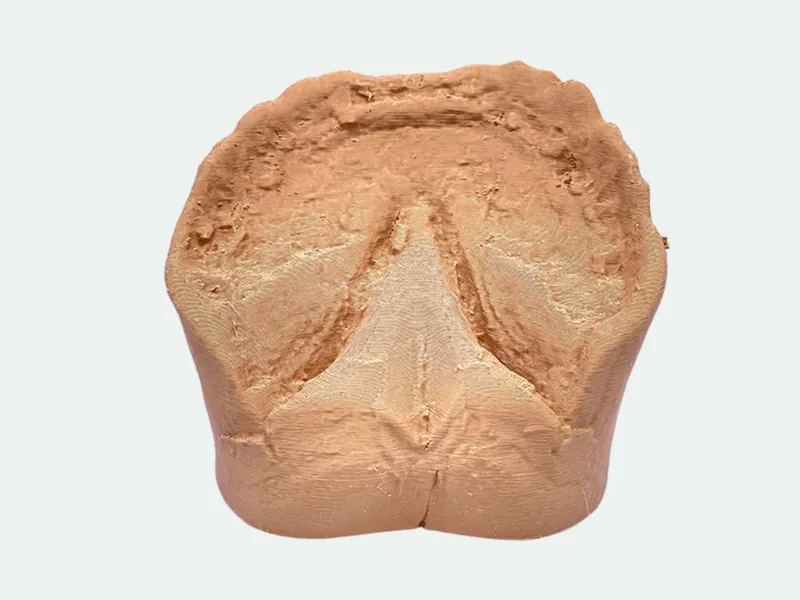
Length. From the back of the heel buttress to the toe. Not from the back of the frog. Not from the hairline. The weight-bearing surface, heel to toe.
Write both down in whichever unit your ruler or tape shows. Every size chart lists inches and millimeters, so there is no need to convert. Converting back and forth is where people lose accuracy.
Photograph the foot with a ruler or tape in the shot, flat on the ground beside the hoof. If you contact us unsure, that one photo answers more questions than a paragraph of description.
Width usually decides the size
When width and length point to different sizes, and they often will, because horses are not standardized, width is generally the number to work from.
A pad that is too narrow will not sit on the wall properly, and you will be trying to glue to an edge rather than a surface. A pad that is slightly long can be dealt with. A pad that is too narrow cannot.
That said, extremely long relative to width, or extremely wide relative to length, is worth a conversation before you order rather than after.
The gap at the top is not always a mistake
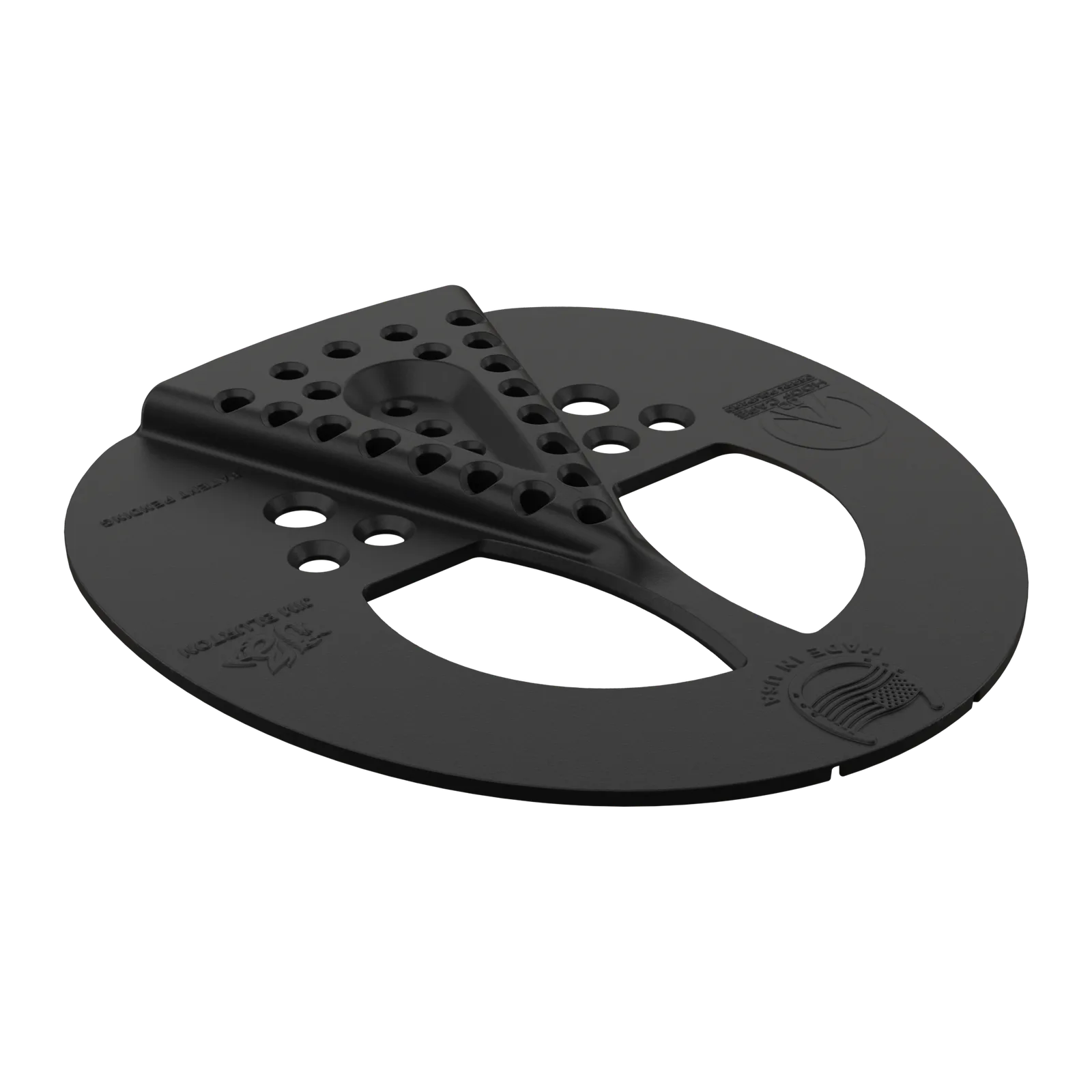
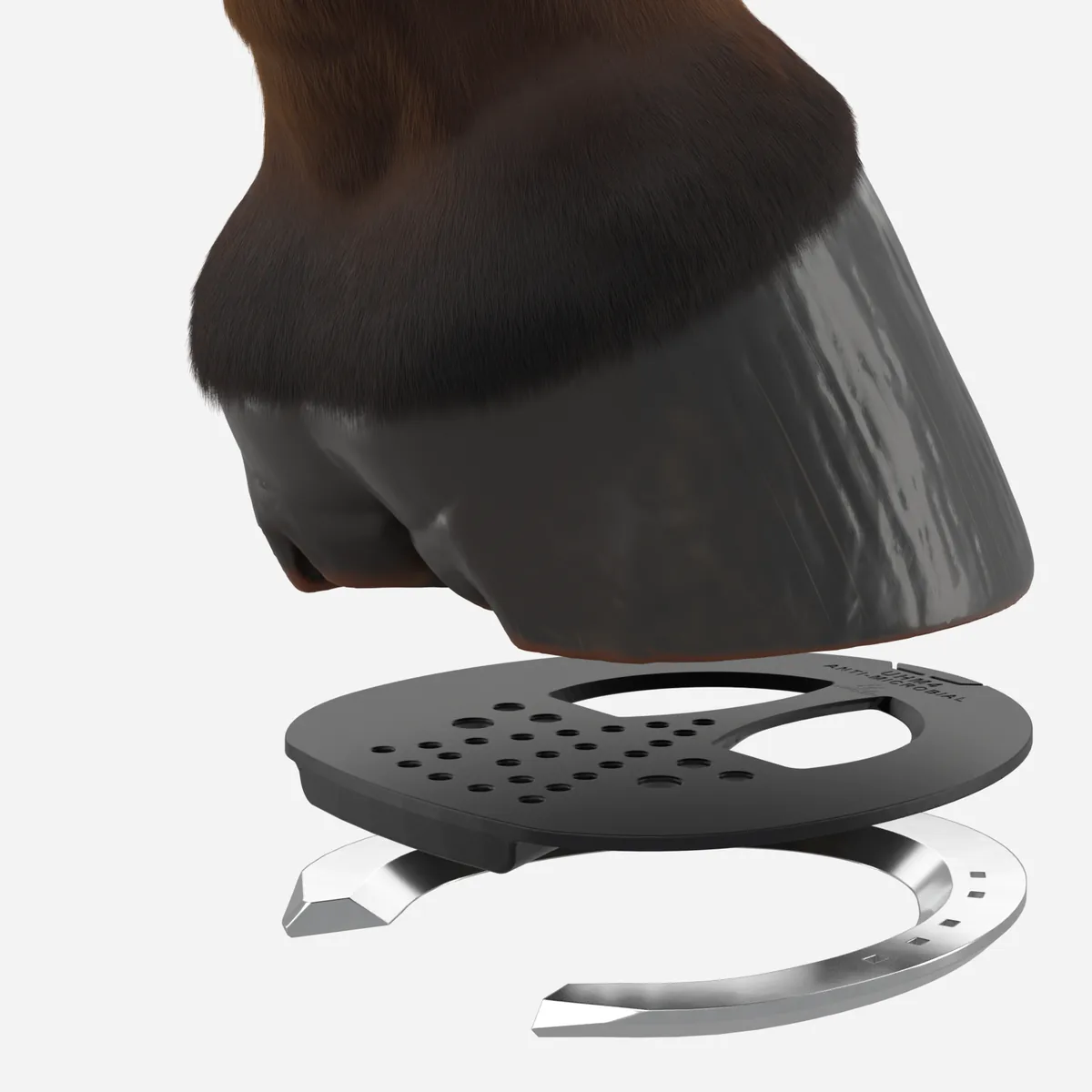
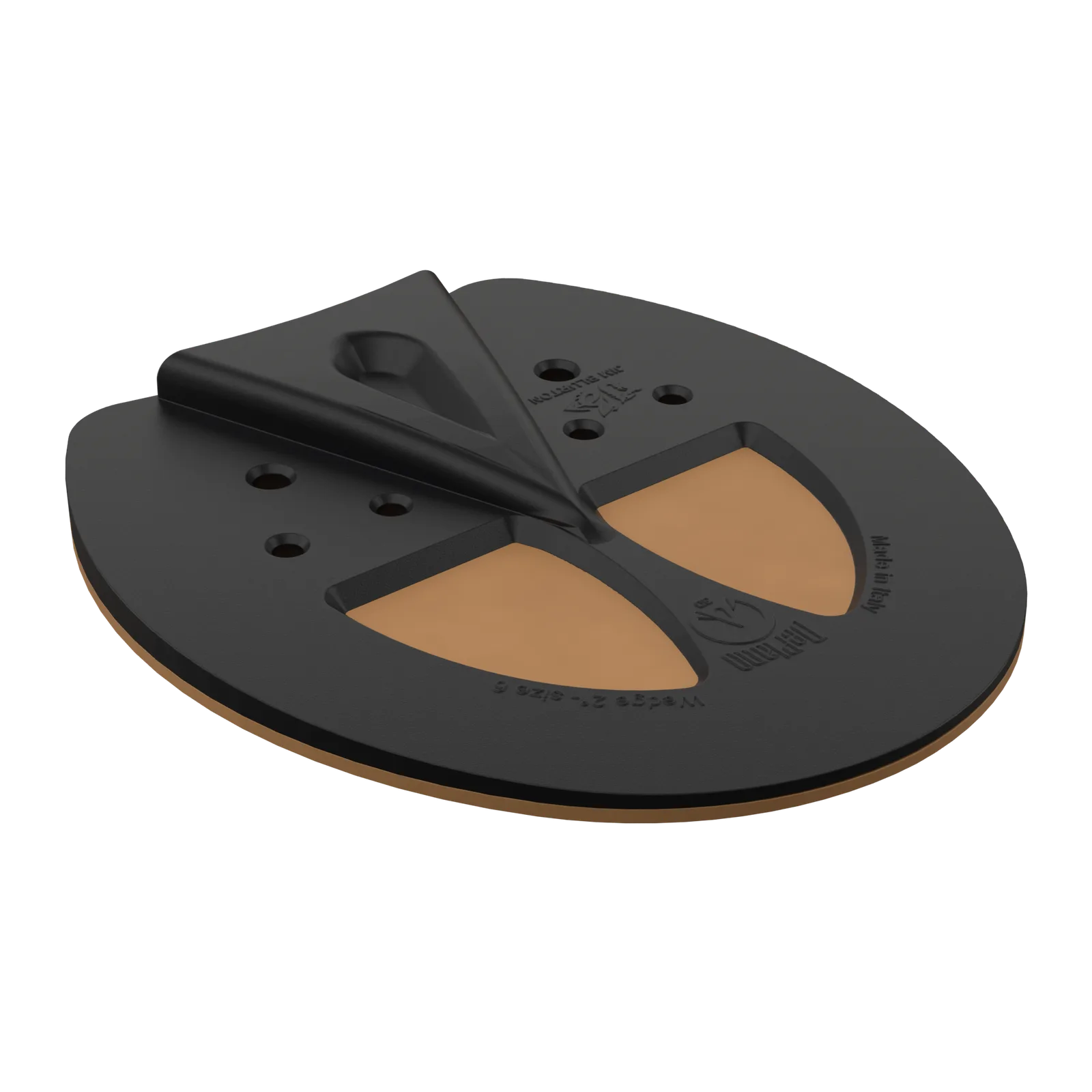
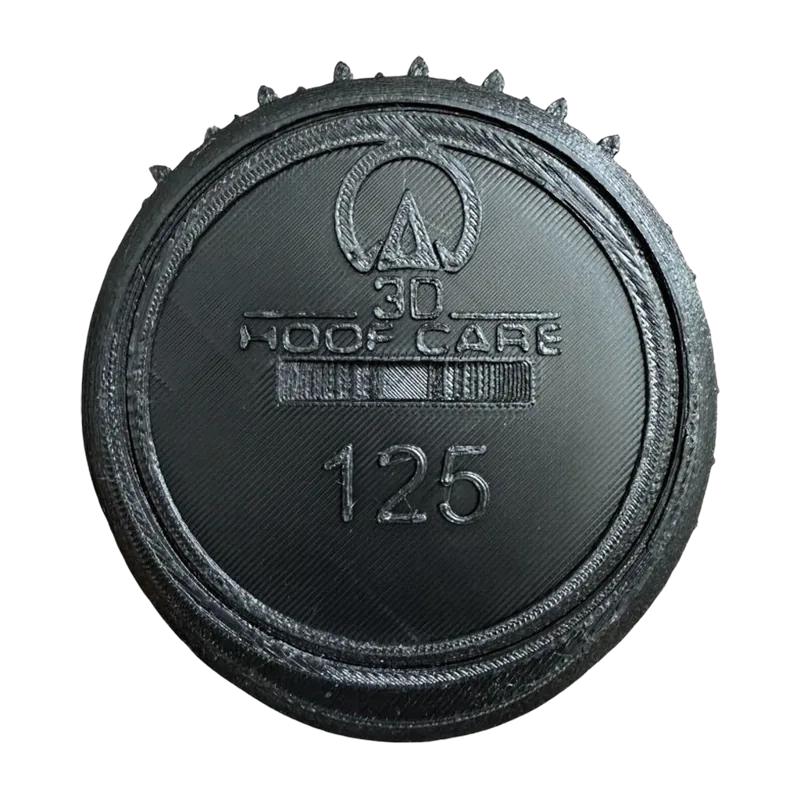
This one surprises people. When someone posts a photo saying there is a large gap around the top of the pad, the pad is frequently the correct size.
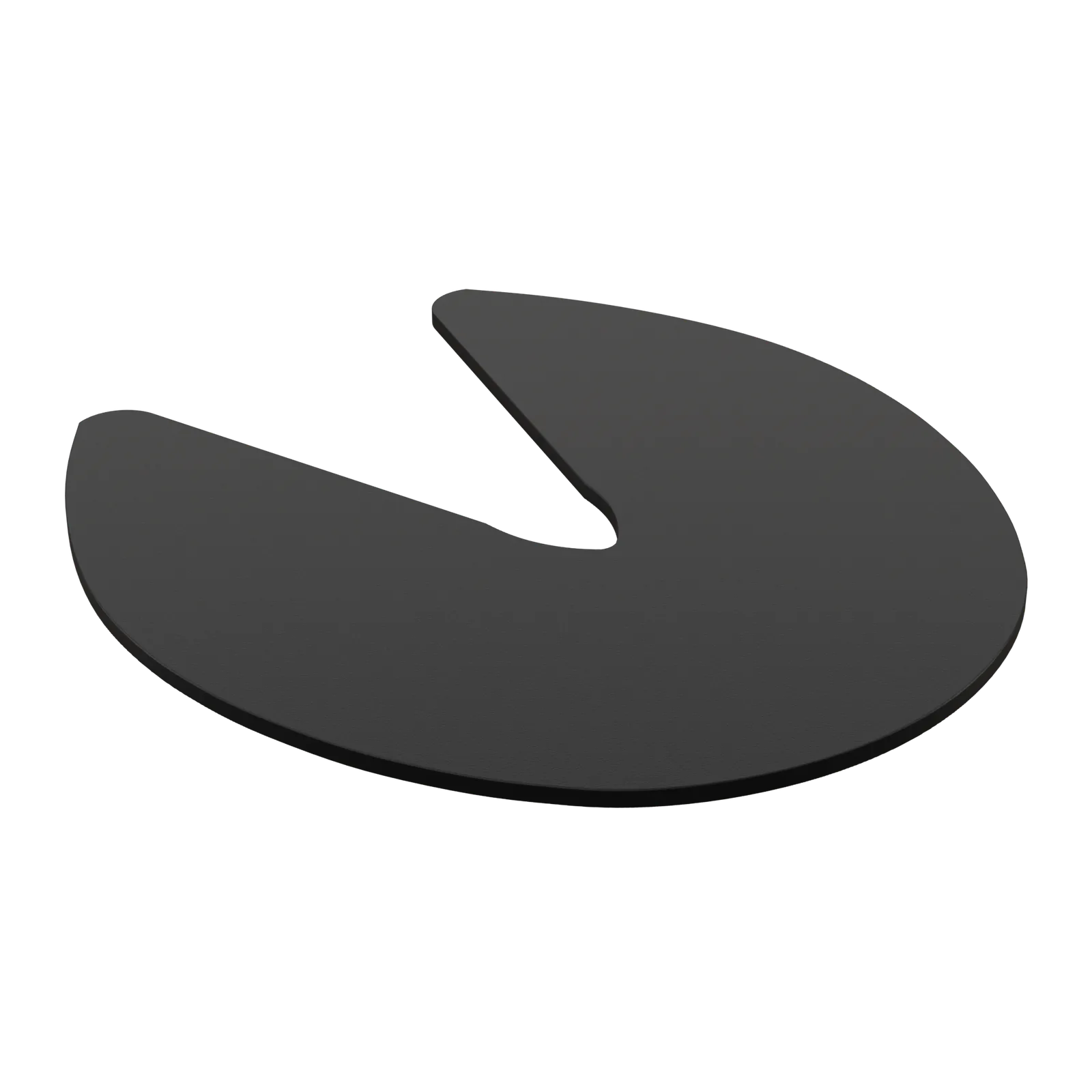
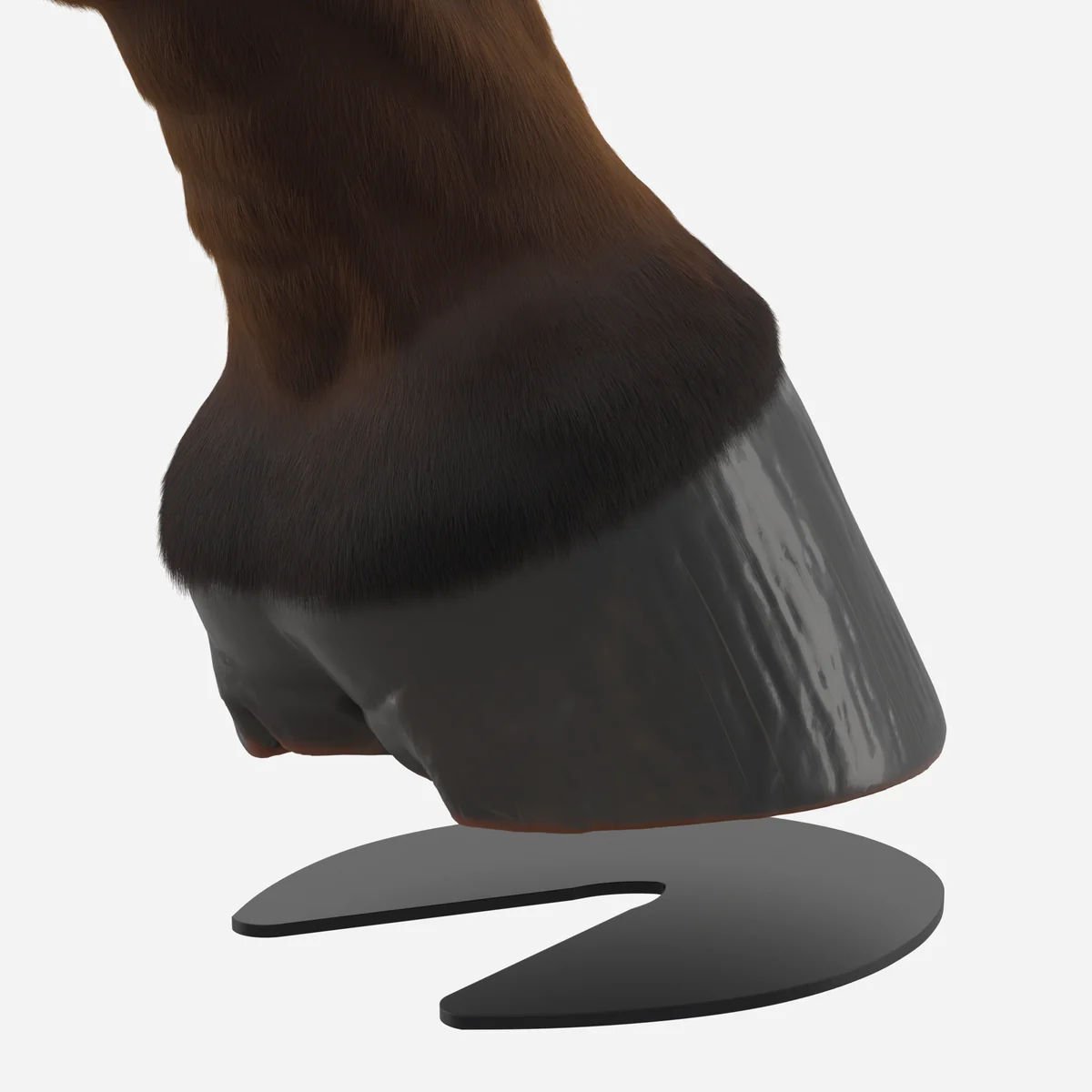
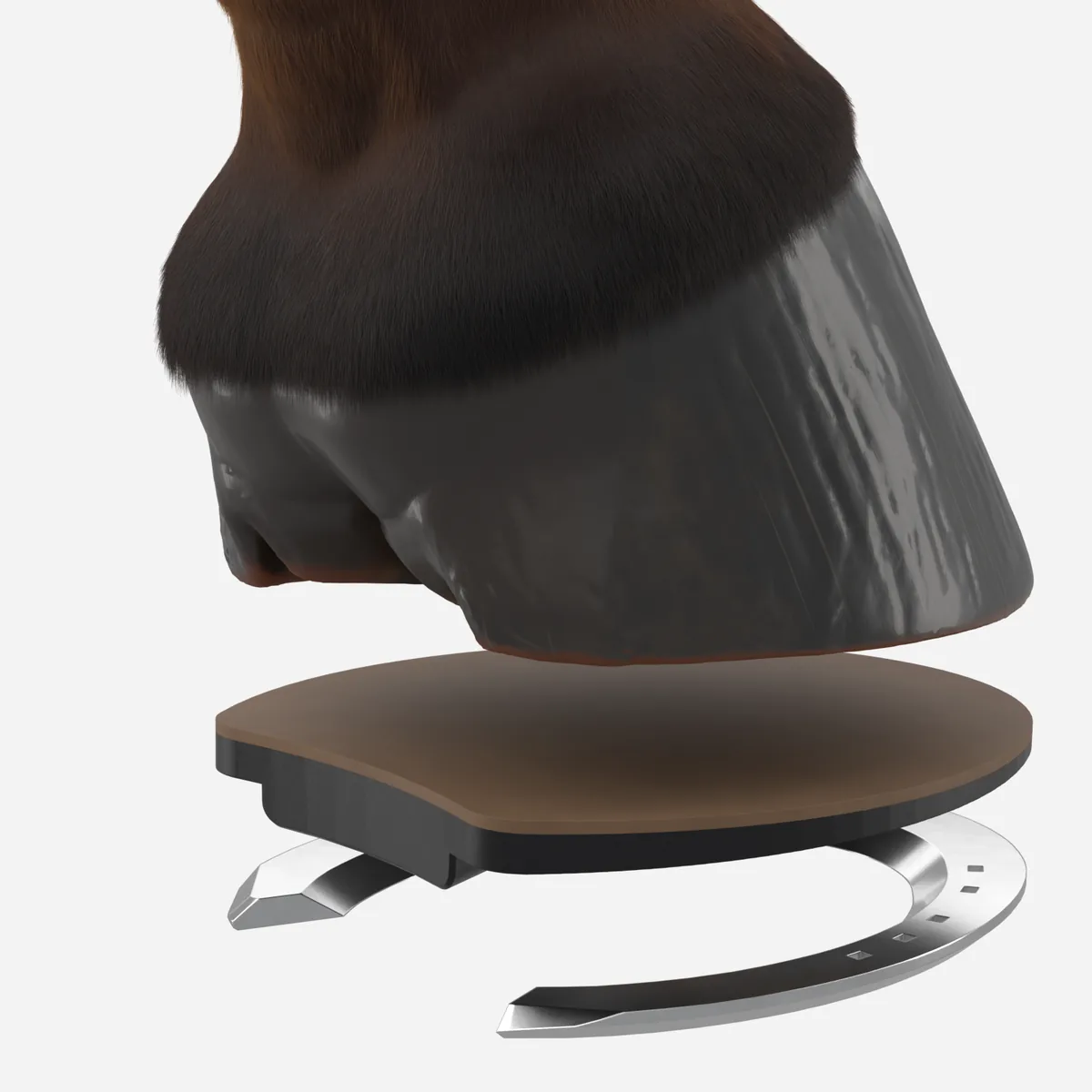
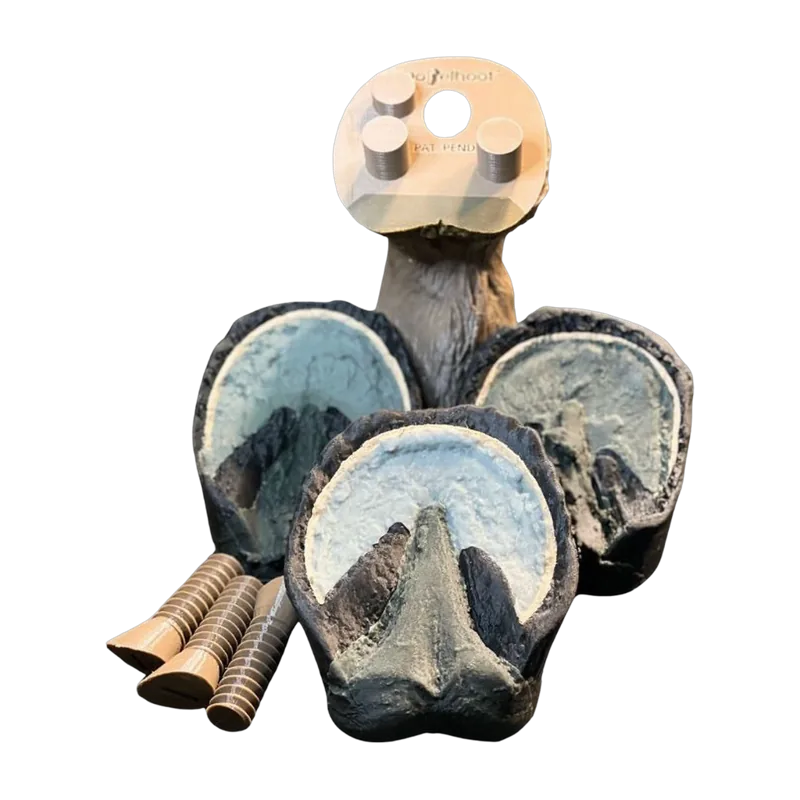
These are not boots. They are not designed to hug the hoof capsule all the way round like a molded shell. The fit that matters is at the weight-bearing surface and where the adhesive contacts the wall. Space higher up the hoof is normal and, in a rehabilitation context, often desirable. You do not want a rigid rim pressing on a compromised coronary band or a hoof that is going to change shape over the coming weeks.
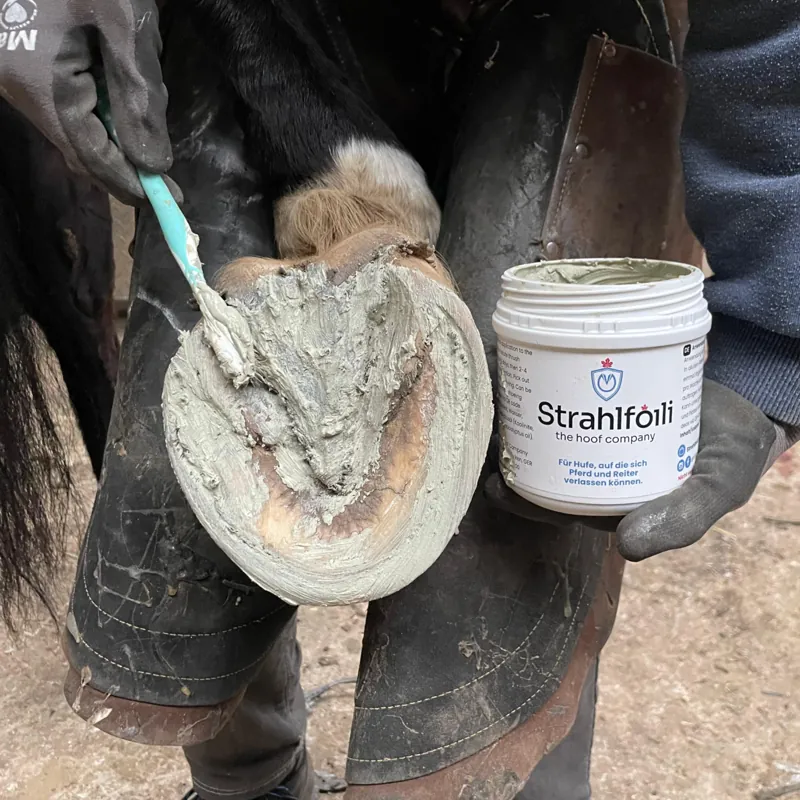
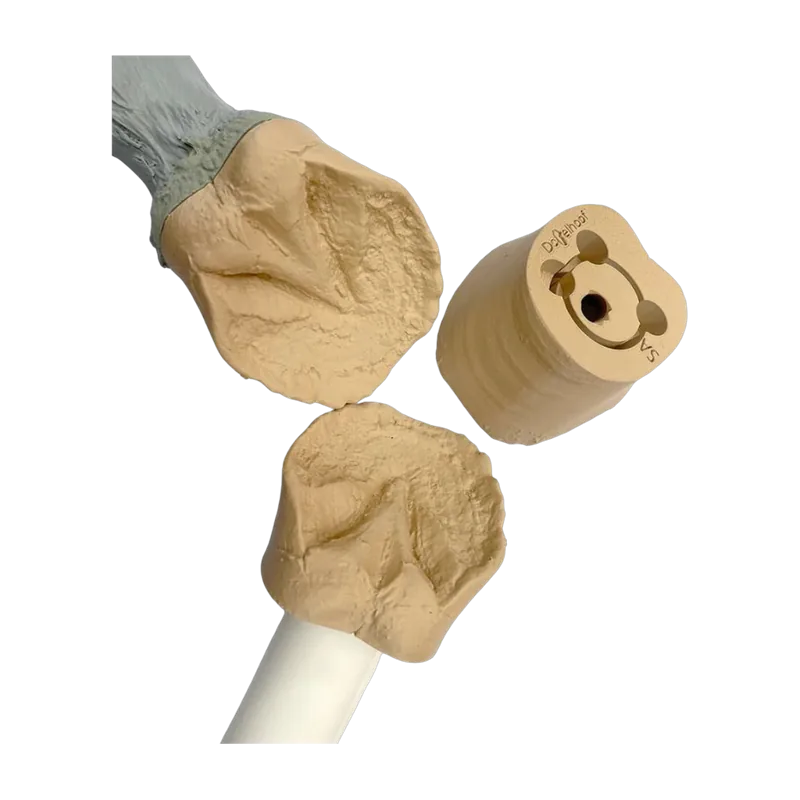
Impression material is what closes the gaps that need closing. It is part of the system, not a fix for bad sizing.
Between sizes
You will land between sizes. Everyone does. It is the most requested change we get. One farrier put it plainly after a first application: please make half sizes soon.
We hear it. In the meantime, here is the honest guidance:
For rehabilitation pads, size up rather than down. A slightly generous pad with impression material taking up the difference will be more comfortable than a tight one. One farrier who used them for the first time found they fitted tighter than expected and had to make it work. A size up would have made that day easier.
For glue-on shoes, fit is tighter and you have less latitude. A shoe that is too large leaves gaps at the cuff, and as covered elsewhere on this journal, a gap is where a failure starts. Choose the size that fits the trimmed foot, because the shoe is not shaped to fit.
For anything unusual, ask first. Because we print to order, we can often do things a stock range cannot.
The sizes people do not know exist
A recurring theme in the group is someone concluding that nothing on the market fits their animal. Usually something does.
Very small feet. We added Squish Pads in sizes 9x0 and 10x0 for exactly this. When someone posted about a rescued mini measuring 68mm wide by 72mm long, laminitic and overweight, the assumption in the thread was that she was too small for anything. She was not.
Very large feet. The range runs the other way too. There are 9-inch pads that have gone onto Shire broodmares.
Donkey feet. Donkey hooves are a different shape, not a smaller horse hoof, and the donkey range reflects that, including larger donkey sizes 6 and 7 for mammoth stock.
Ponies and minis in glue-ons. Cuffed shoes with a rolled toe fit from 65mm wide.
If you have measured and still cannot find a size, message us before you give up. Made-to-order means made to order.
A note on measuring donkeys and minis
Small feet are proportionally less forgiving. A five-millimeter error on a 200mm hoof is nothing. The same five millimeters on a 68mm hoof is a size.
Take the measurement twice, on a clean freshly trimmed foot, and photograph it. For donkeys in particular, get the width at the true widest point. Donkey feet are typically more upright and narrower than a horse foot of comparable length, and people used to horses consistently overestimate.
Before you order, check
- Trimmed foot, not a foot due a trim
- Width at the widest point
- Length from heel buttress to toe
- Both fronts, or all four. Feet are rarely a matched pair, and a high-low horse may need two different sizes
- A photograph with a ruler in it, saved on your phone
That last one takes ten seconds and saves a great deal of back and forth.
If you get it wrong
You will occasionally order the wrong size. It happens to experienced farriers. The group has more than one post from someone selling on a brand-new pair that never touched a horse.
Talk to us rather than reselling it. Unused product can usually be sorted out, and we would rather you ended up with the right size than lost money on a mistake.
Measuring for glue-on shoes is a different job
Pads and shoes are sized on different logic, and people who have got comfortable measuring for one often trip up on the other.
With a pad, you are fitting a surface to the bottom of a foot. With a cuffed glue-on shoe, you are fitting a shell around the lower wall, so the shape of the foot matters as much as the raw dimensions. A foot that is contracted, or asymmetric, or has a flare on one side, will not sit in a shoe the way its width and length suggest it should.
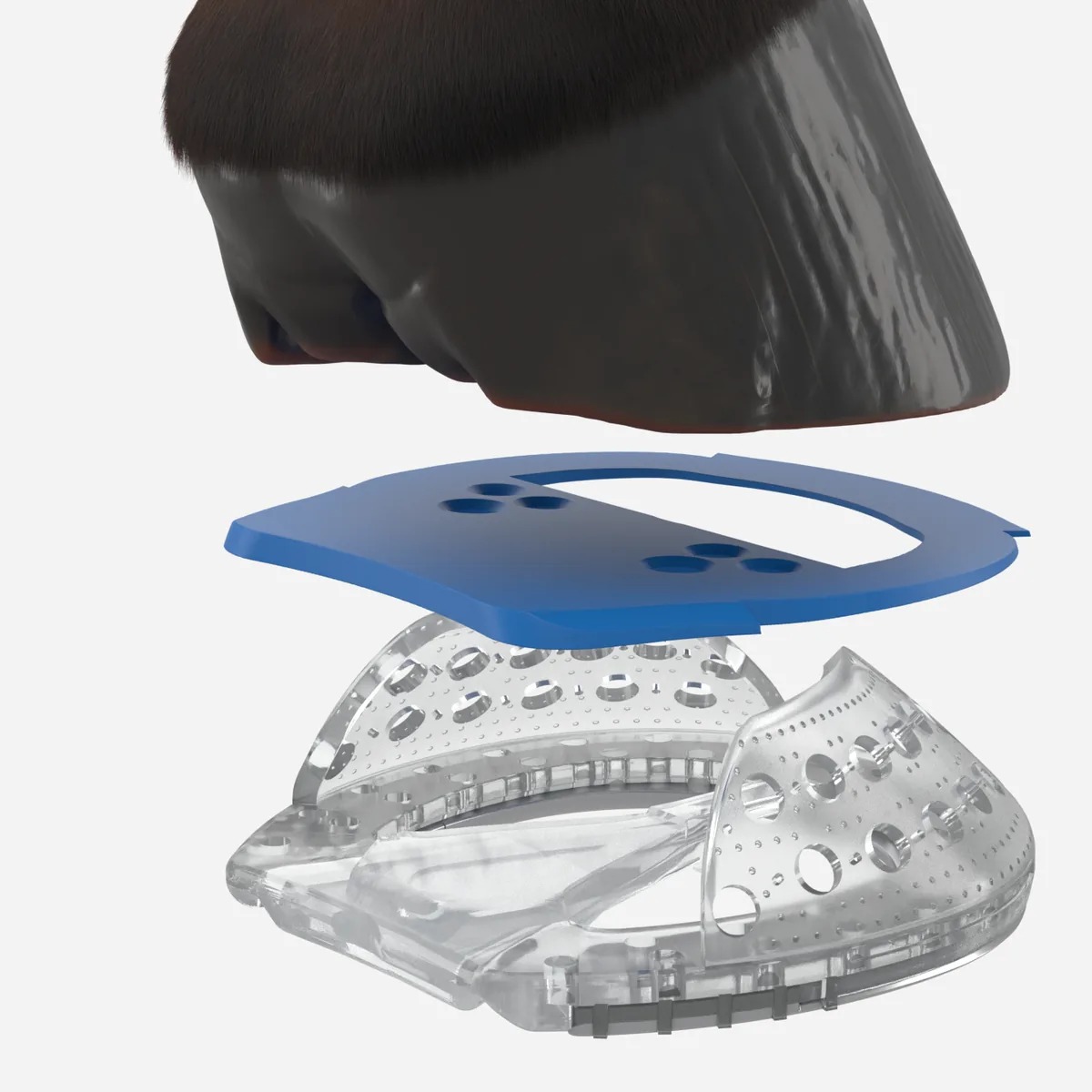
Two practical rules. First, choose the size that fits the trimmed foot rather than sizing up to cover a flare. EasyShoes are urethane and are not shaped to the foot. Second, check the fit dry, with the shoe held in place, before you commit any adhesive, and look specifically for gaps at the cuff, because that is where failures begin.
Feet change, so measure again
The measurement you took in March is not the measurement in September, and this catches people out on repeat orders.
A foot in rehabilitation changes shape as it recovers, often substantially. Flares grow out, heels come back under the foot, a contracted foot spreads as it becomes comfortable. That is the whole point, and it means the size that was right at the start of a project may not be right three cycles in.
Re-measure at least every couple of orders, and always after a significant change in the foot or a long gap. It takes a minute and it avoids the frustration of a pad that fitted perfectly last time and does not now.
The same applies to horses with a genuine high-low pair. Two feet on the same horse can easily be different sizes, and ordering two of the same because they came off the same animal is one of the more common reasons an order does not fit.
Not sure what you are looking at? Send us the photograph with a ruler in it. Between us we have measured a great many feet, and there is no such thing as a silly sizing question.