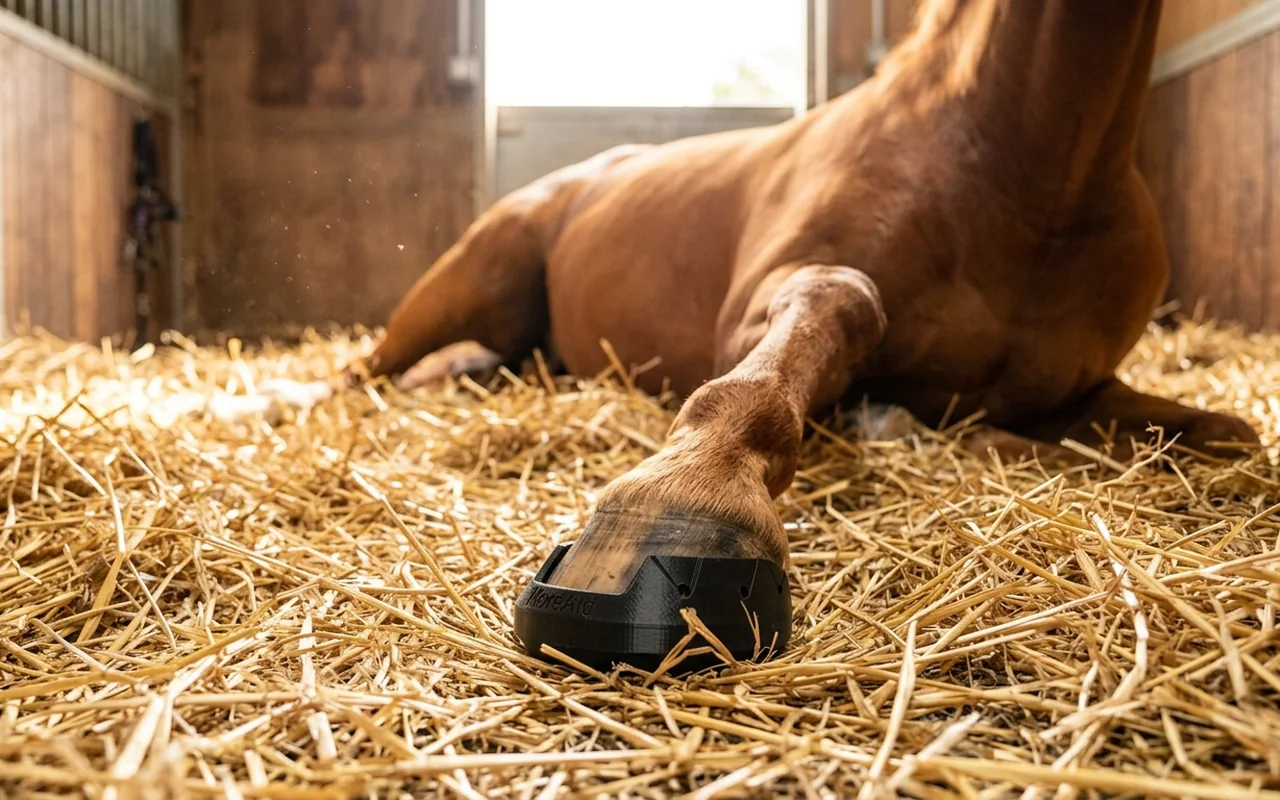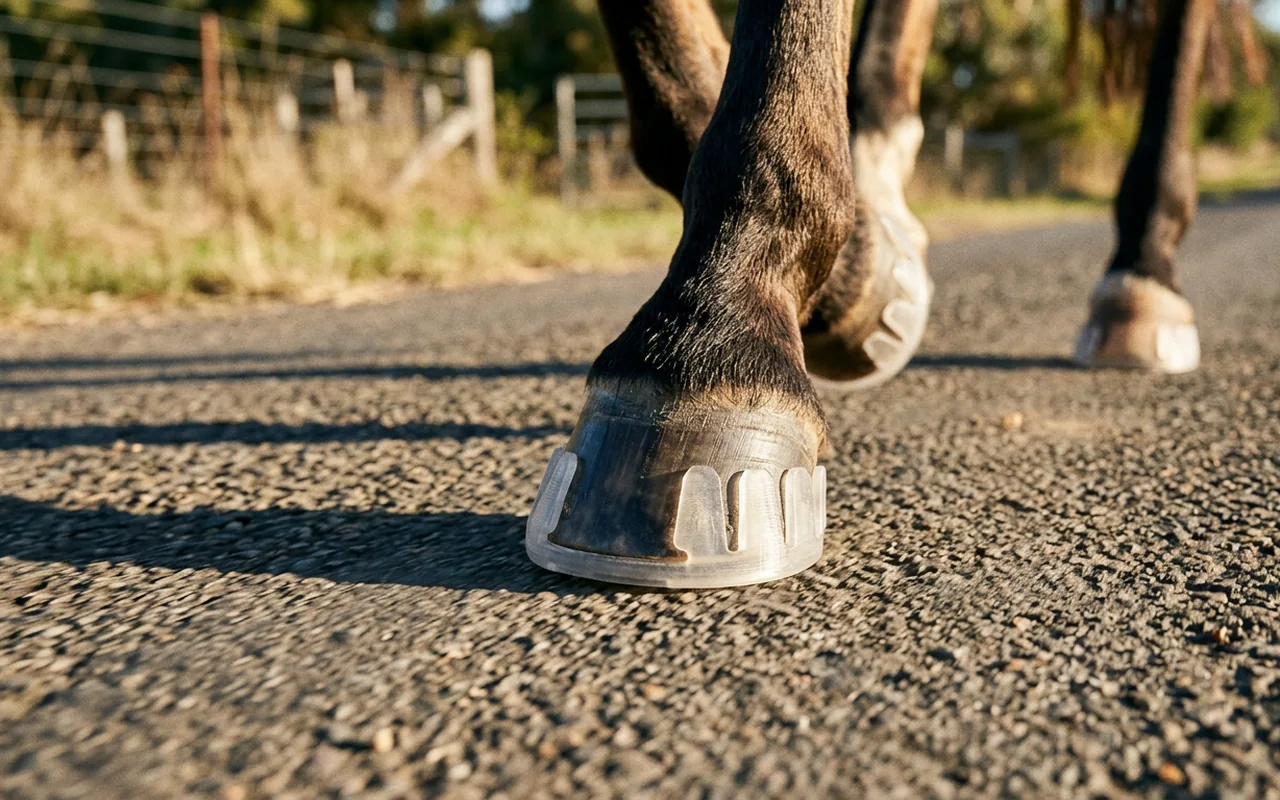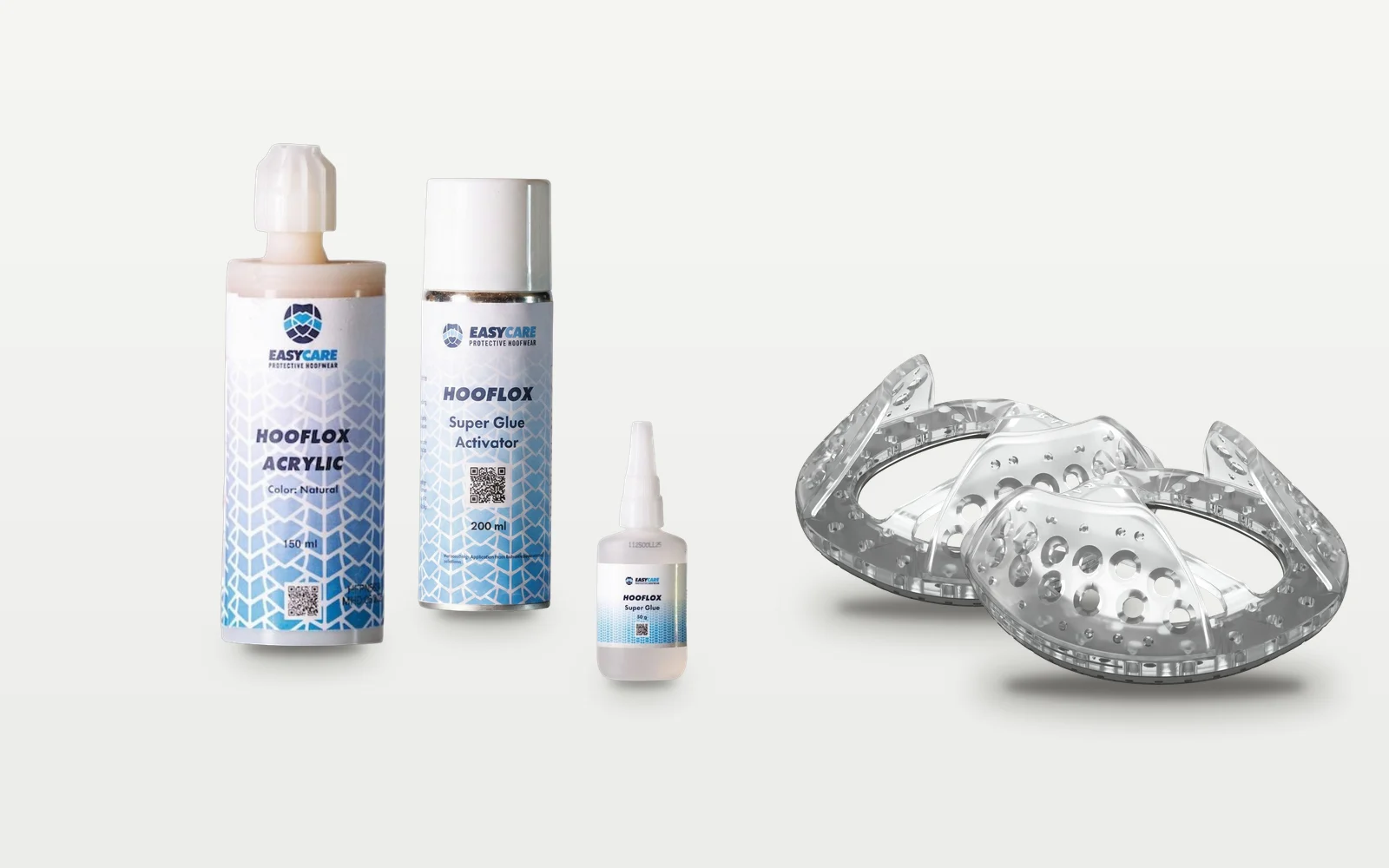

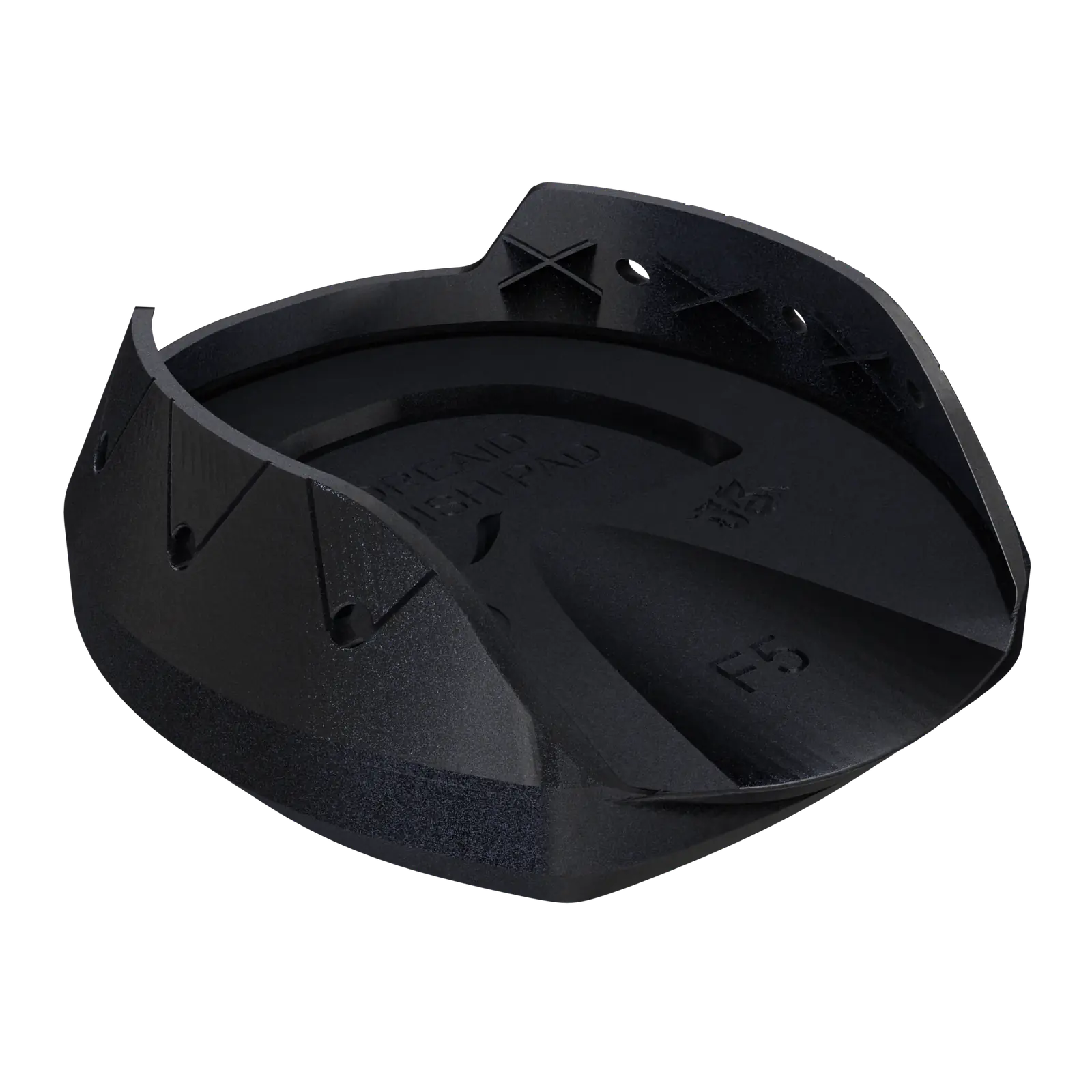
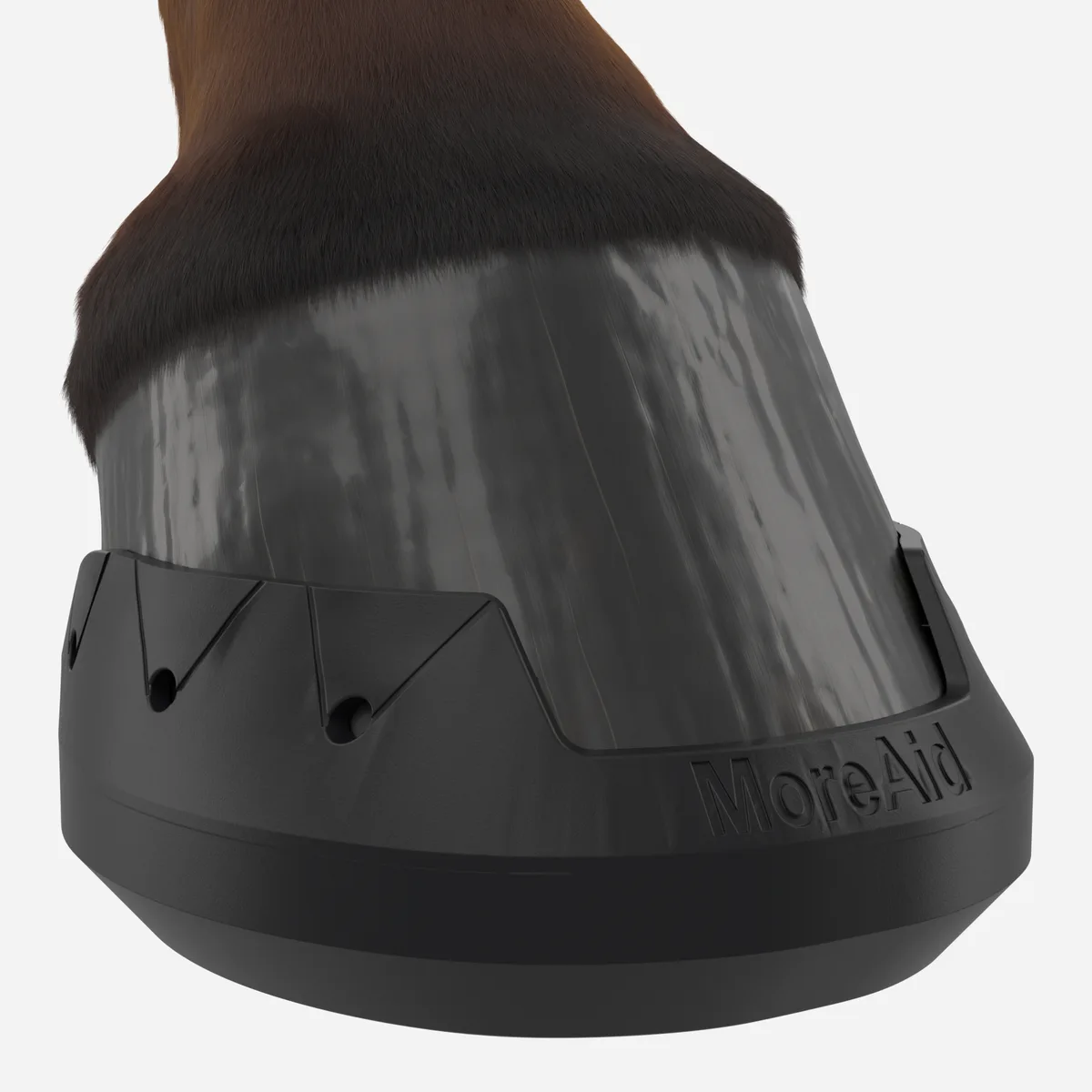
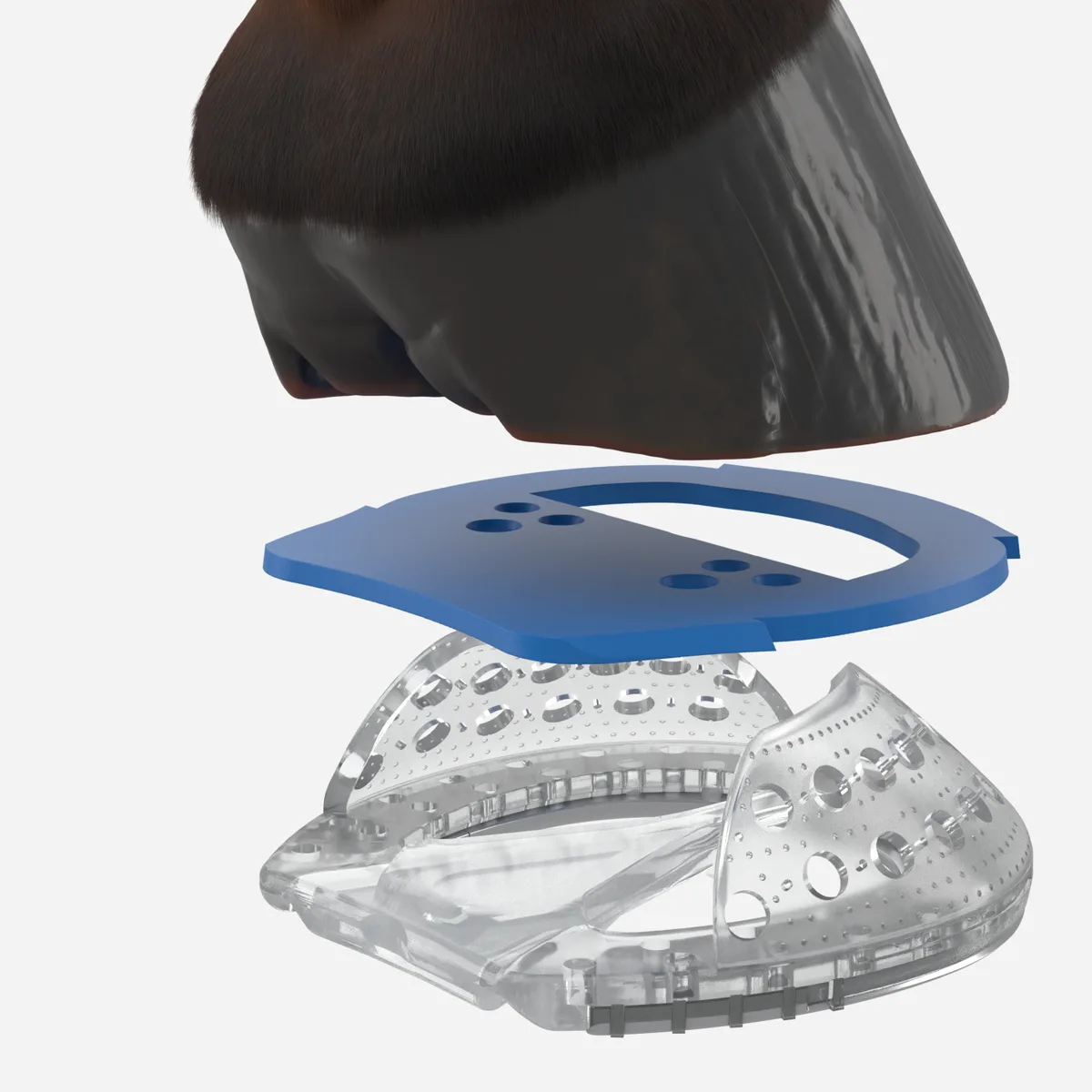
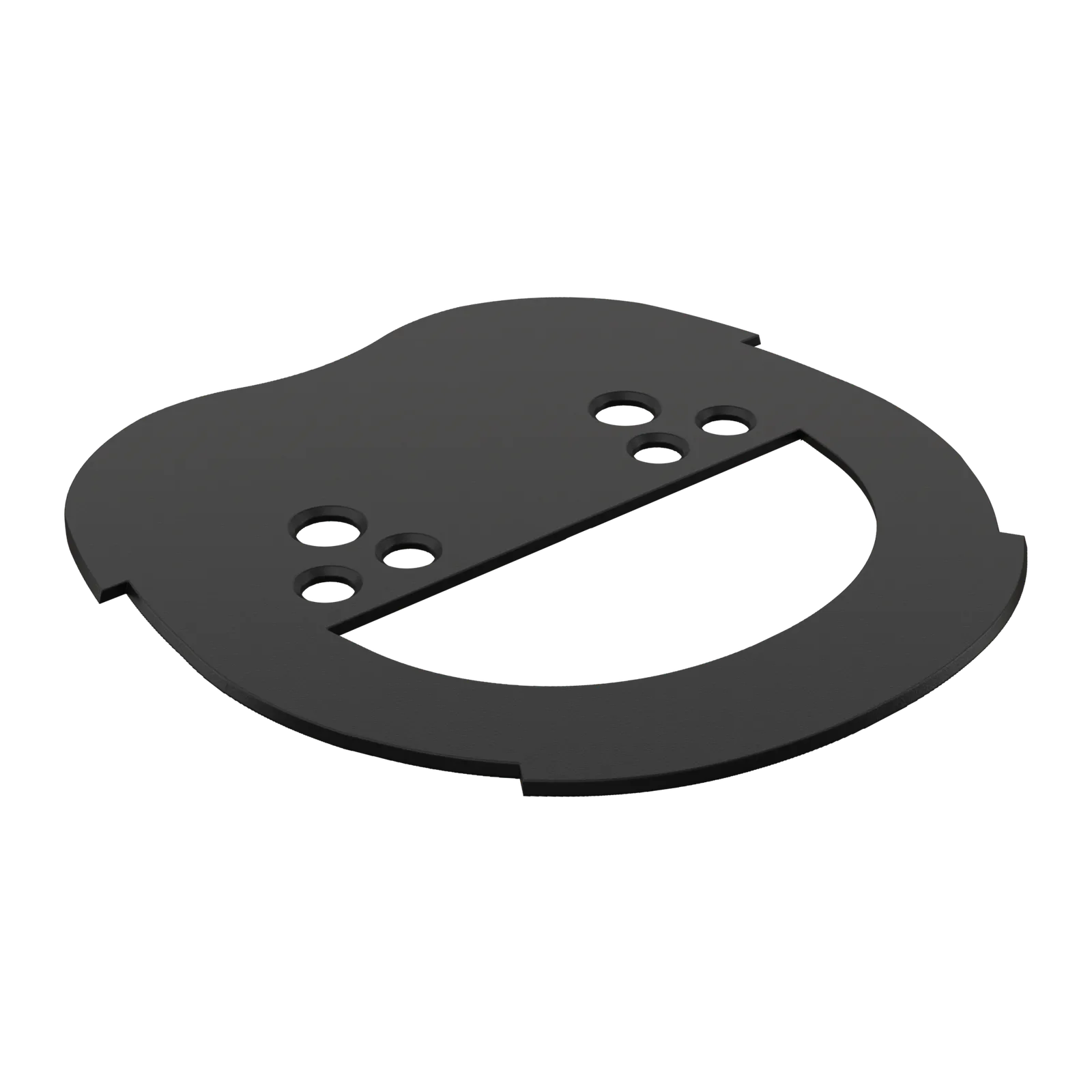
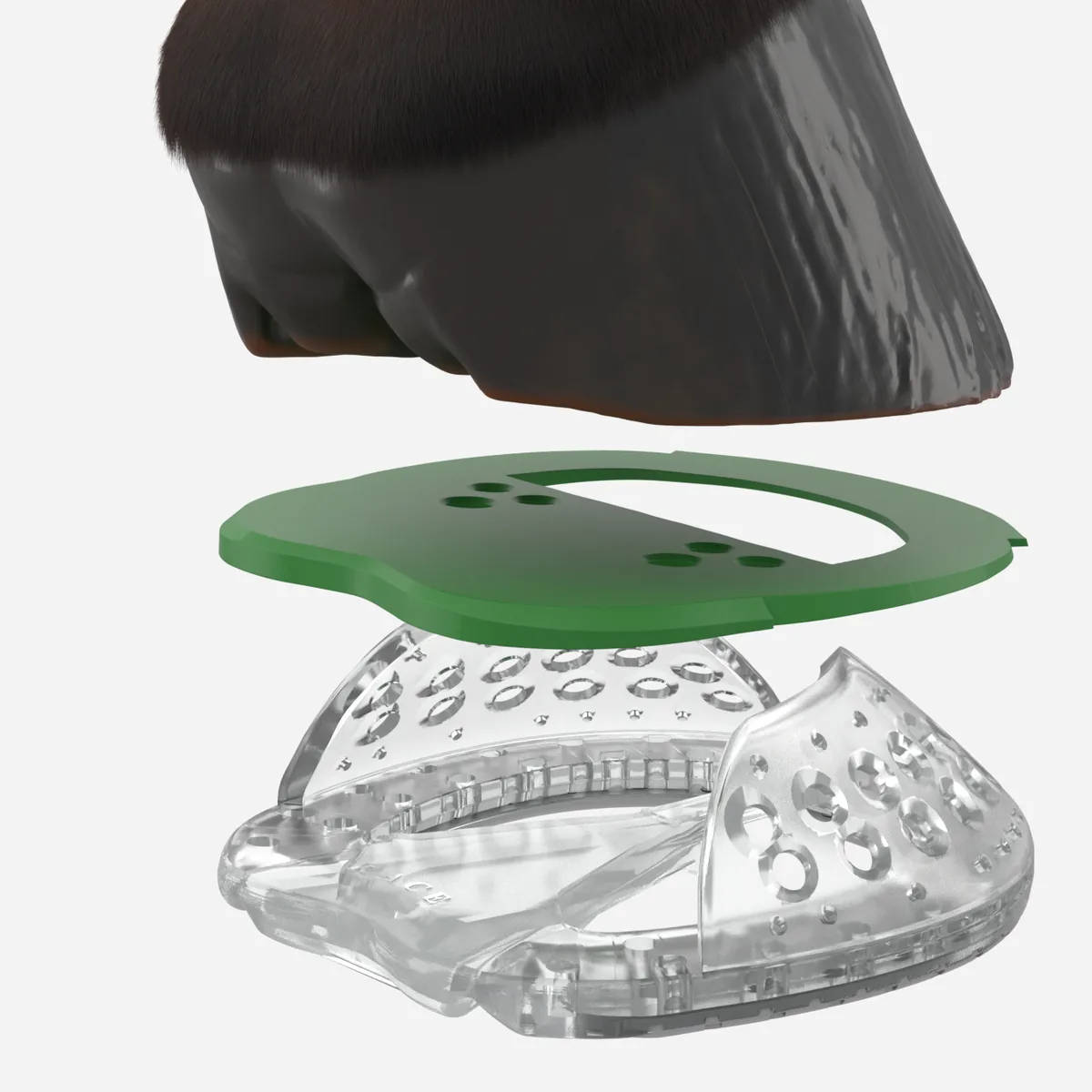
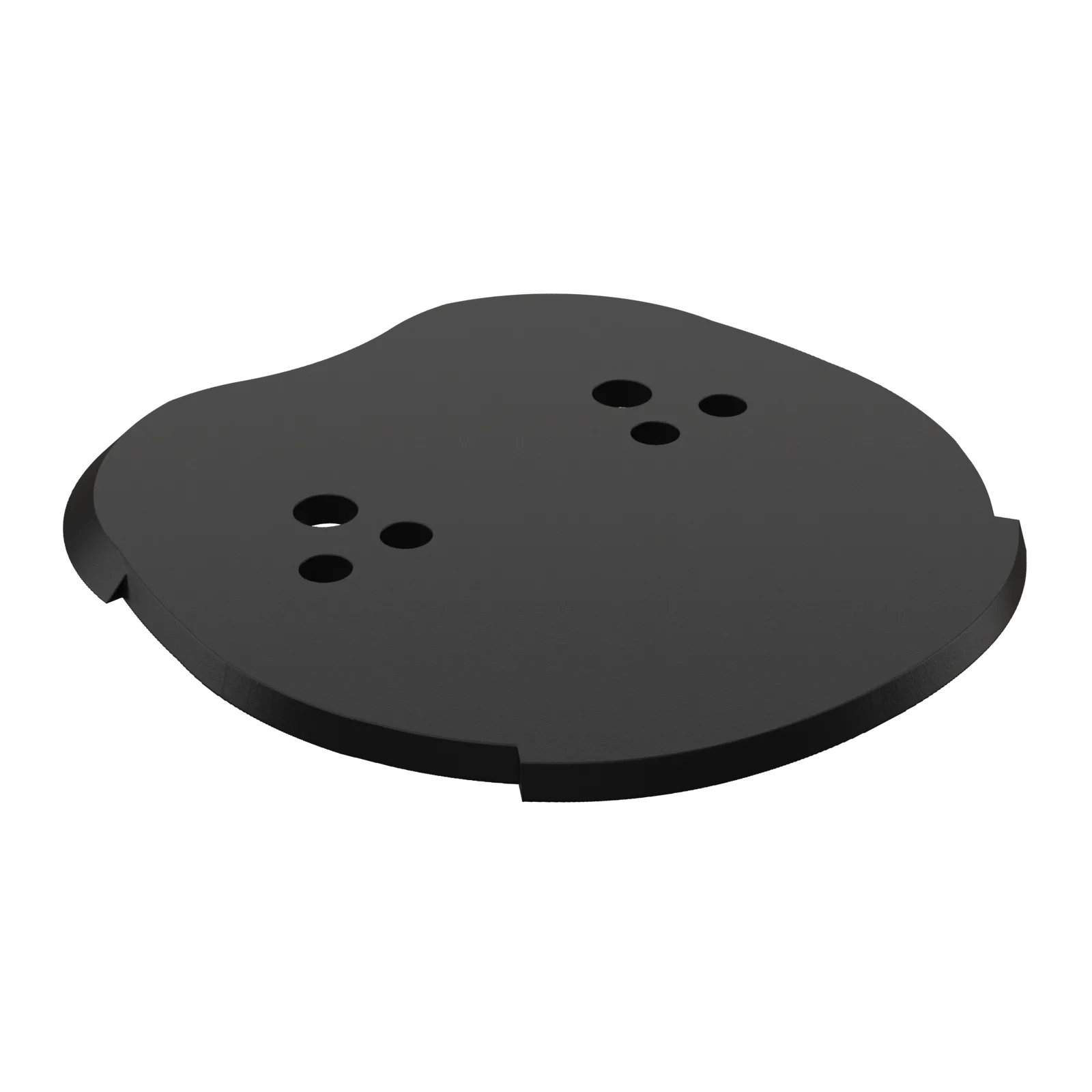
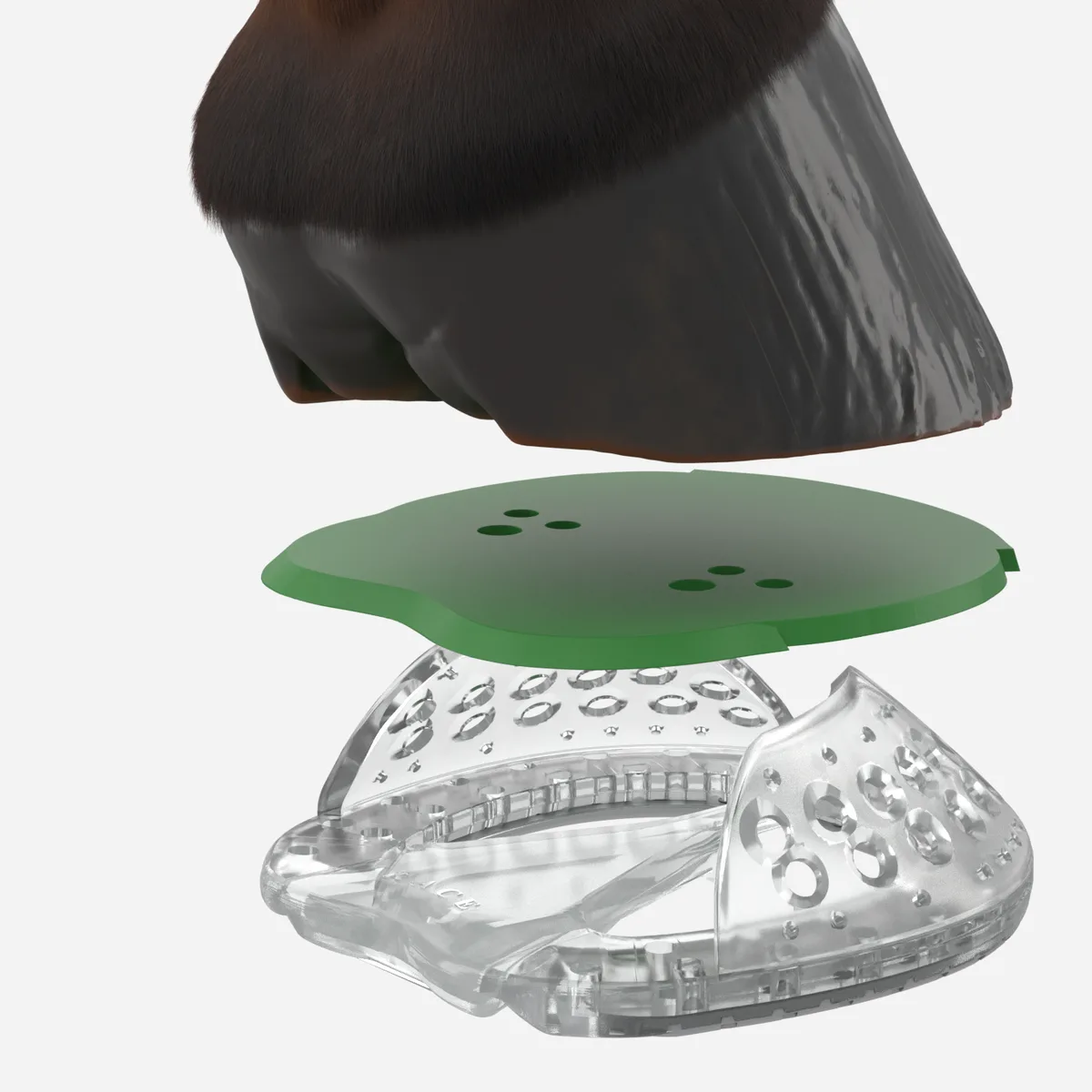
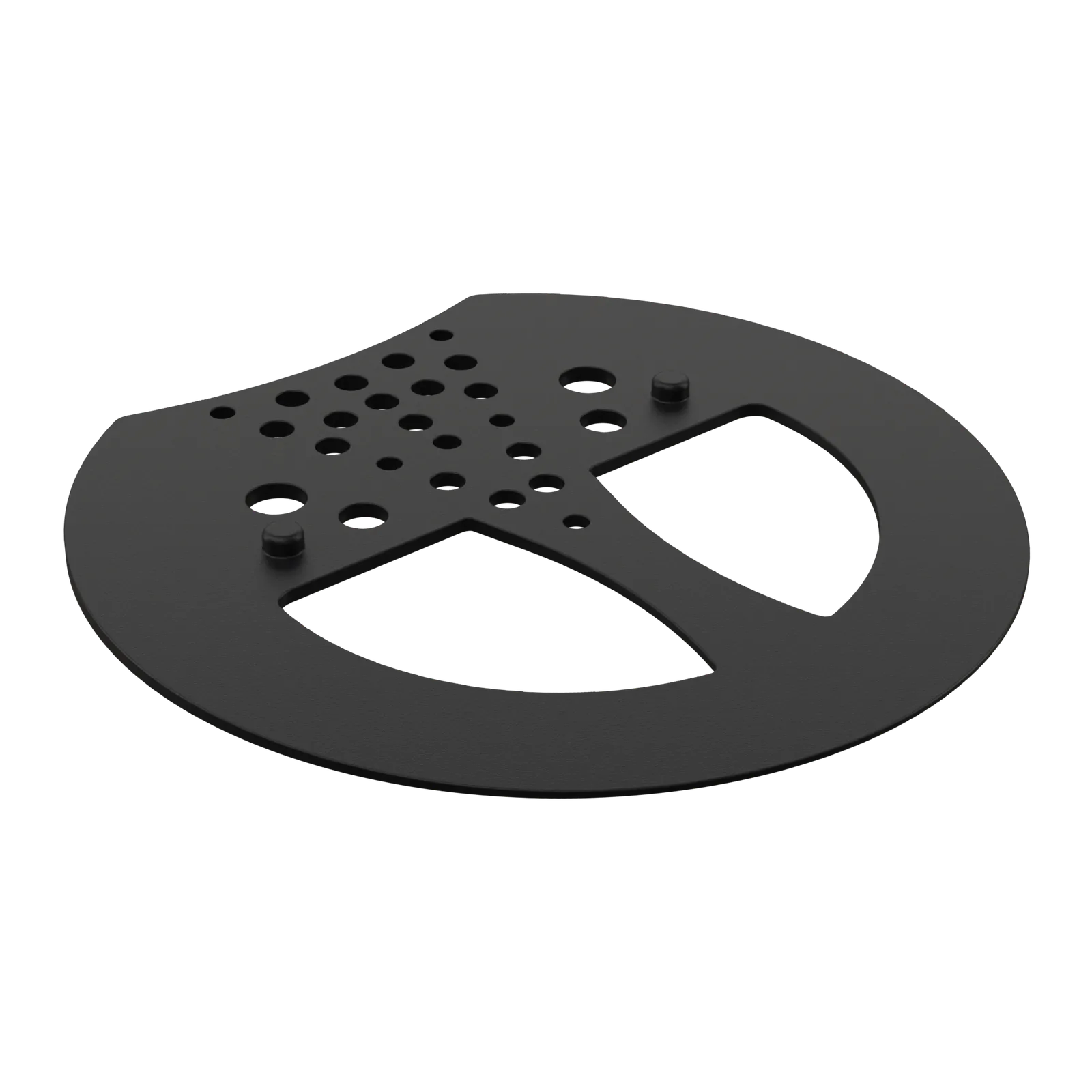
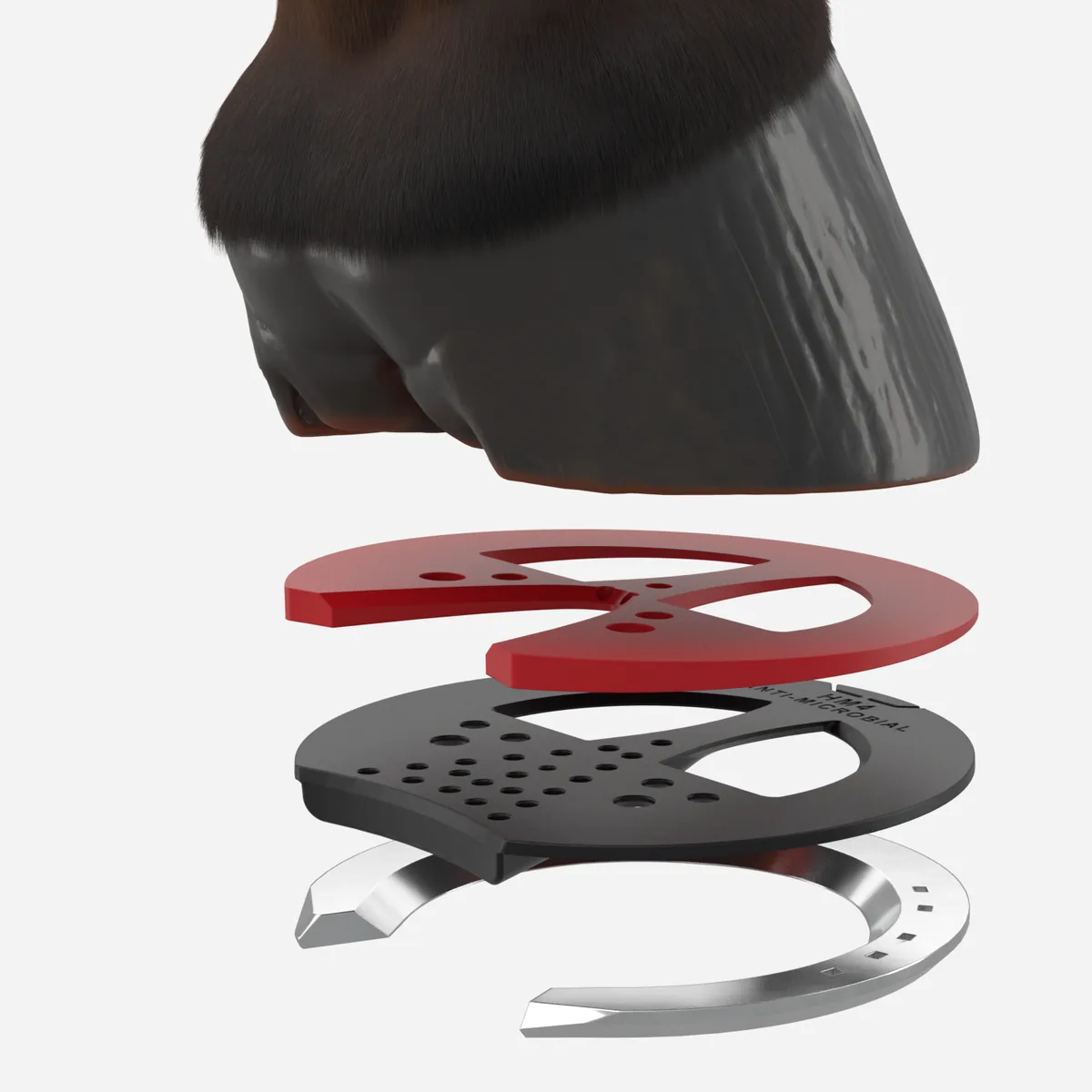
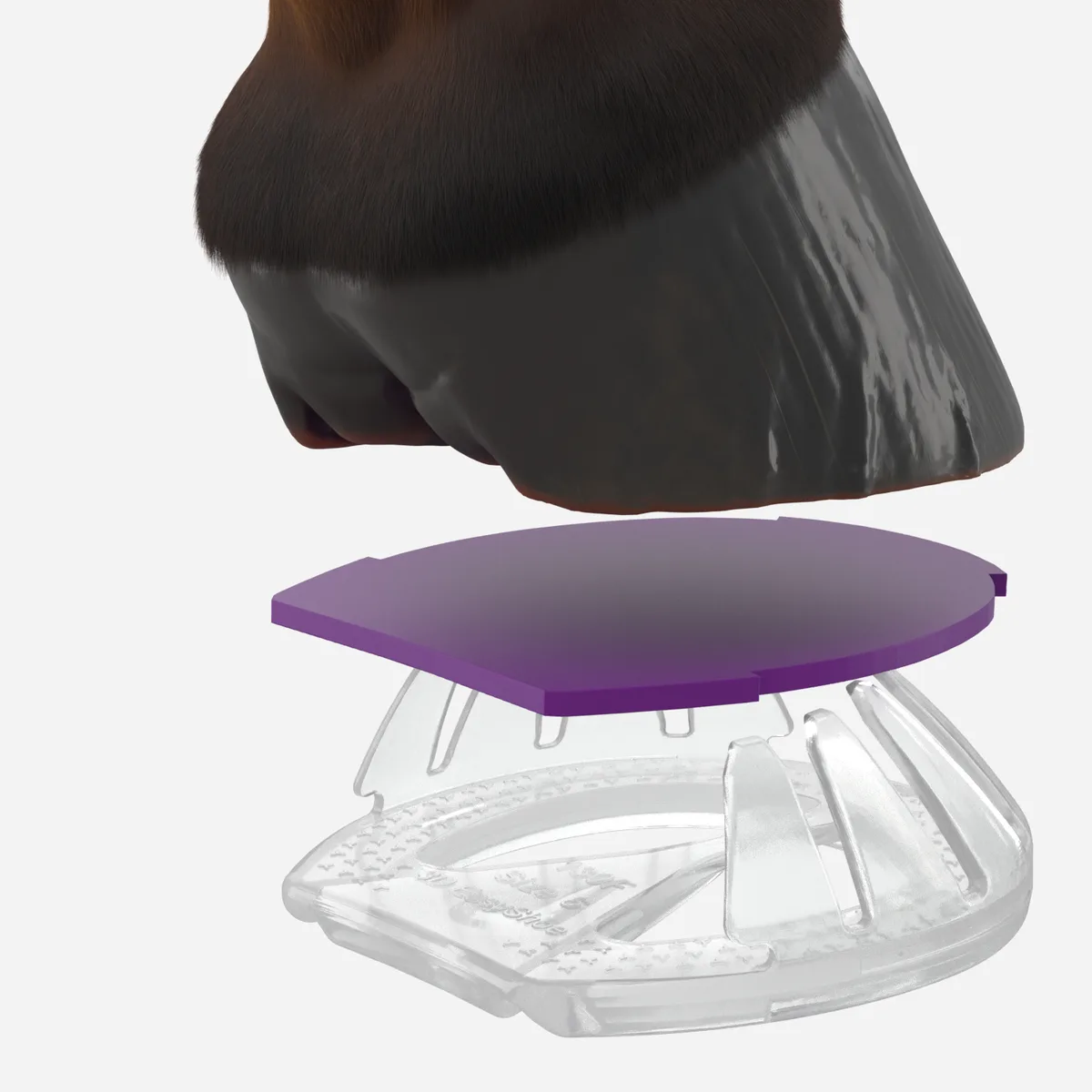
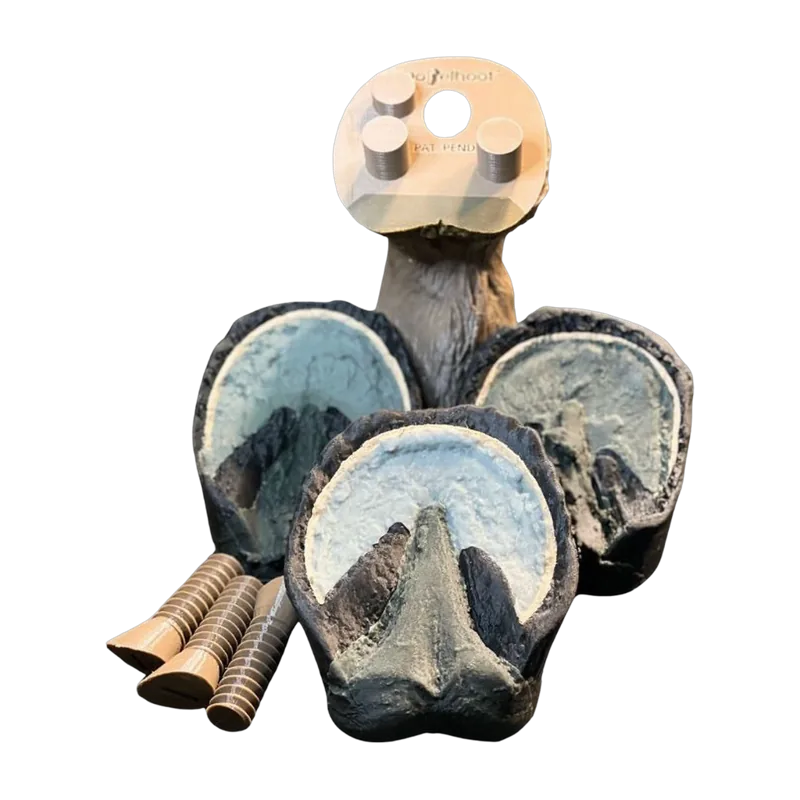
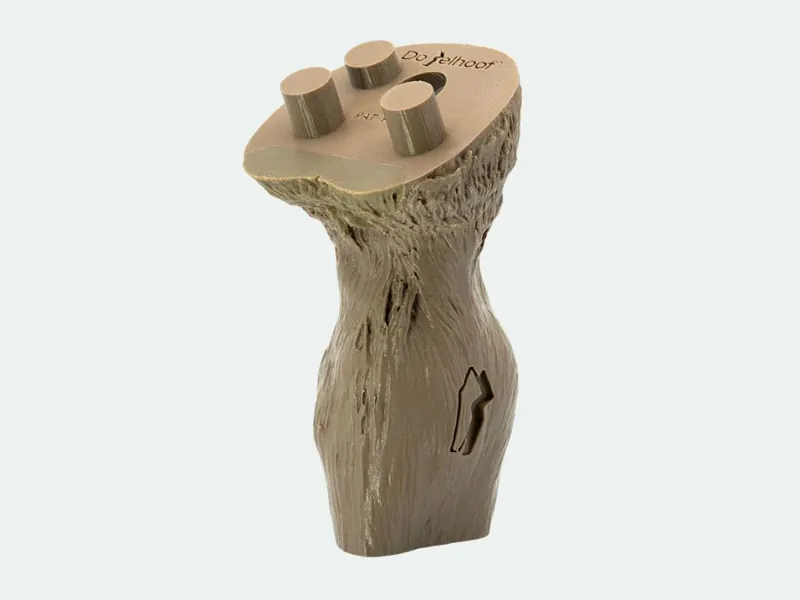
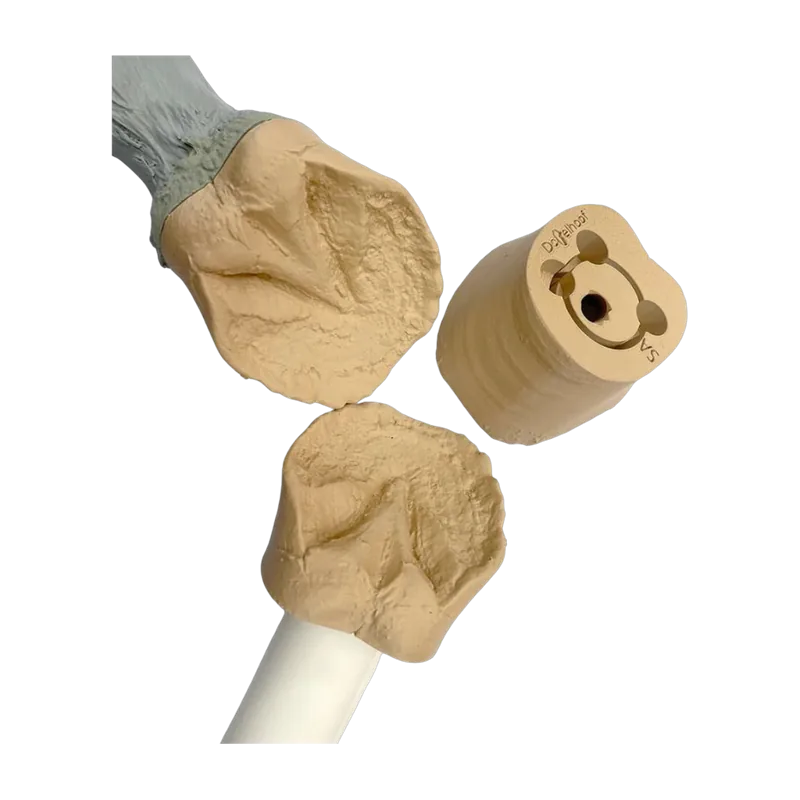
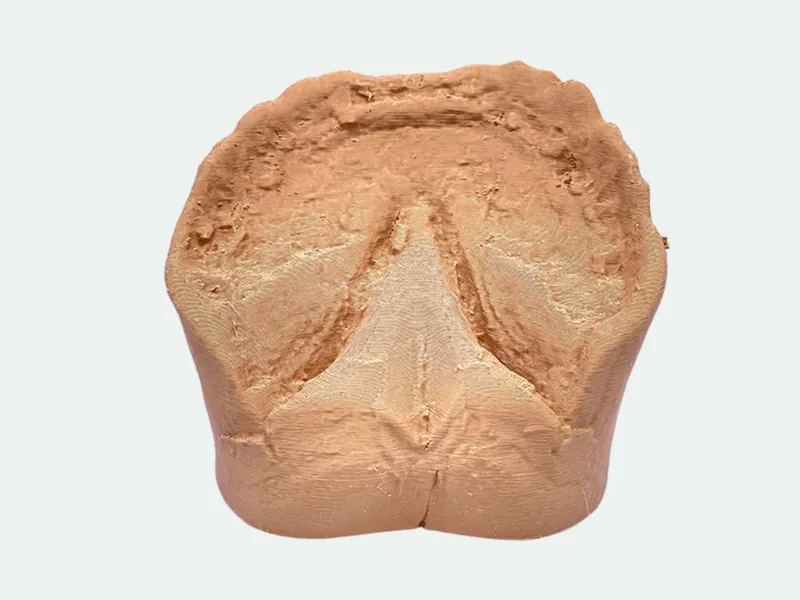
Every insert in the range does one job under the foot. If you can name the job, you can name the insert. This guide is the list, in plain language, with the situations where I would reach for each one.
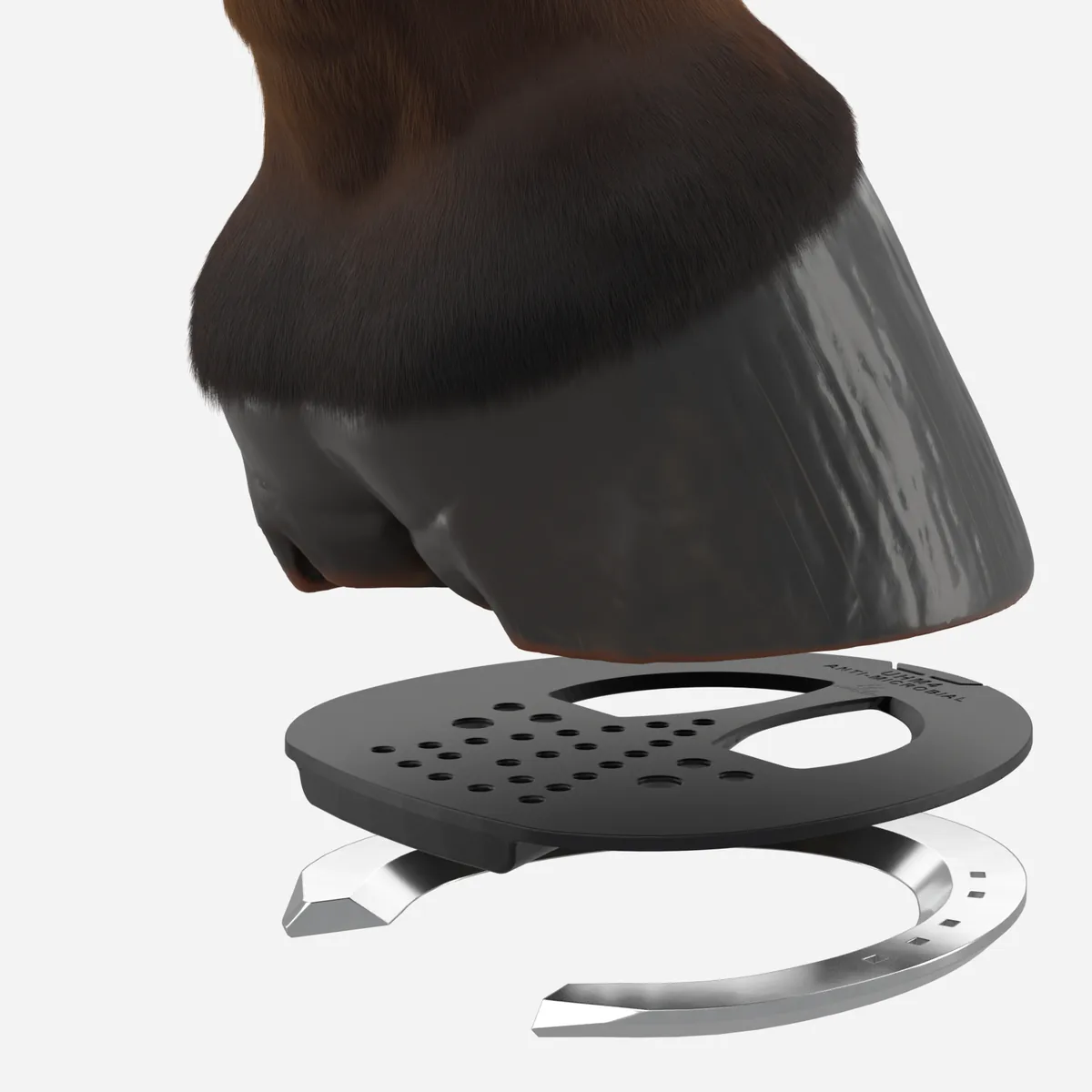
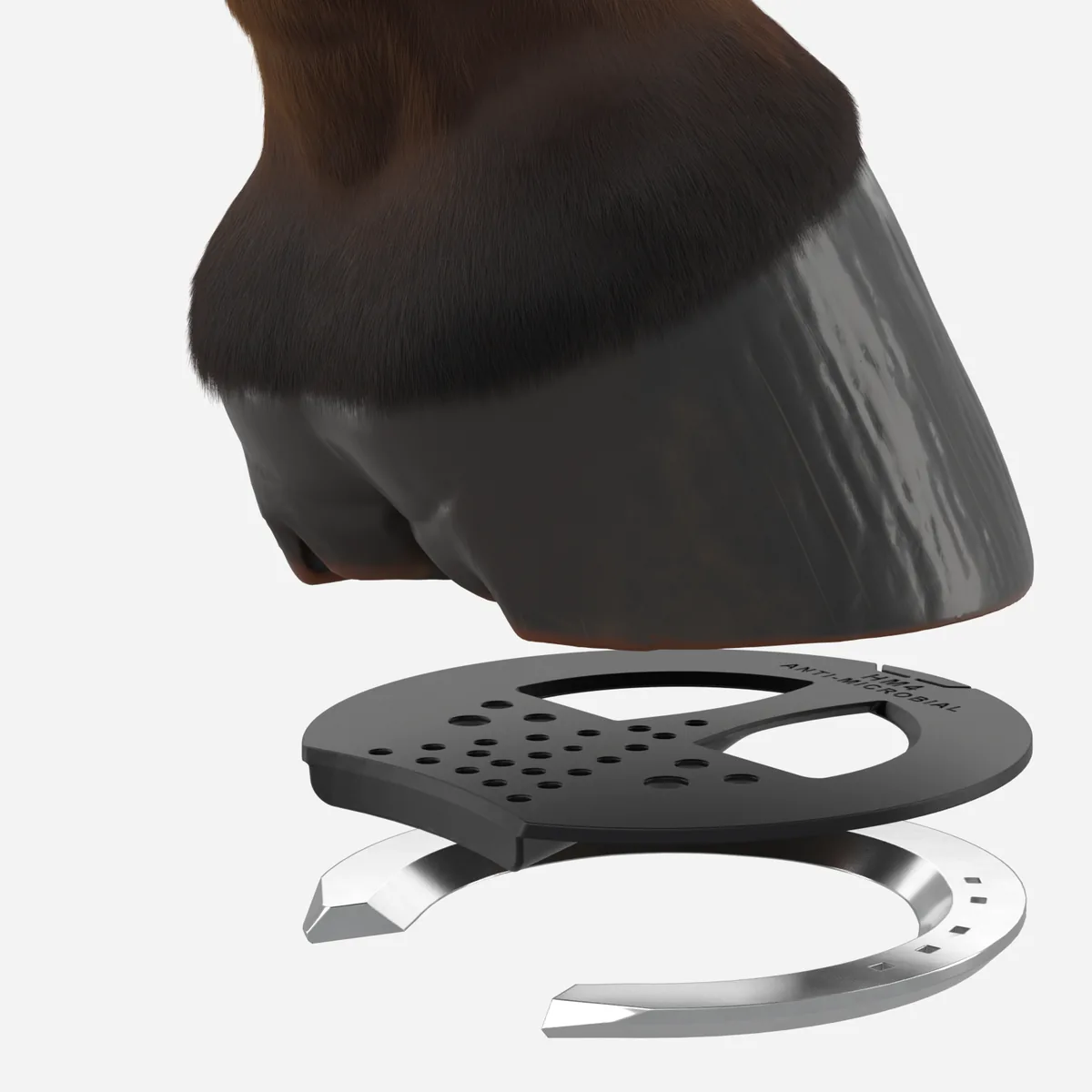
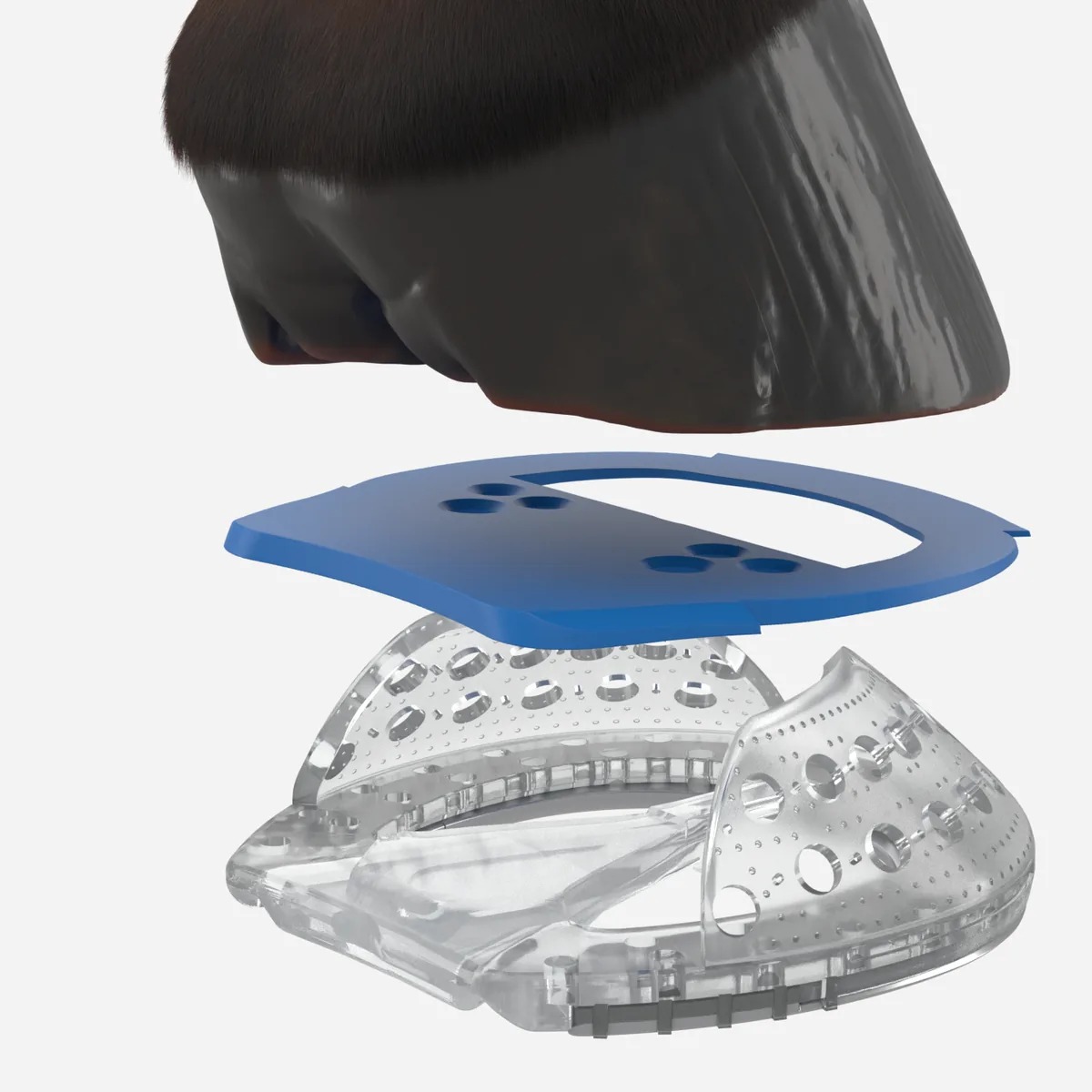
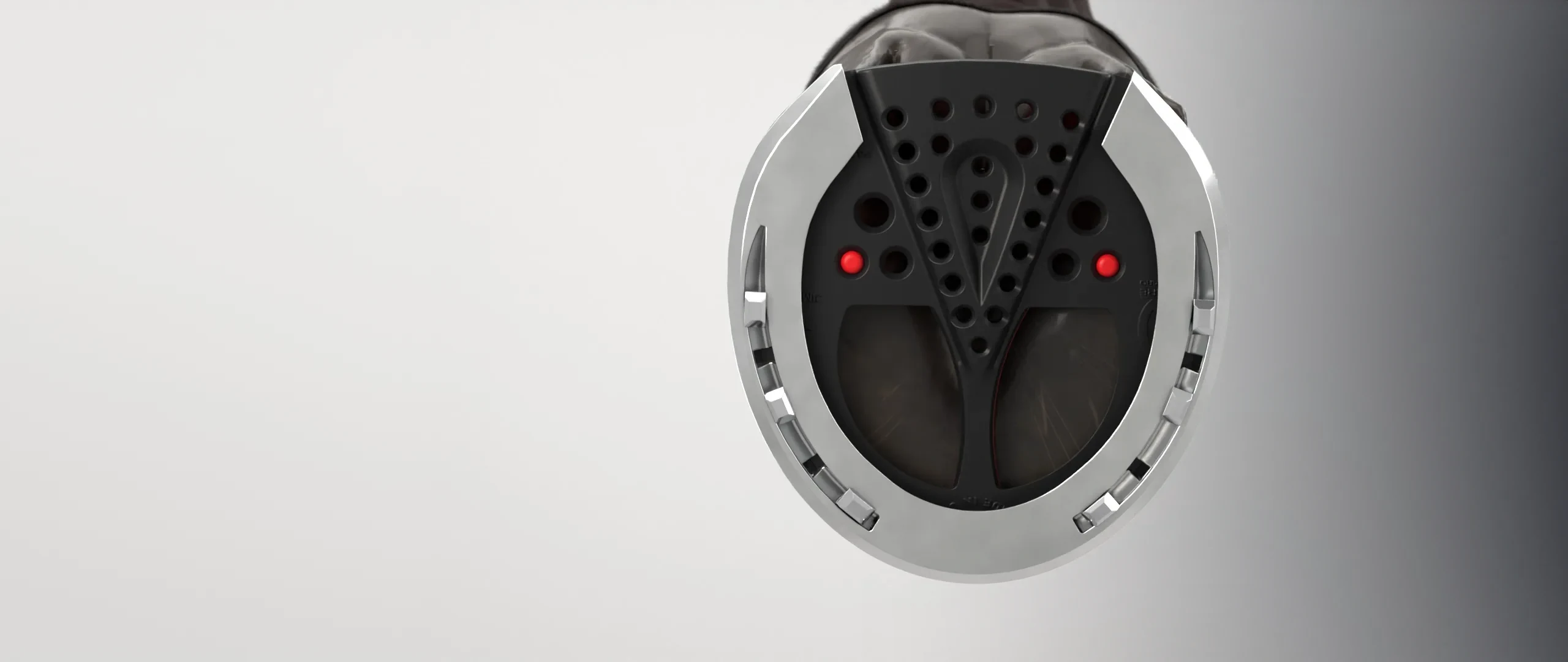
A quick definition first. The pad or the shoe is the part that bonds to the foot. The insert is the part that sits inside it and changes what the sole and the back of the foot are standing on. Same pad, different insert, different mechanics. That is why the inserts are sold separately.
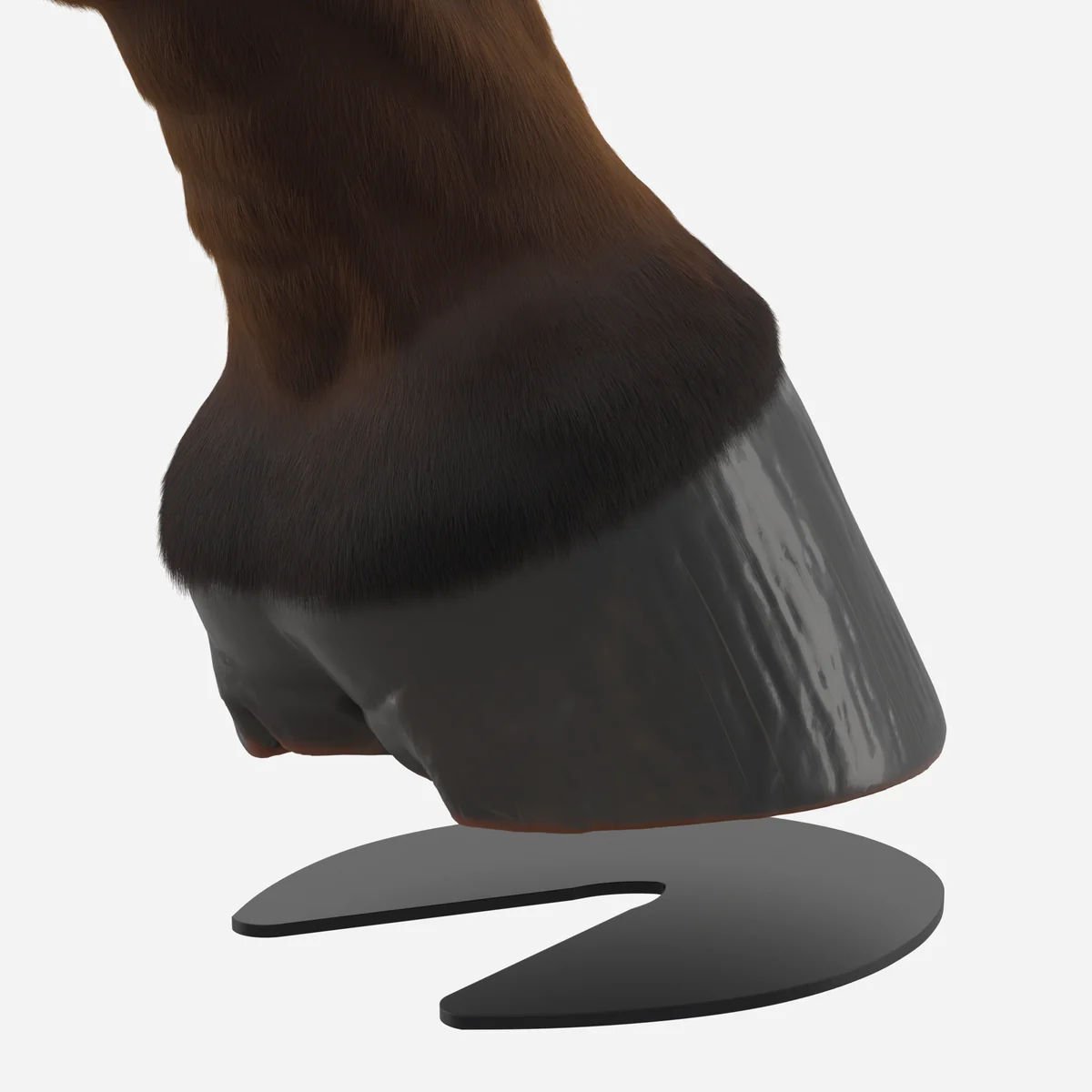
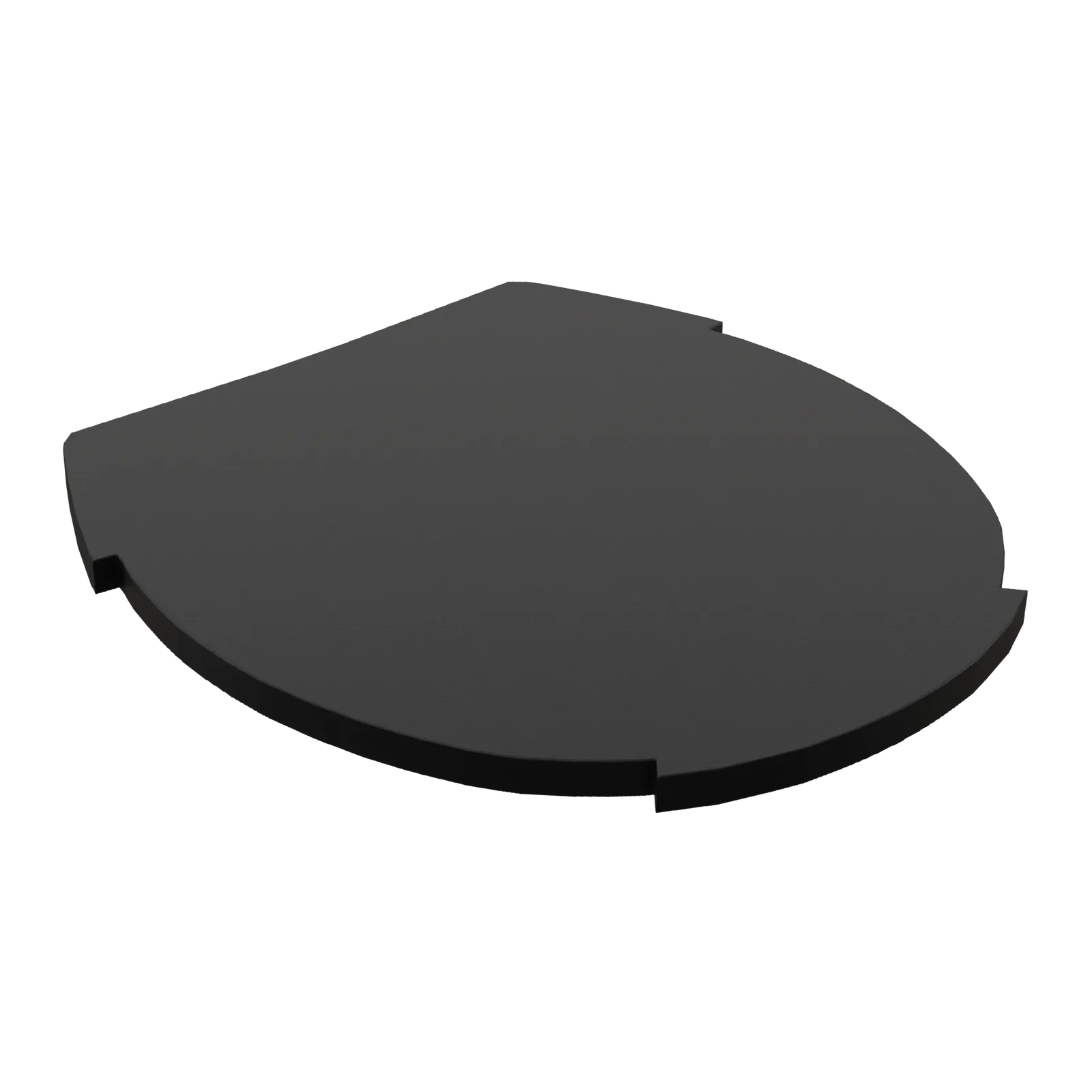
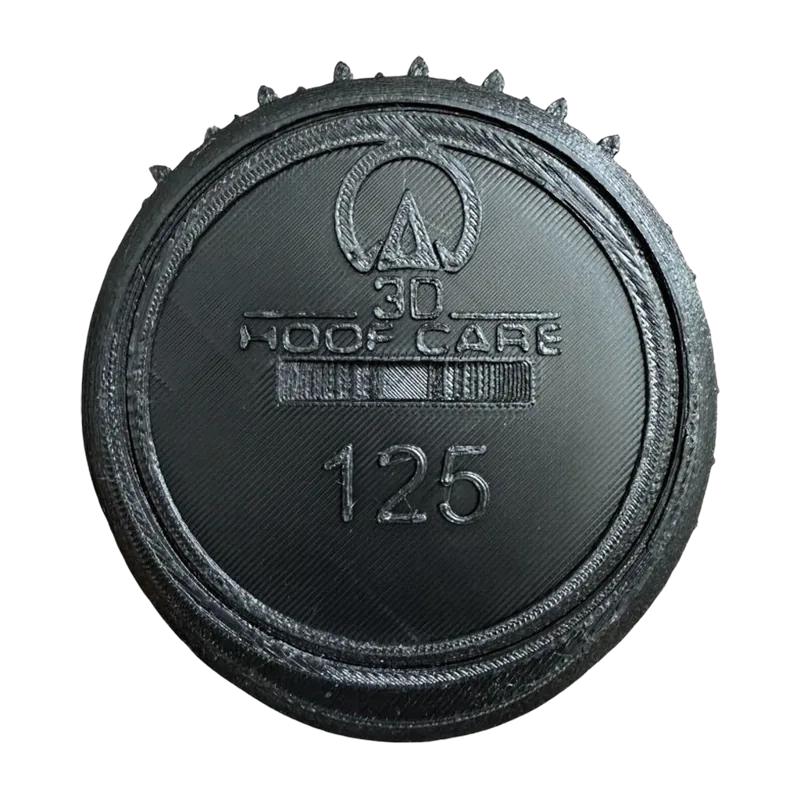
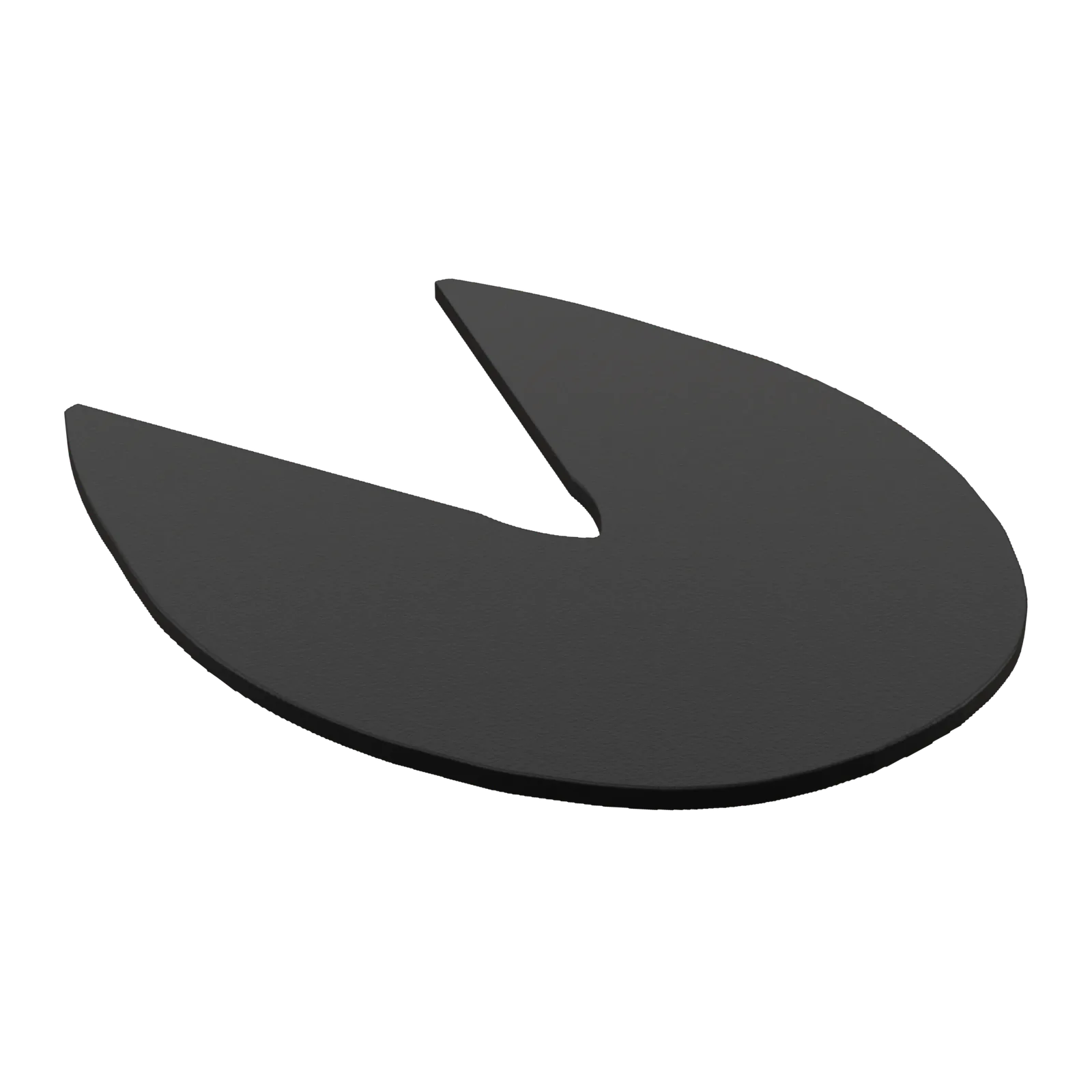
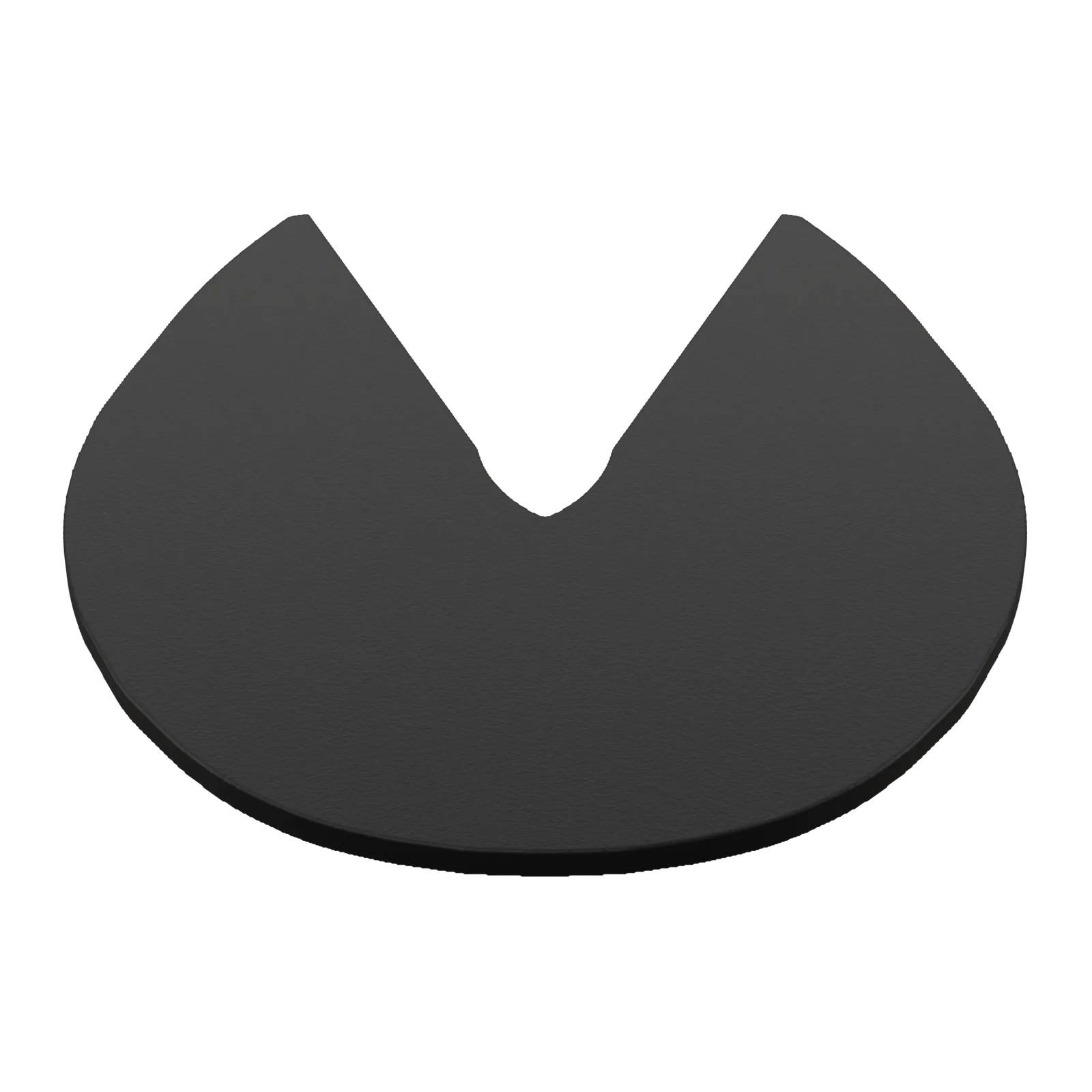
Flat insert
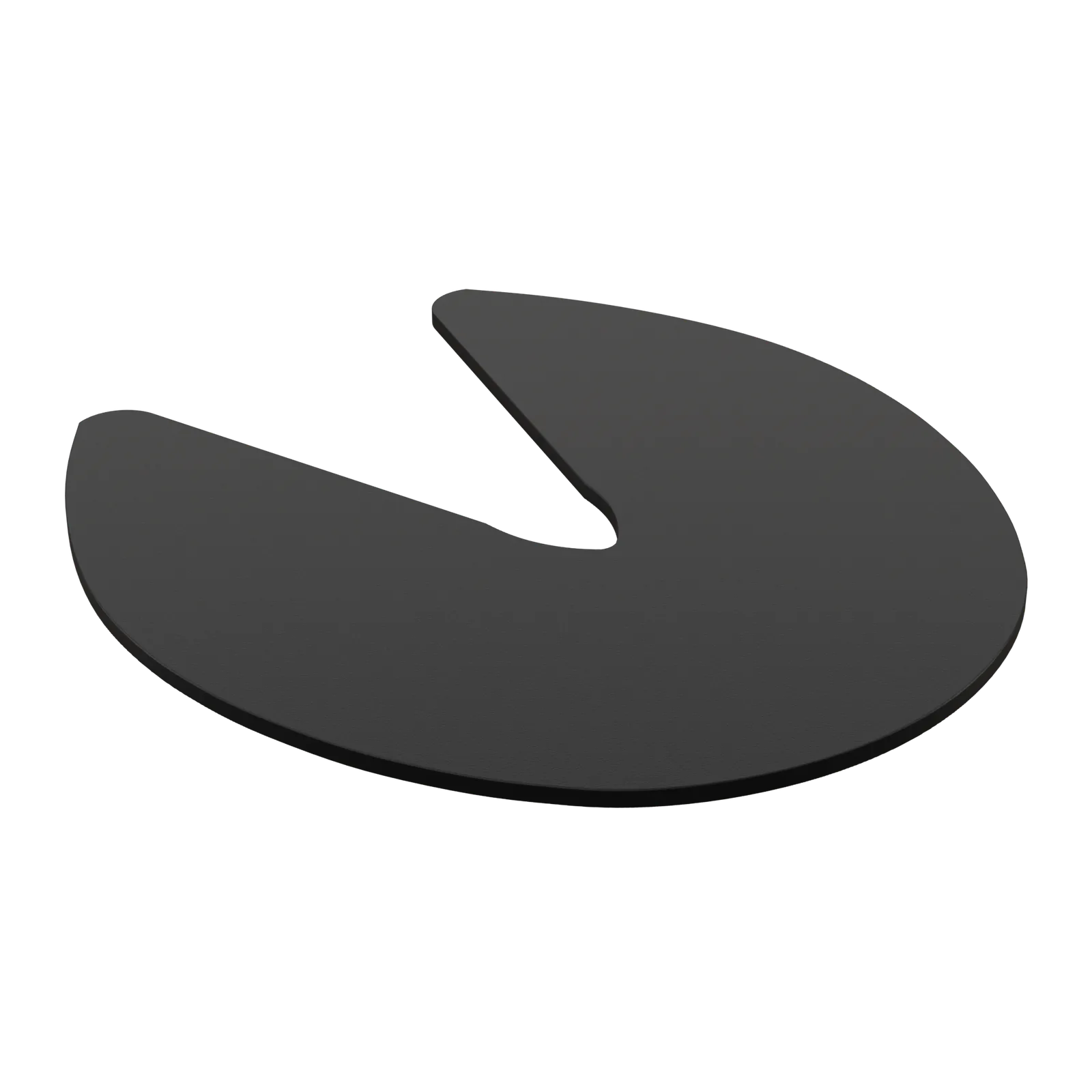
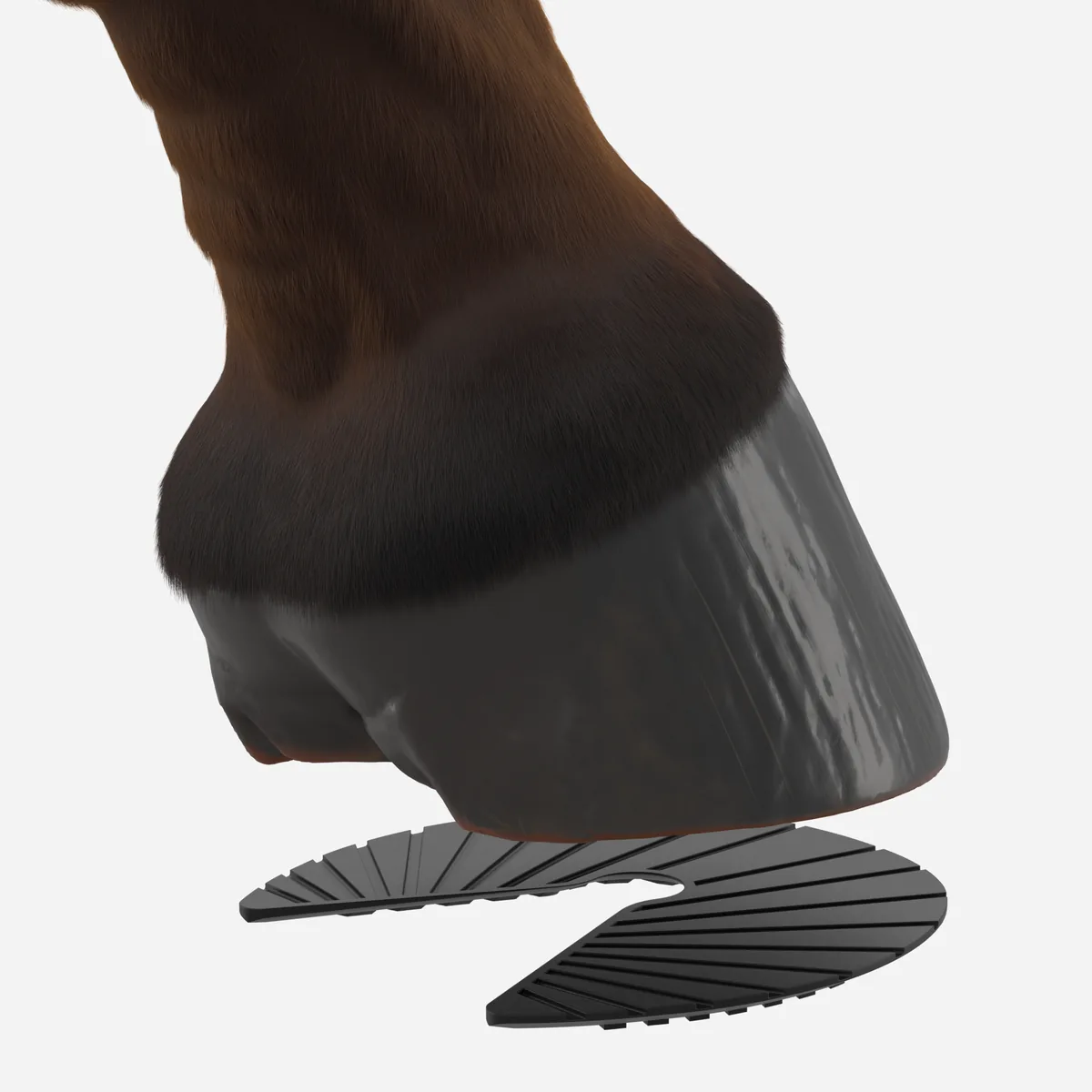
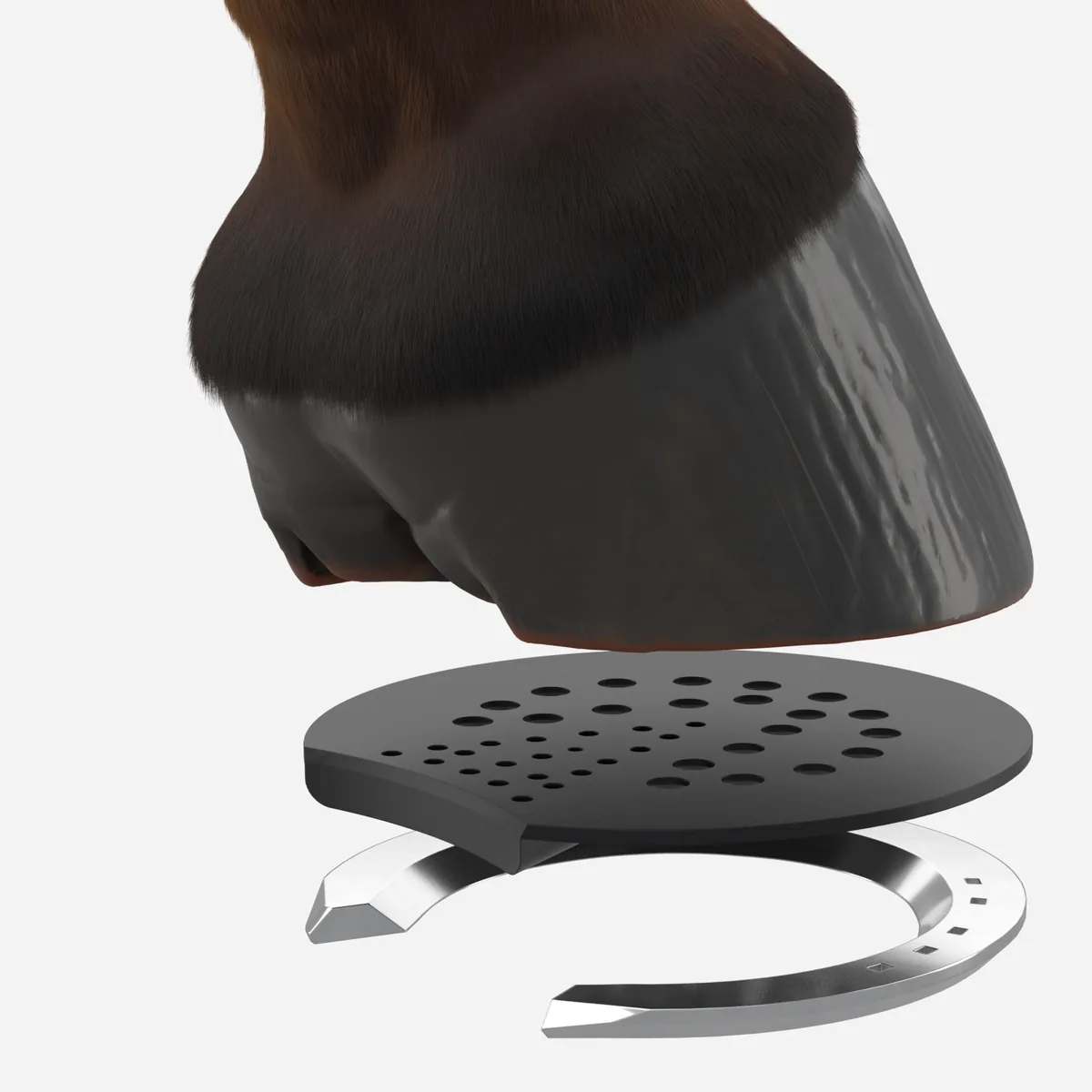
What it does: fills the pad or shoe with a level support surface so the sole, frog and bars share load with the wall. No change of angle.
When I reach for it: thin soles, flat feet, a horse that is sore on stones but has nothing wrong with its angles. Also the default starting point when I want to see how a foot responds to load sharing before I change anything else.
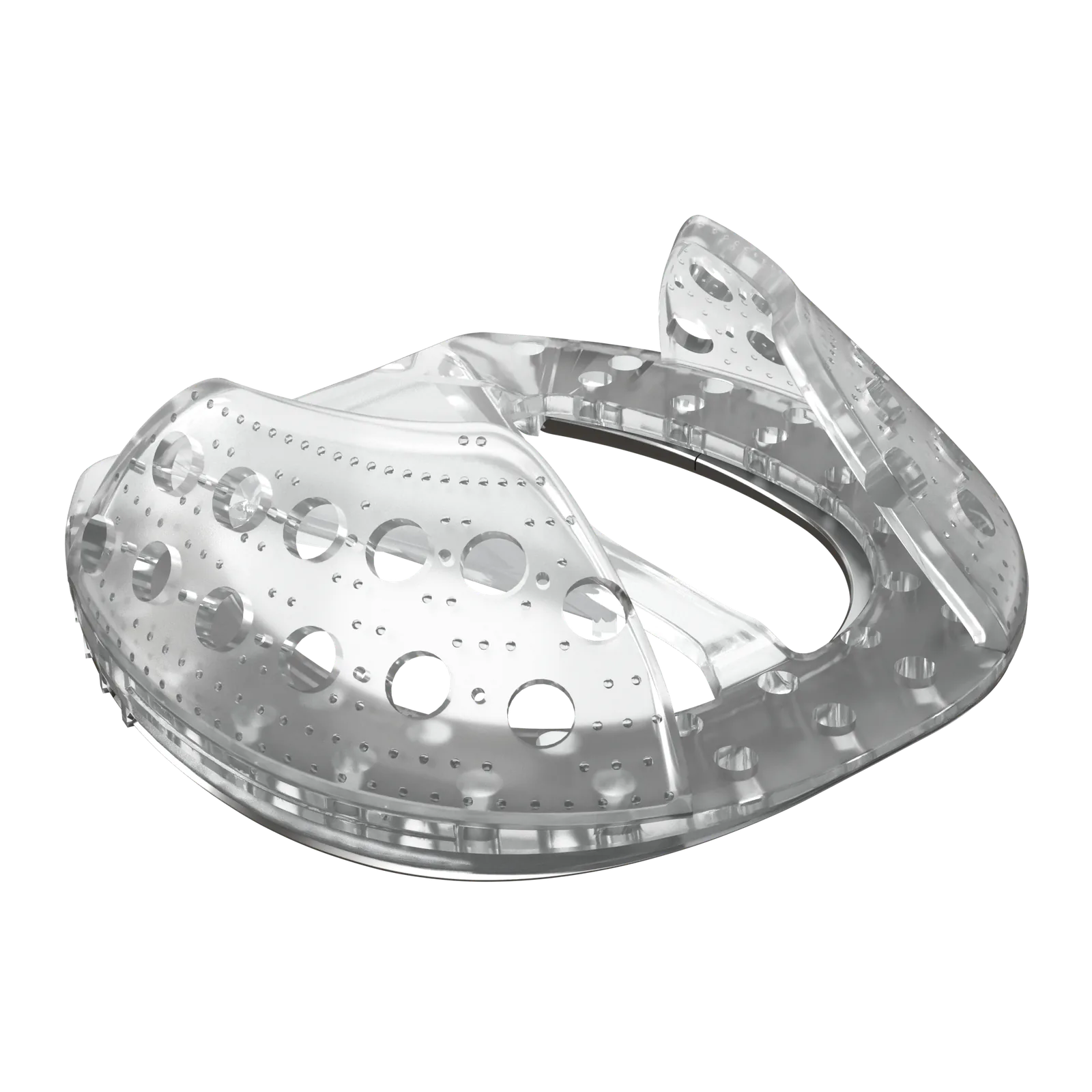
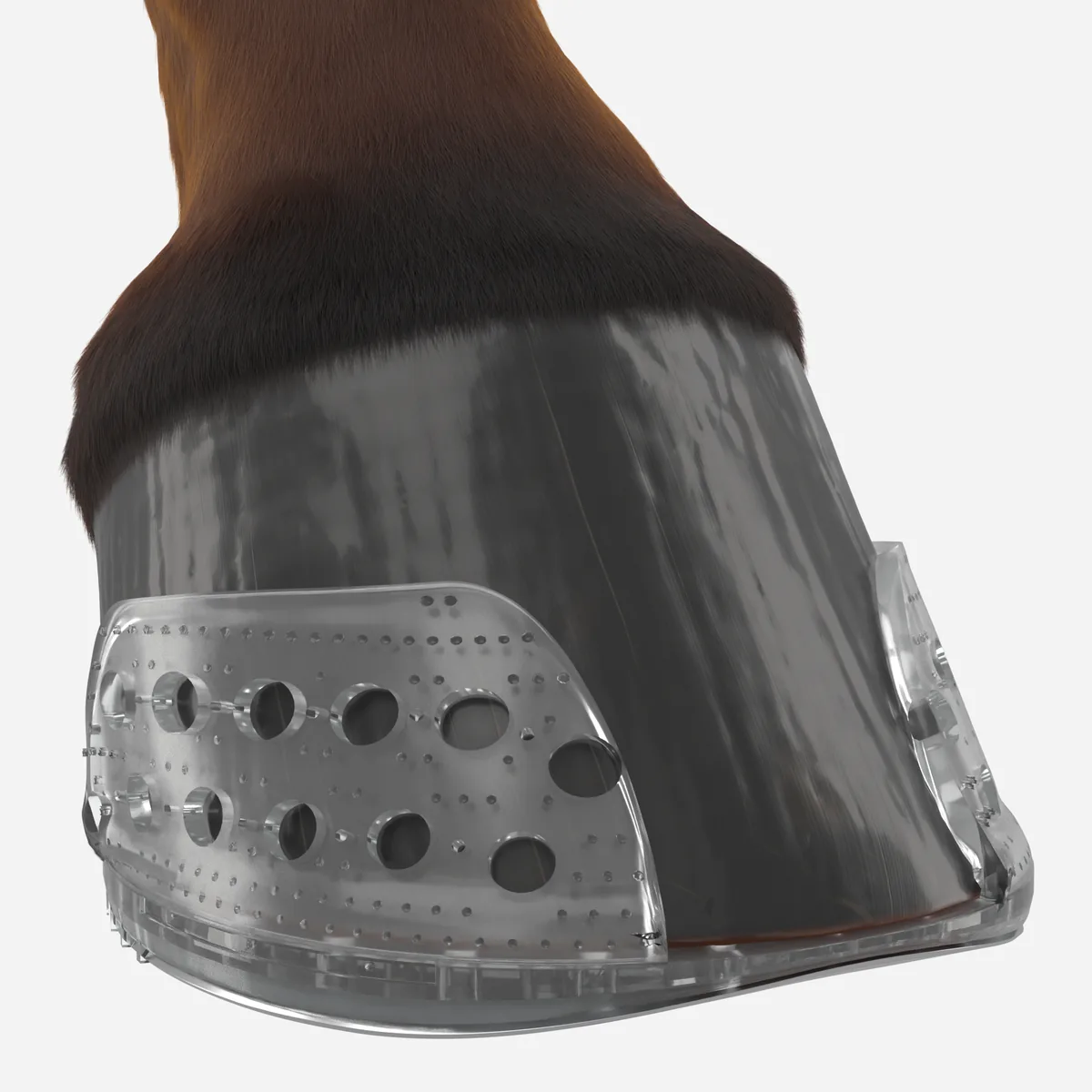
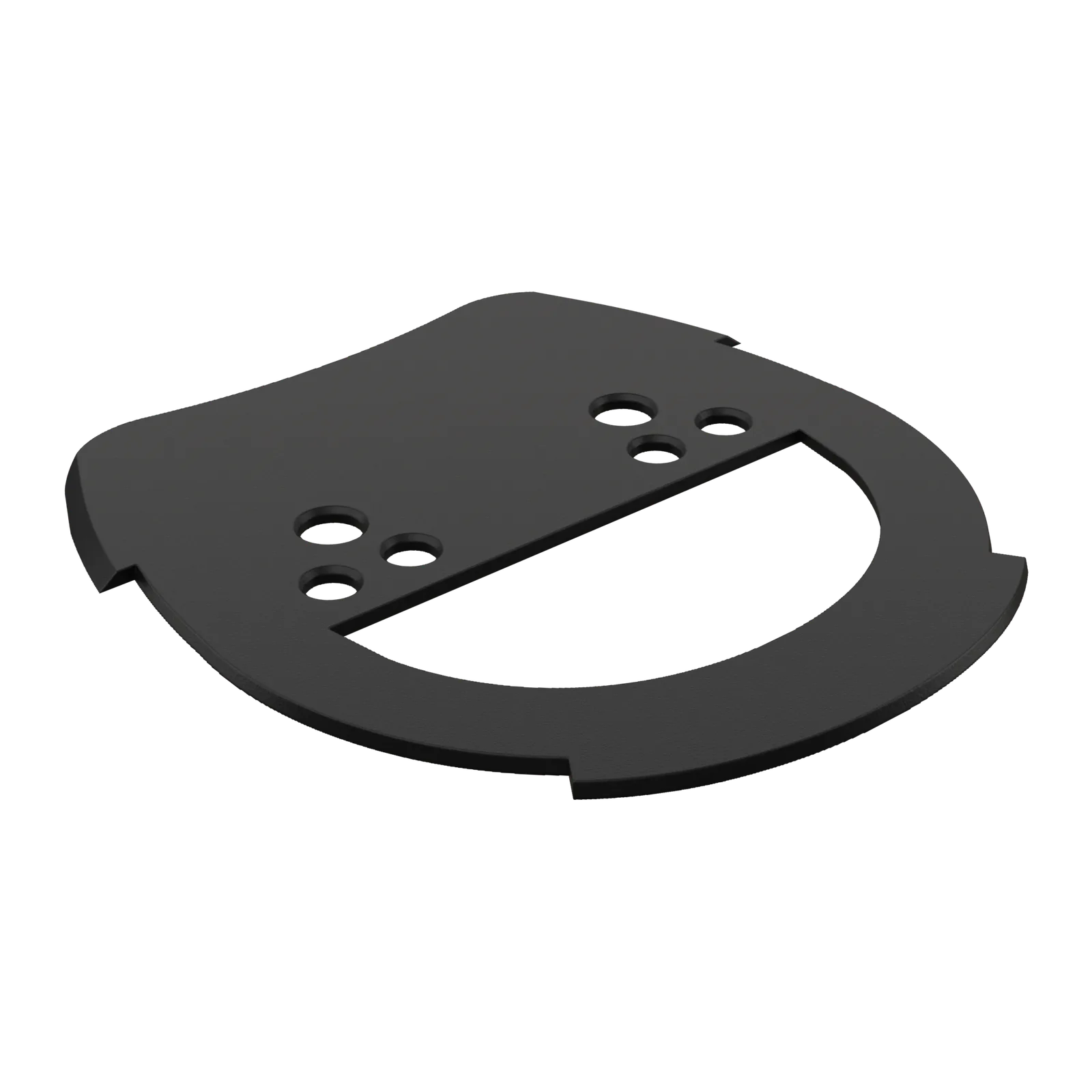
Fits: Half Mesh and Full Mesh pads, the Narrow Half Mesh pad, and the EasyShoe 3D in front and hind patterns. The Full Mesh version covers the whole solar surface and holds impression material best. The Half Mesh leaves the toe region open for air.
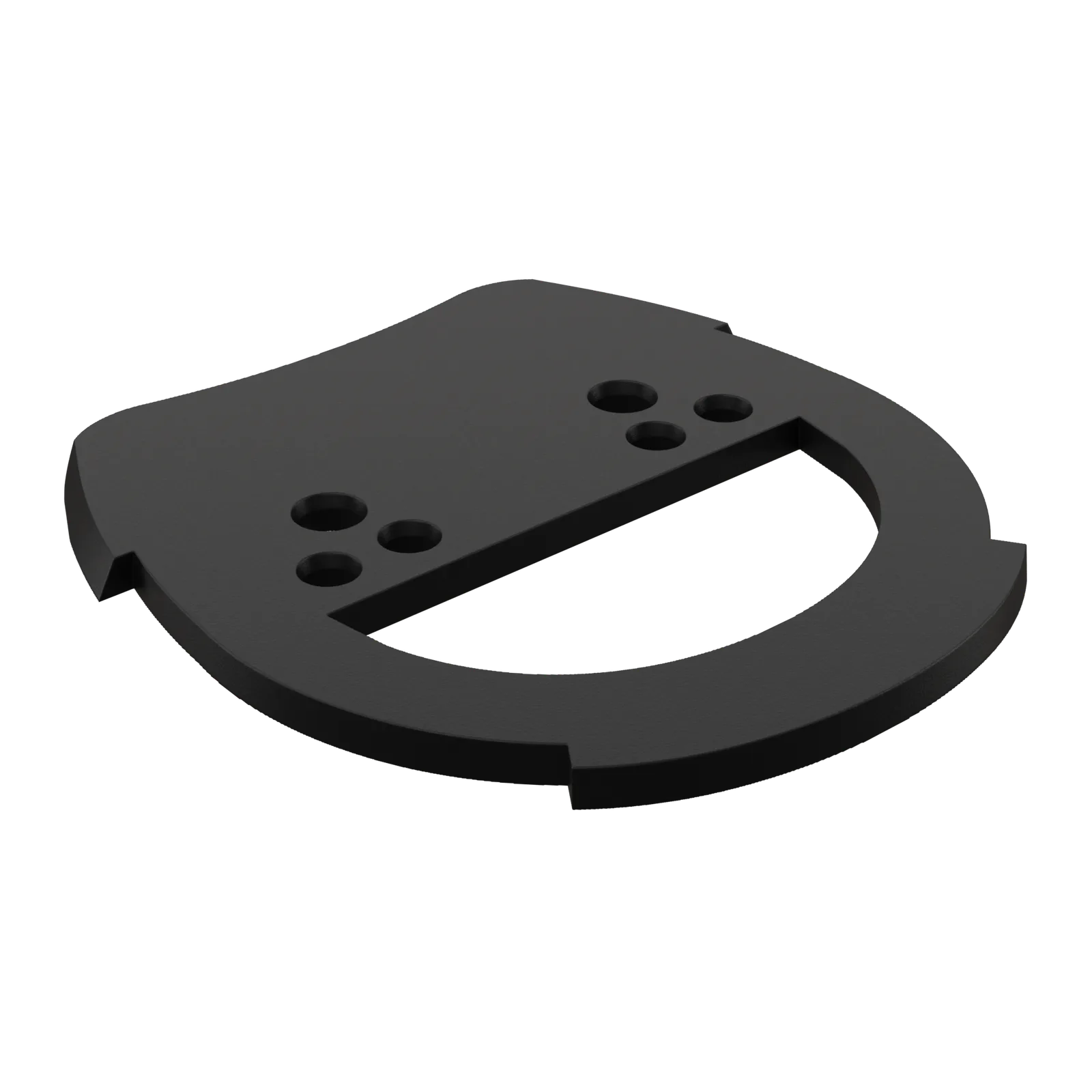
Degree insert (1 to 5 degrees)
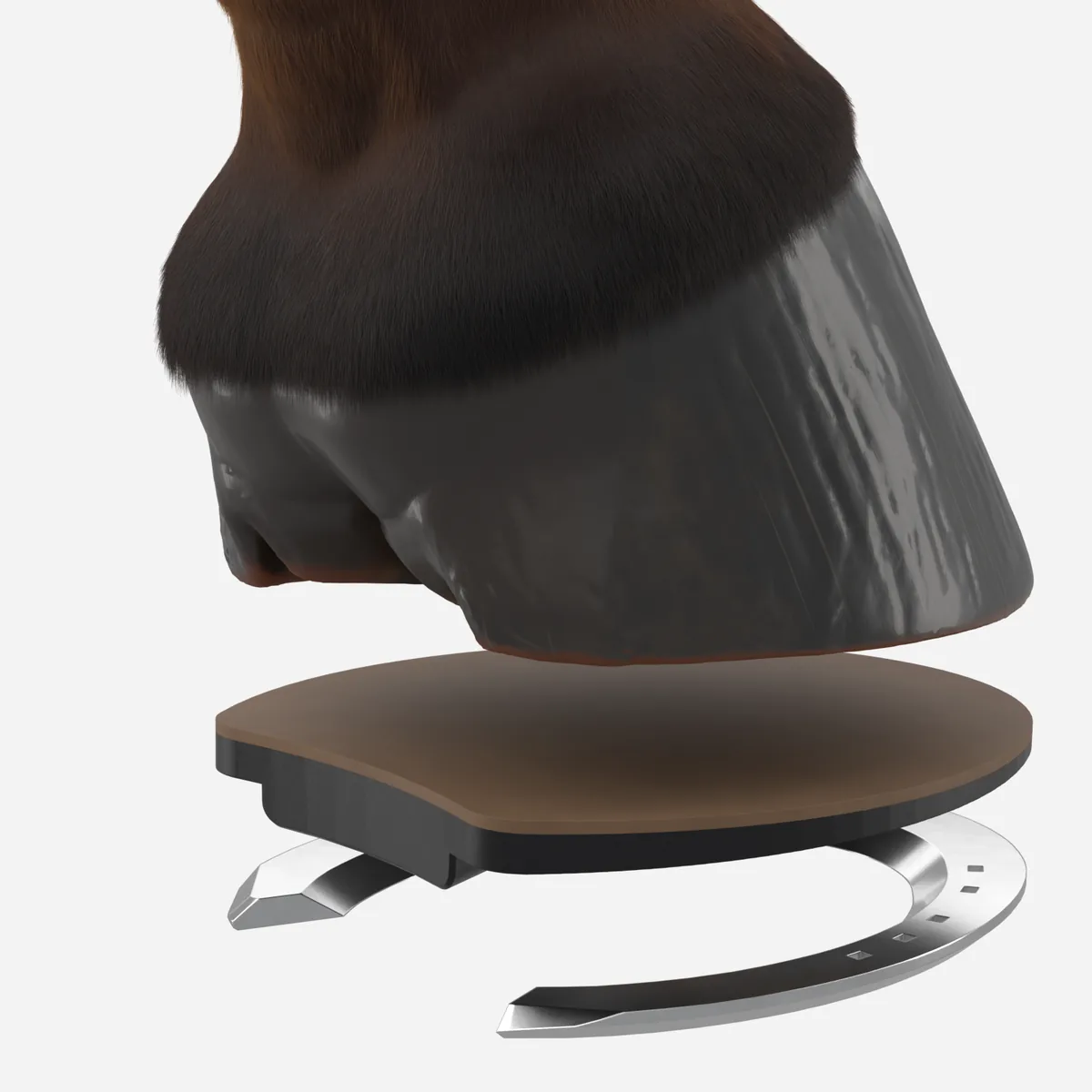
What it does: lifts the heel by a set angle. Elevating the heel reduces tension in the deep digital flexor tendon and moves the coffin bone toward a more positive angle.
When I reach for it: negative or low palmar and plantar angles confirmed on radiographs, underrun heels that need something to stand on while they rebuild, and some laminitis protocols on veterinary instruction. The degree is a case by case decision made with films, not a formula.
The rule that goes with it: bring the toe back first. A wedge on an unaddressed long toe treats the number on the radiograph, not the foot. Elevation is a correction, not a permanent state. Reduce it as the foot holds the angle on its own.
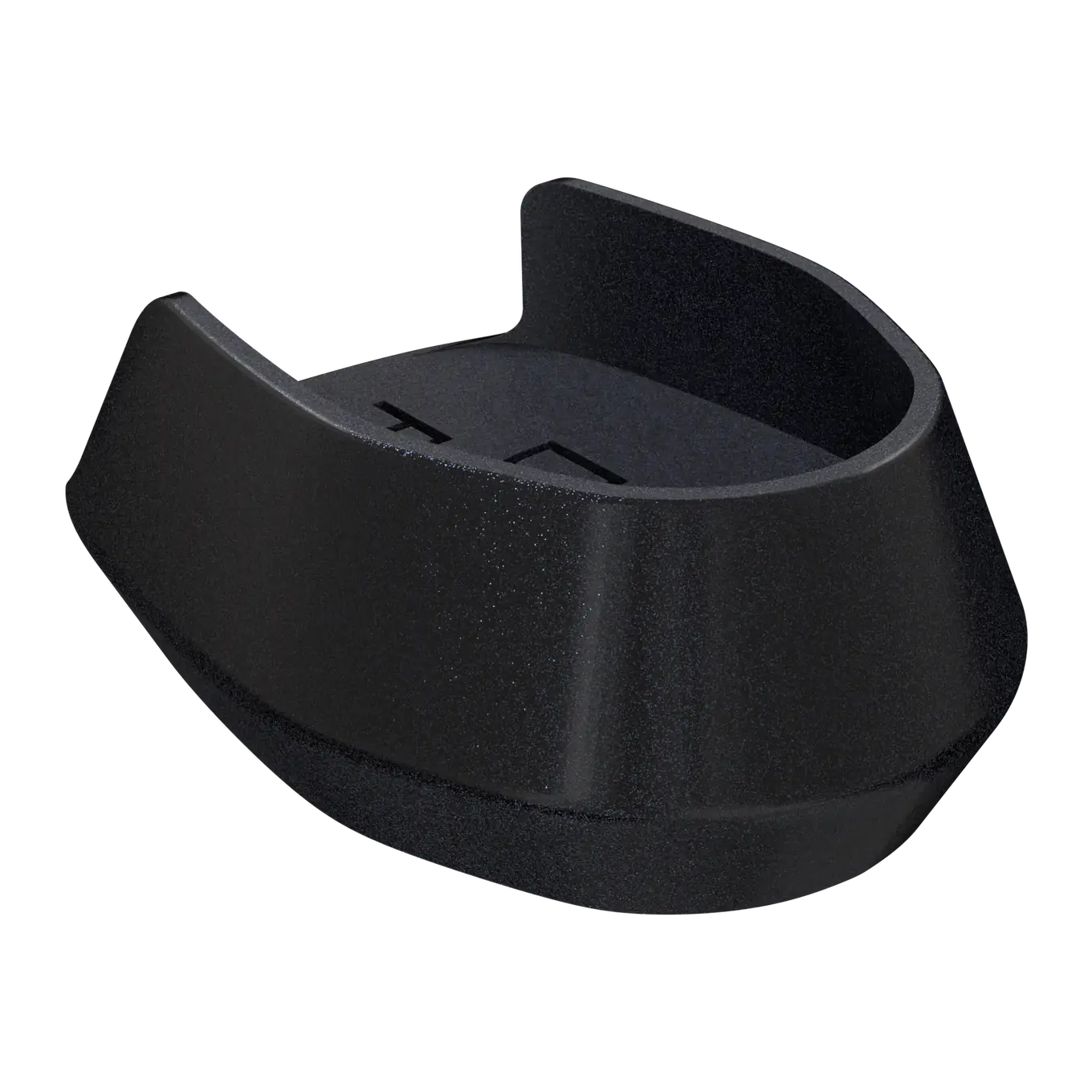
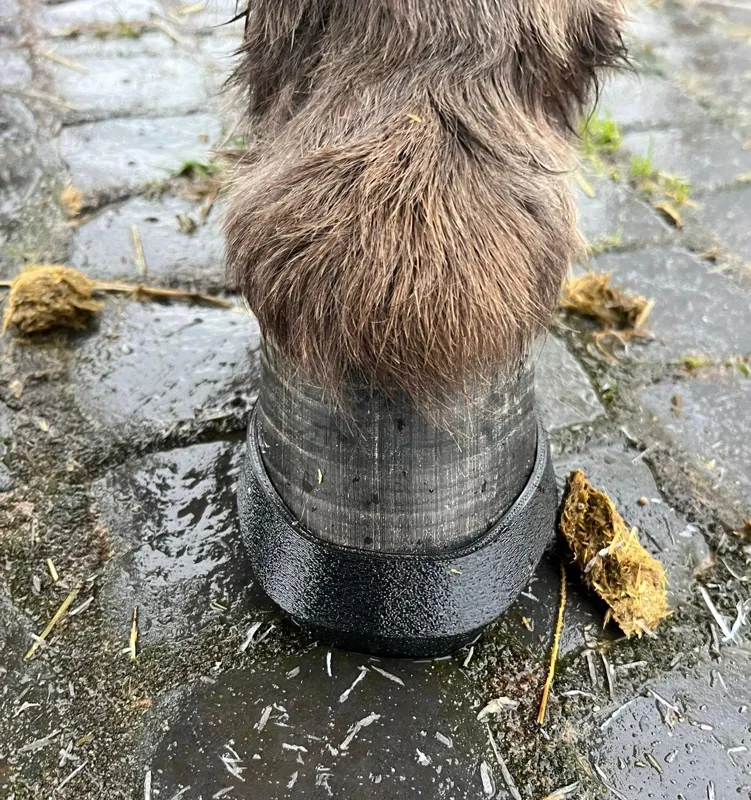
Fits: Half Mesh and Full Mesh pads, the Narrow Half Mesh pad, and the EasyShoe 3D. The recess version sits the degree insert into the pad so the overall stack stays thin.
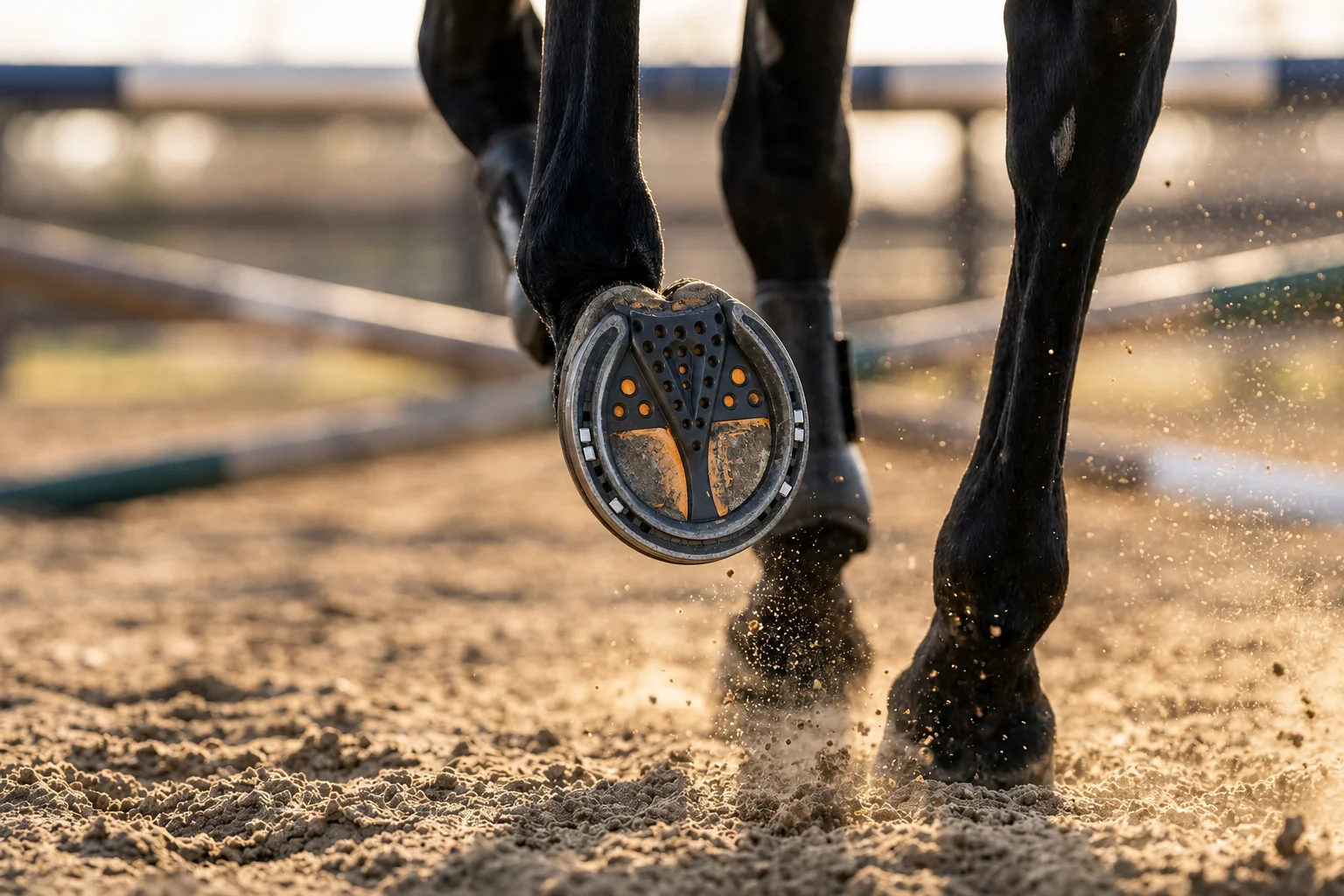
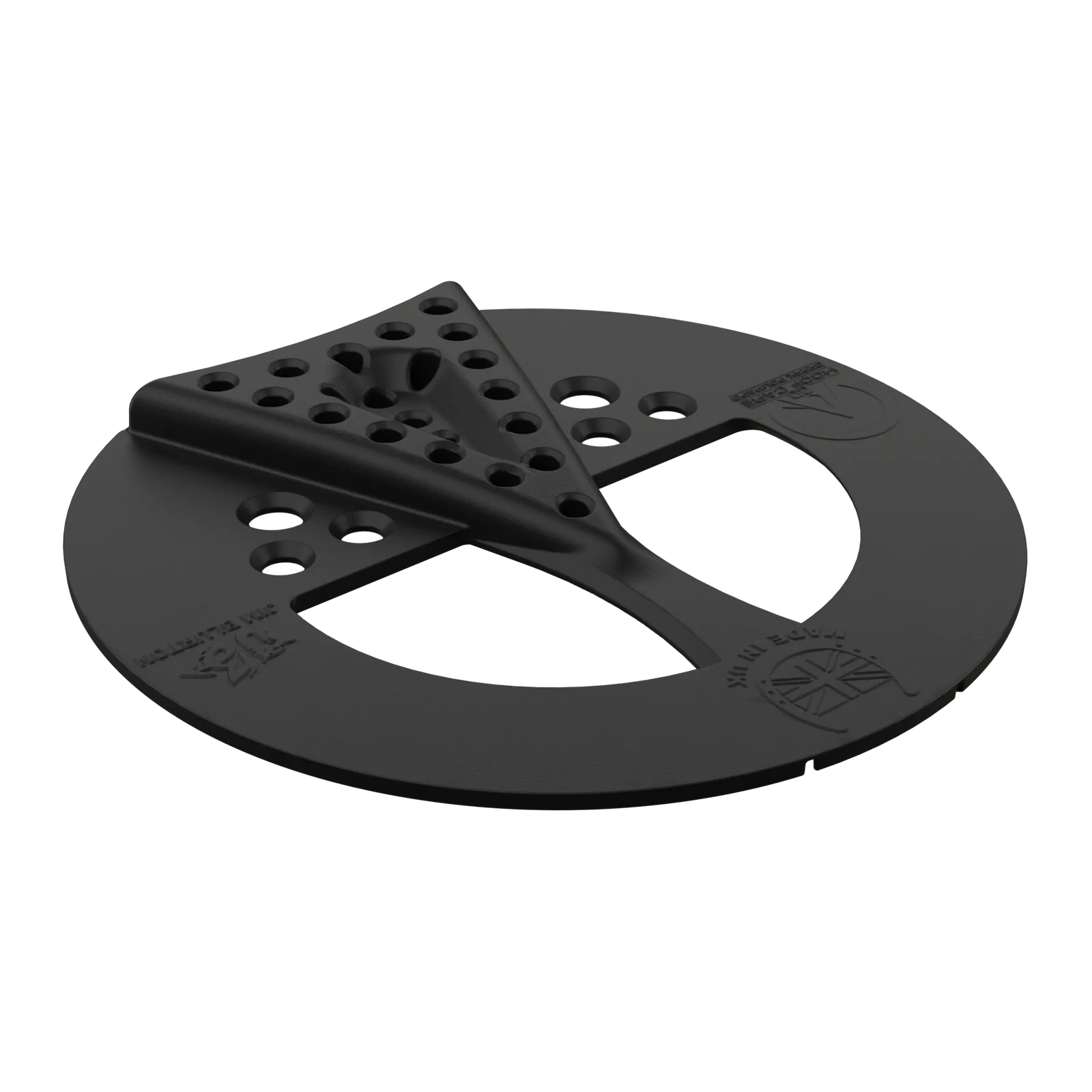
Spiral insert
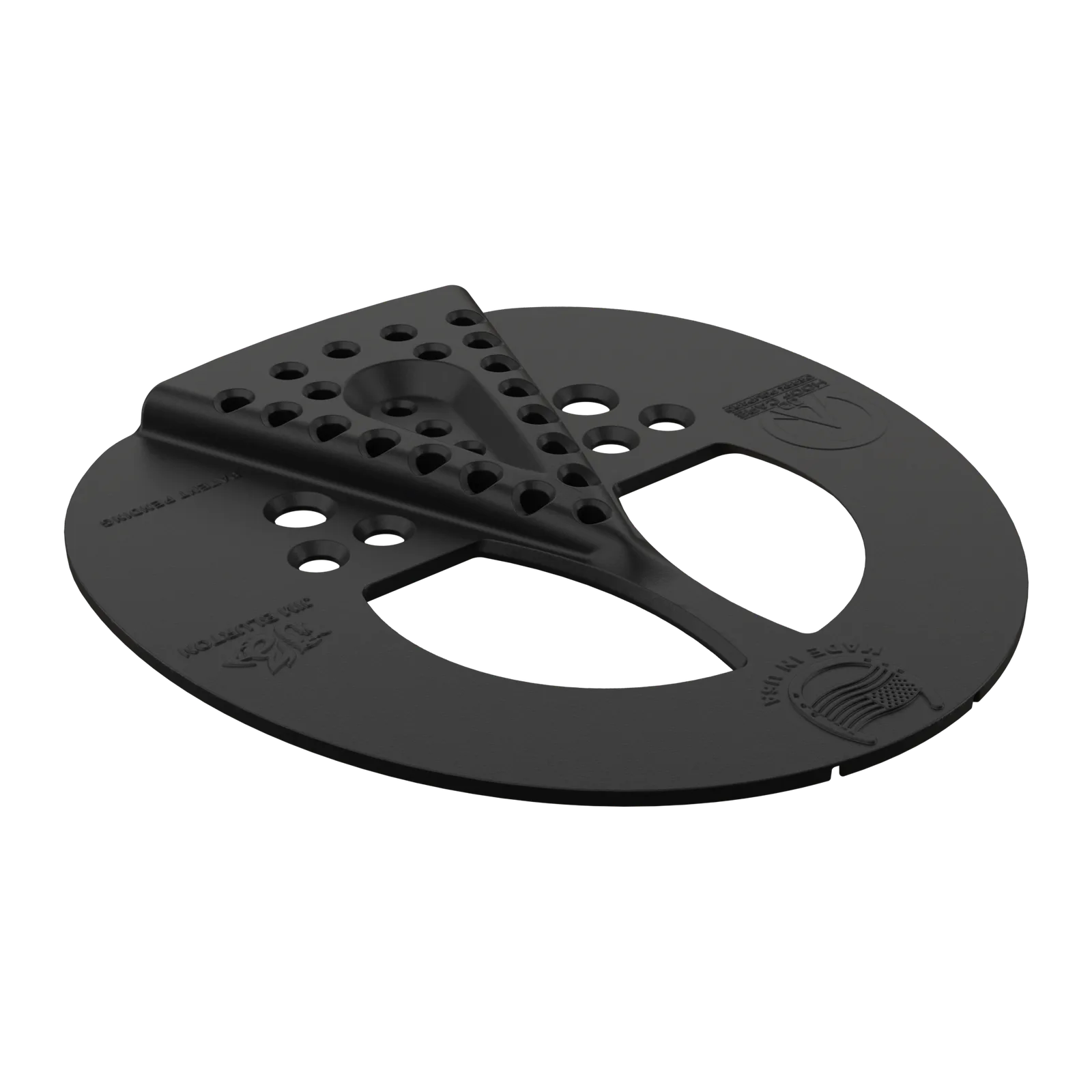
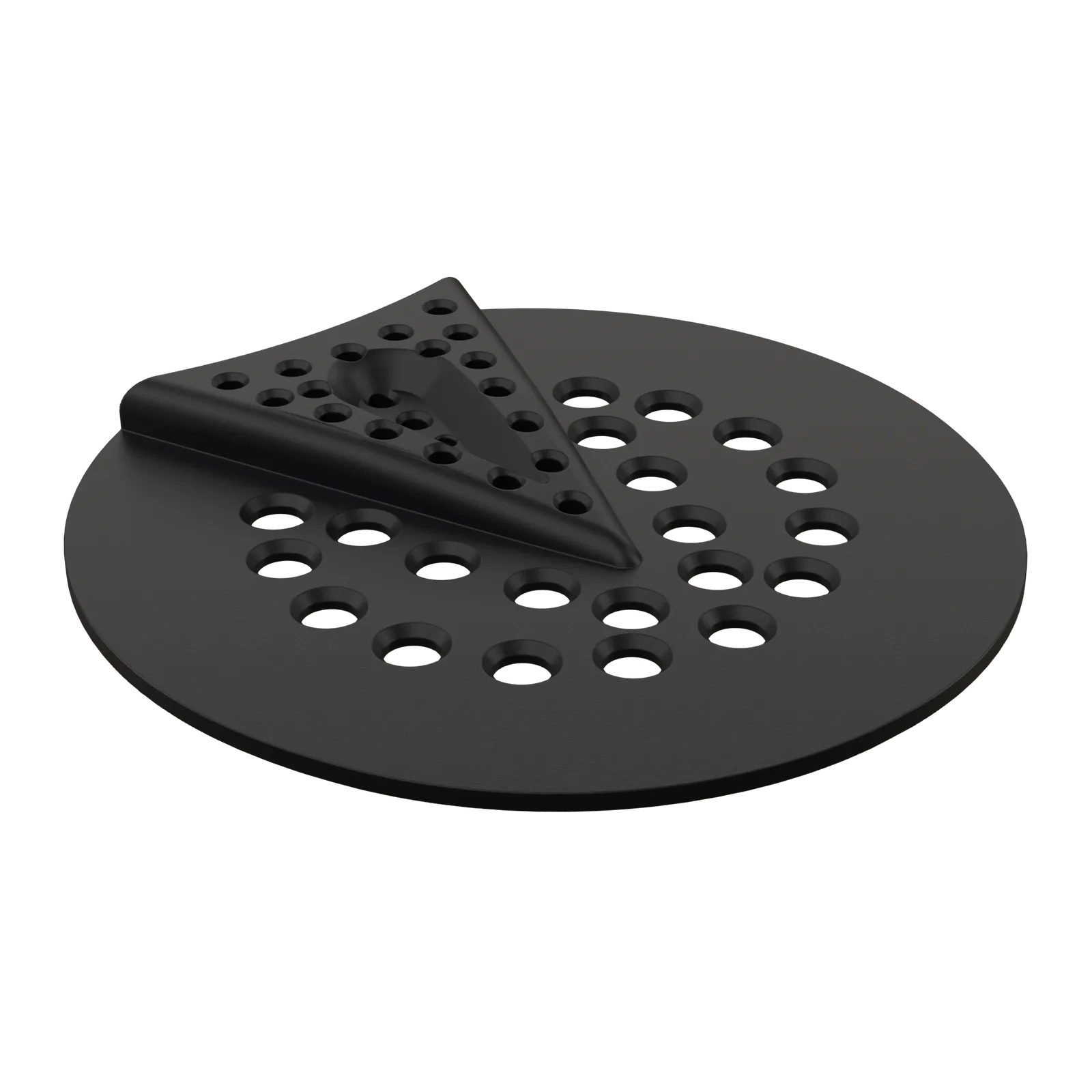
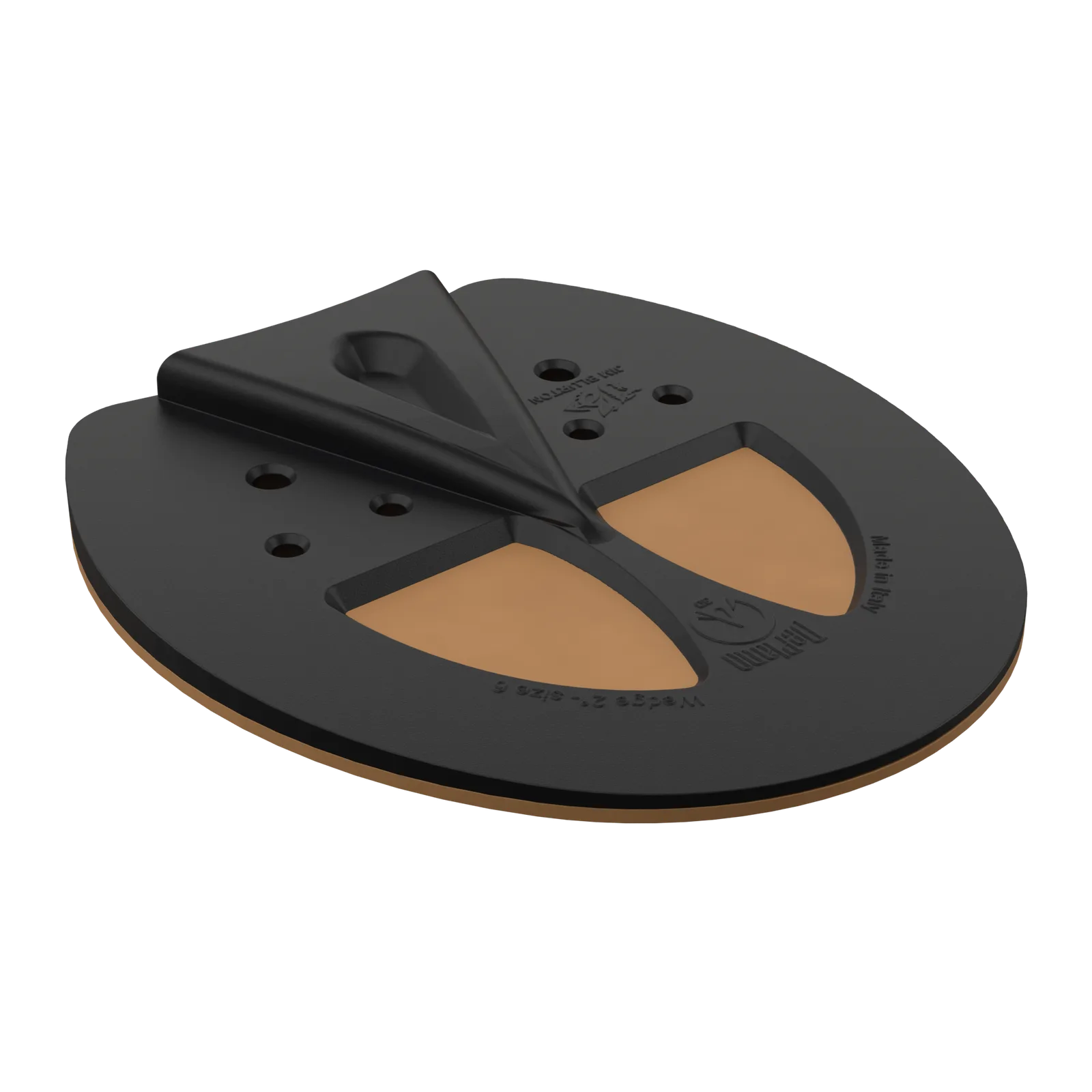
What it does: a graded surface that changes the load path across the foot, from one heel diagonally toward the opposite toe, rather than lifting the whole heel evenly. Spirals are handed. Left and right are different parts.
When I reach for it: a foot that loads unevenly, a high-low pair where one side is collapsing, medial or lateral imbalance that a plain wedge would make worse. It is a more specific tool than a degree insert and it rewards a farrier who has watched the horse move.
Fits: Half Mesh and Full Mesh pads, the Narrow Half Mesh pad, the EasyShoe 3D, and the Race and Roller shoes.
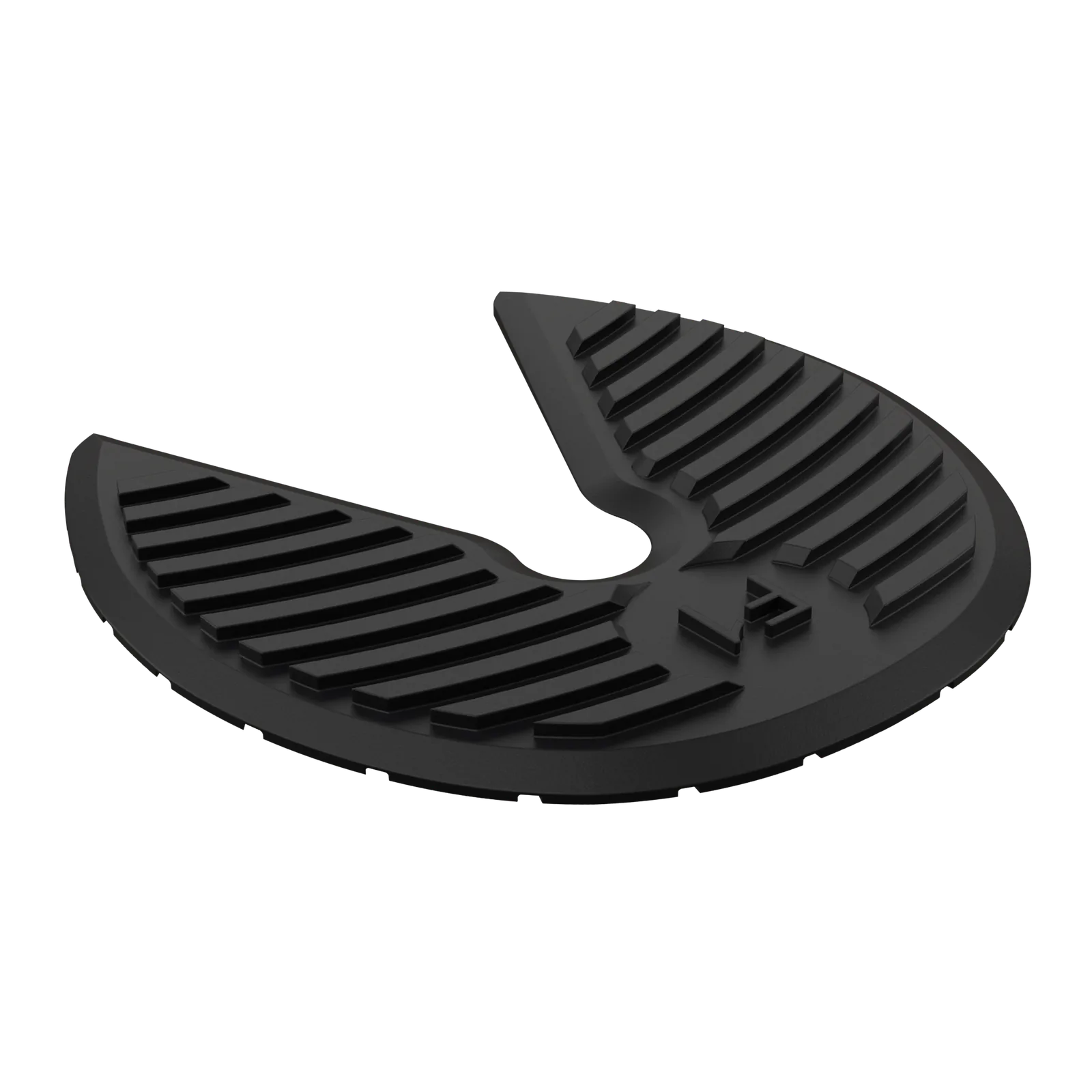
Air insert
What it does: a soft, air-cushioned layer under the sole. It gives comfort and a little deformation without changing the angle or the breakover.
When I reach for it: a horse in work that wants a kinder surface underfoot. Hard ground, a sensitive sole that is otherwise fine, a sport horse coming back into work. If someone has heard about the squishy pads and wants to ride, this is usually the product they mean. The Squish Pad is a rehabilitation pad and is not for ridden work; the air insert in a glue-on shoe is.
Fits: EasyShoe 3D (front and hind), EasyShoe One, Race and Roller.
Which pad or shoe goes with which insert
- Half Mesh pad: flat, degree and spiral inserts. Toe region of the sole stays open.
- Full Mesh pad: flat, degree and spiral inserts. Whole sole covered; best retention for impression material.
- Narrow Half Mesh pad: its own narrow pattern inserts in flat, degree, spiral and full mesh.
- EasyShoe 3D: flat full mesh, flat half mesh, half mesh, spiral and air inserts.
- EasyShoe One, Race and Roller: their own insert patterns, including spiral and air.
Inserts are pattern specific. A Half Mesh pad insert does not fit an EasyShoe 3D and the other way around. Check the product name matches the pad or shoe you are using before you order.
Colors and made to order
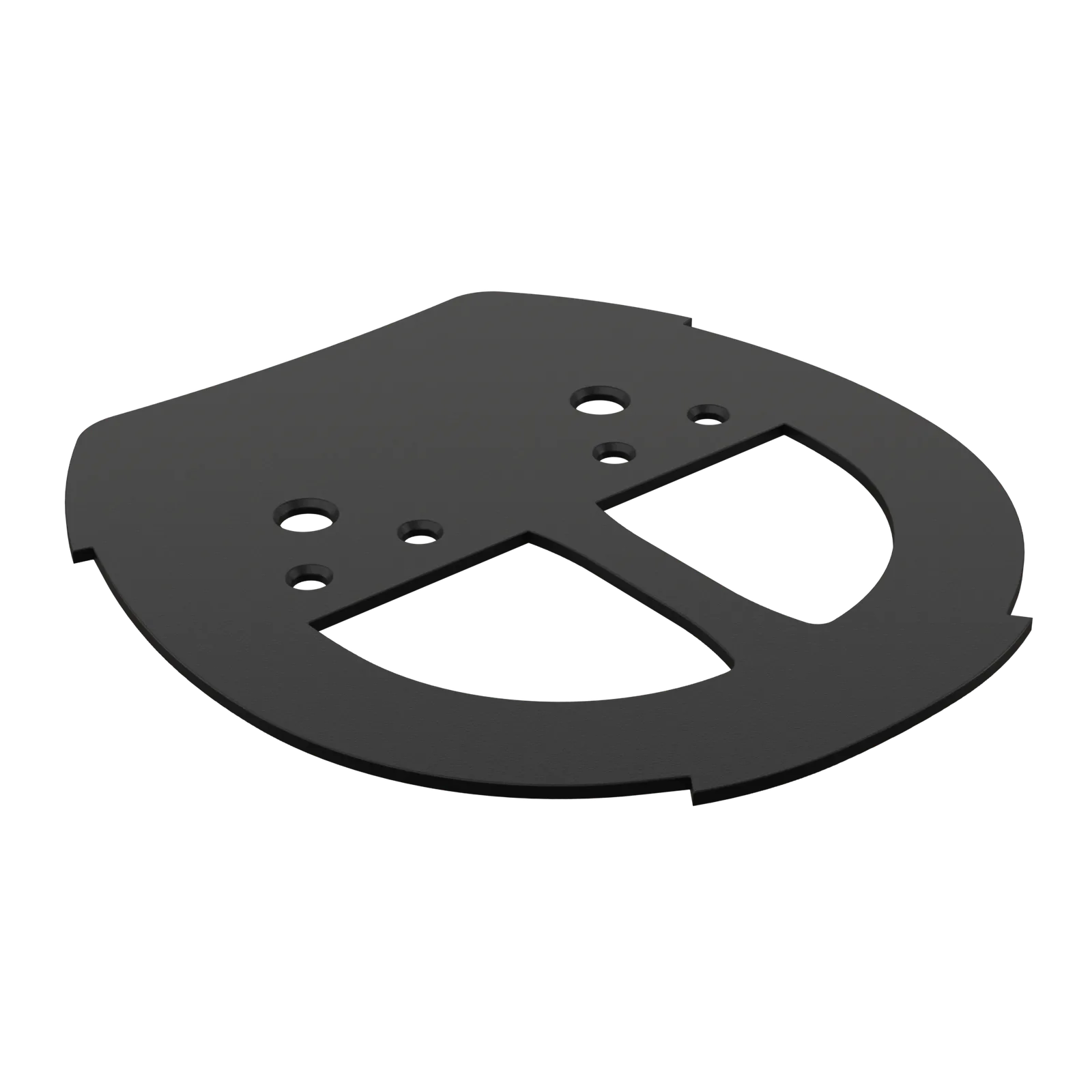
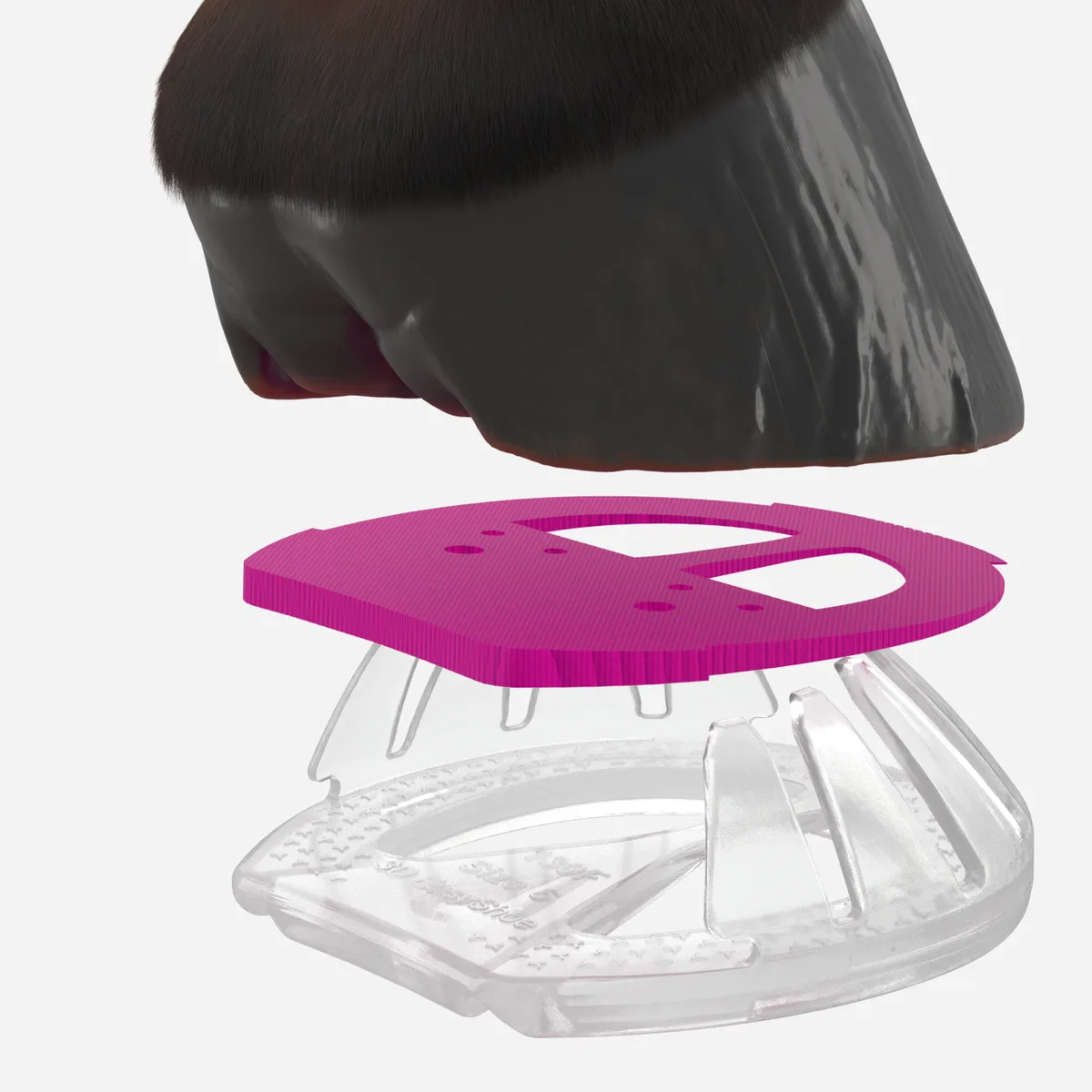
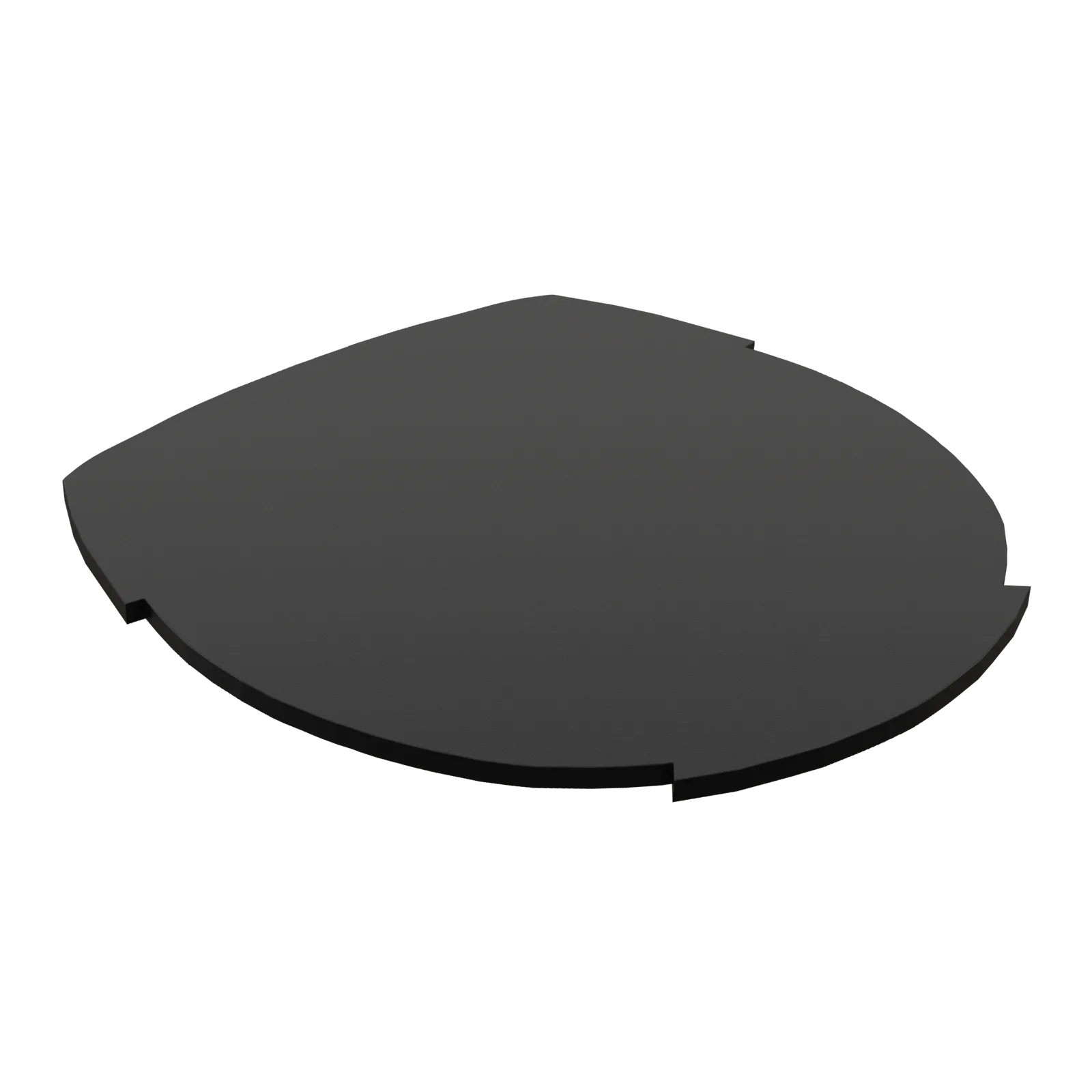
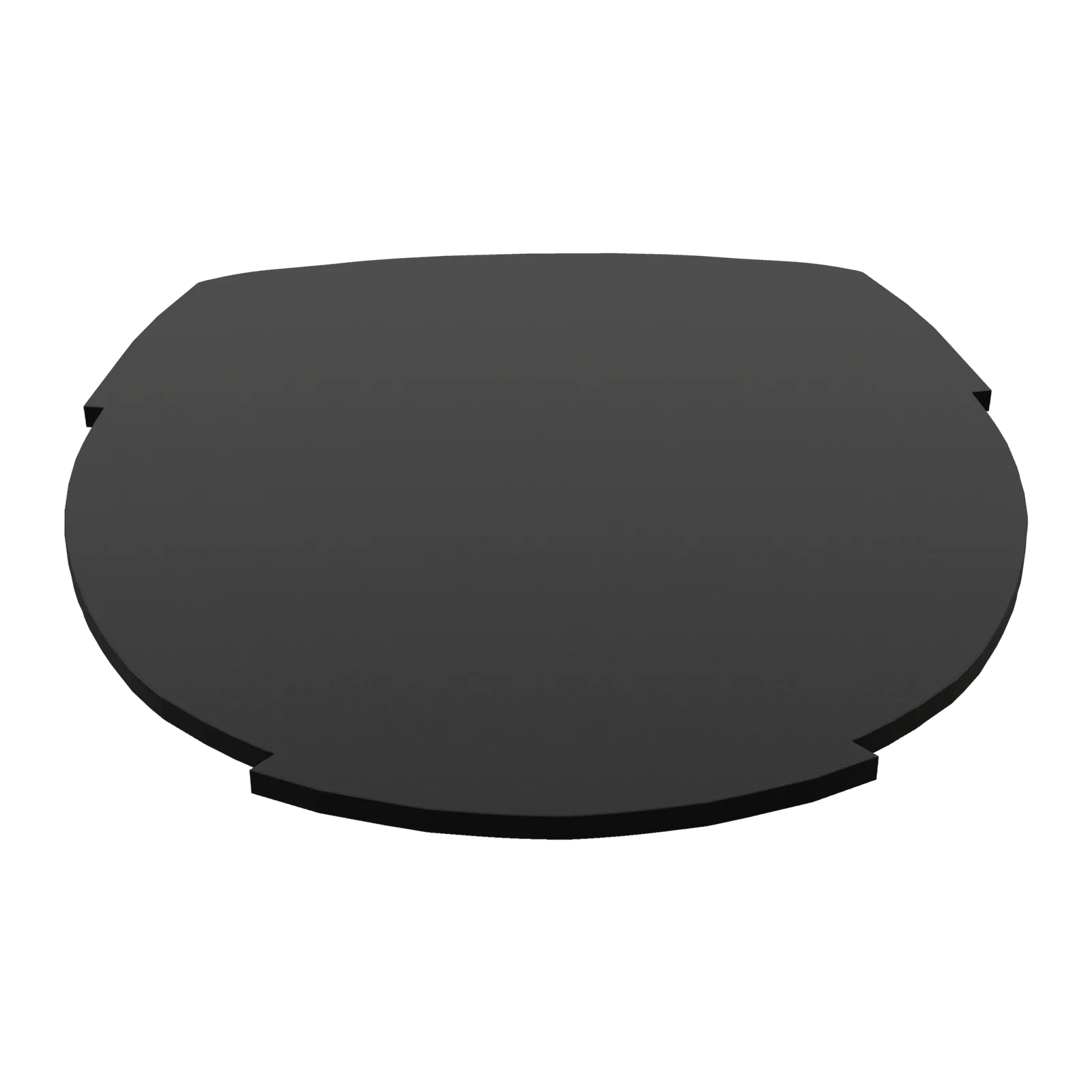
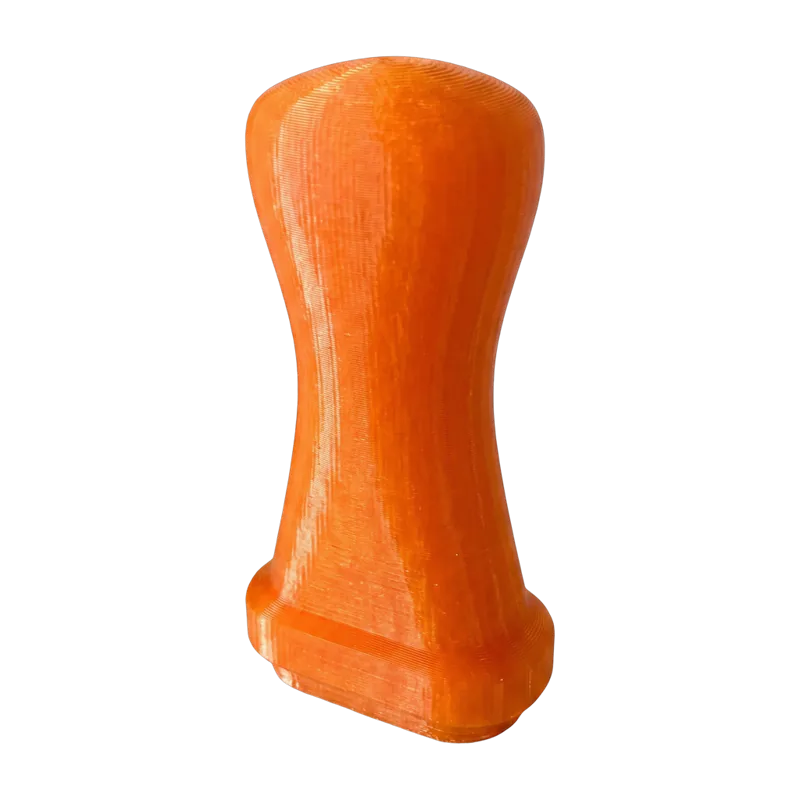
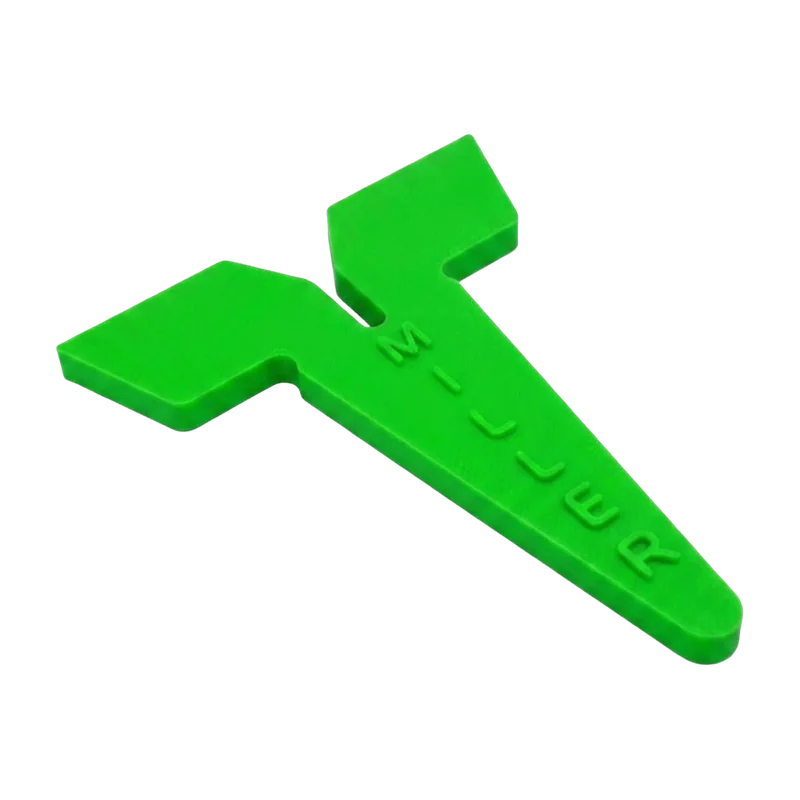
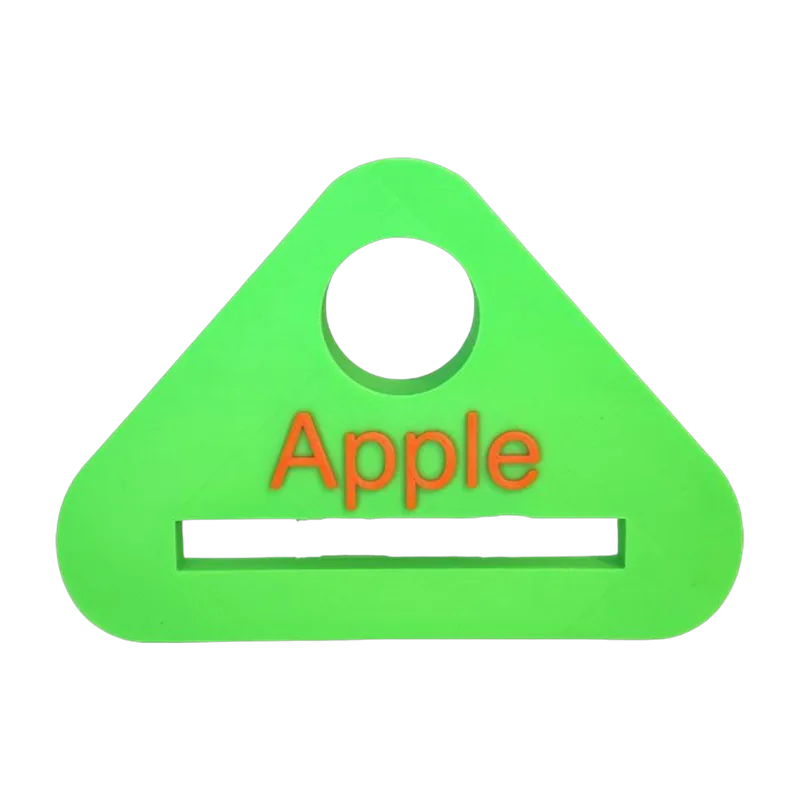
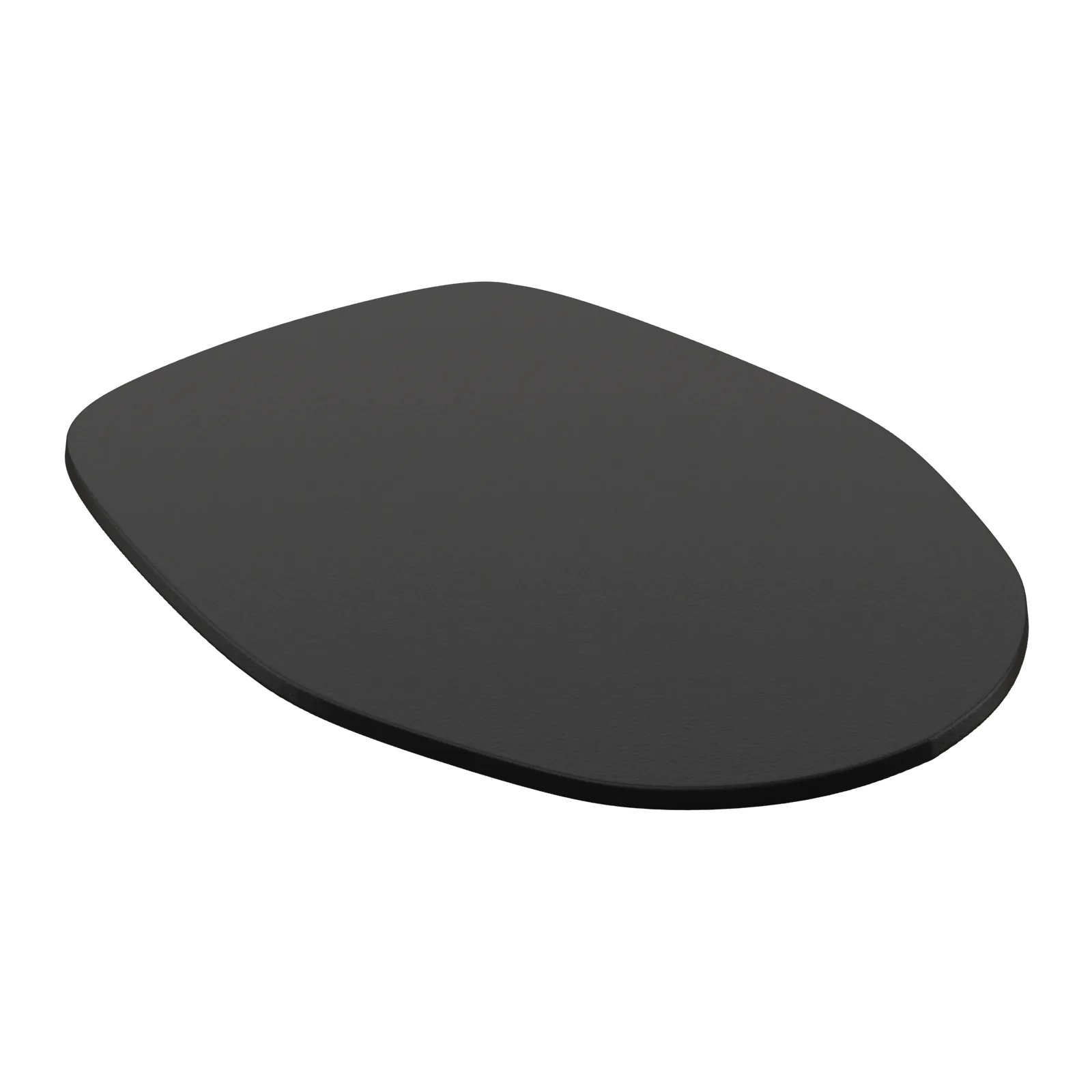
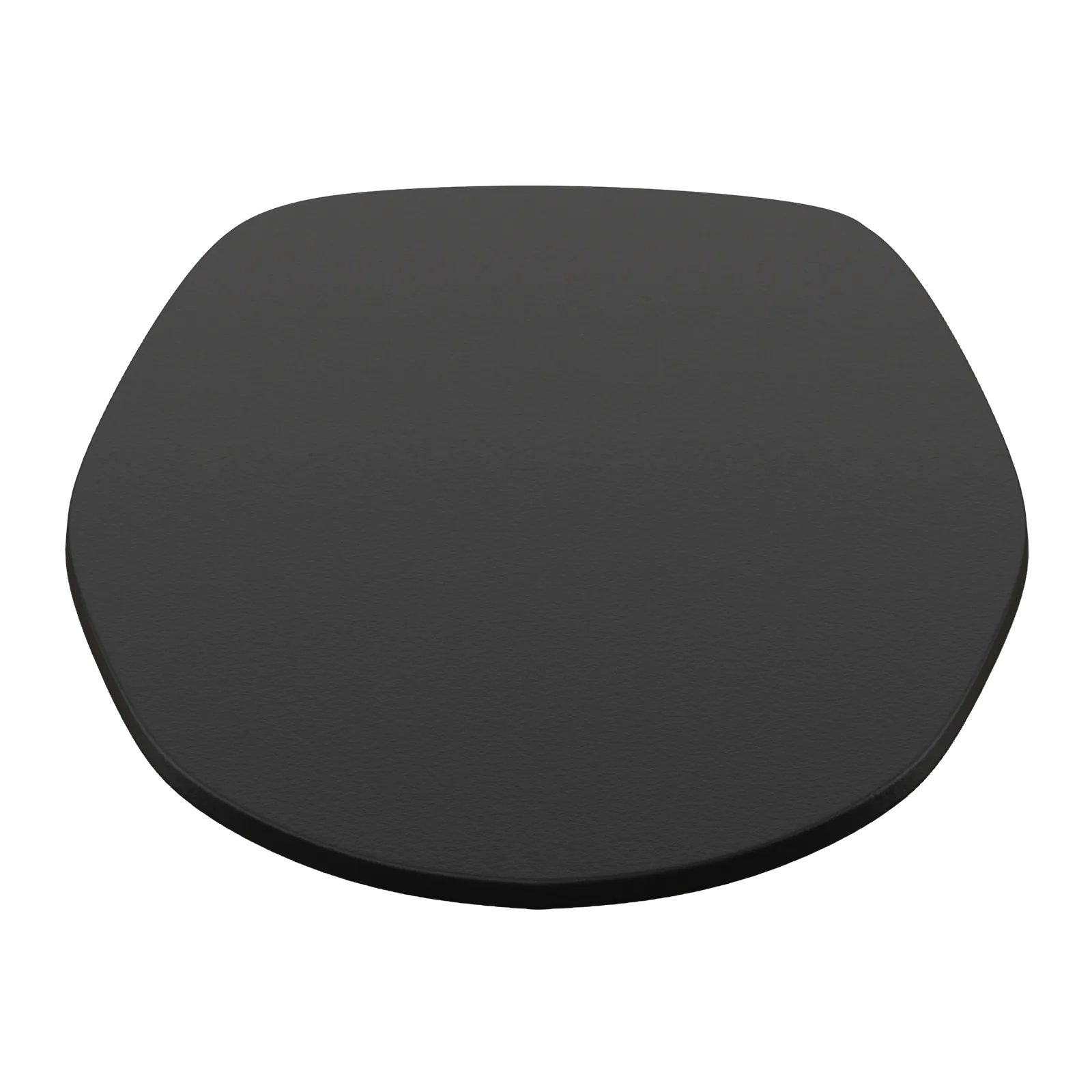
Standard inserts are black. Colored inserts are printed to order in Sarasota, Florida, usually within a day or two, and the color makes no difference to the material or the mechanics. Some farriers use color to tell a left spiral from a right at a glance, or to show a client exactly what changed between cycles. That is a reasonable use of it.
If you are still not sure
Send a photograph of the trimmed foot with a ruler in the shot, a side view of the horse standing square, and the radiograph if you have one. Between the two of us we will name the insert in a few minutes. Unused products in their original condition can be returned within 30 days of delivery for a refund, and US orders can swap sizes free of charge, so the cost of asking is lower than the cost of guessing.
Derek's note: If the question is "what angle", the answer is a radiograph. If the question is "what surface", the answer is in front of you. Flat for support, degree for angle, spiral for balance, air for comfort in work.