




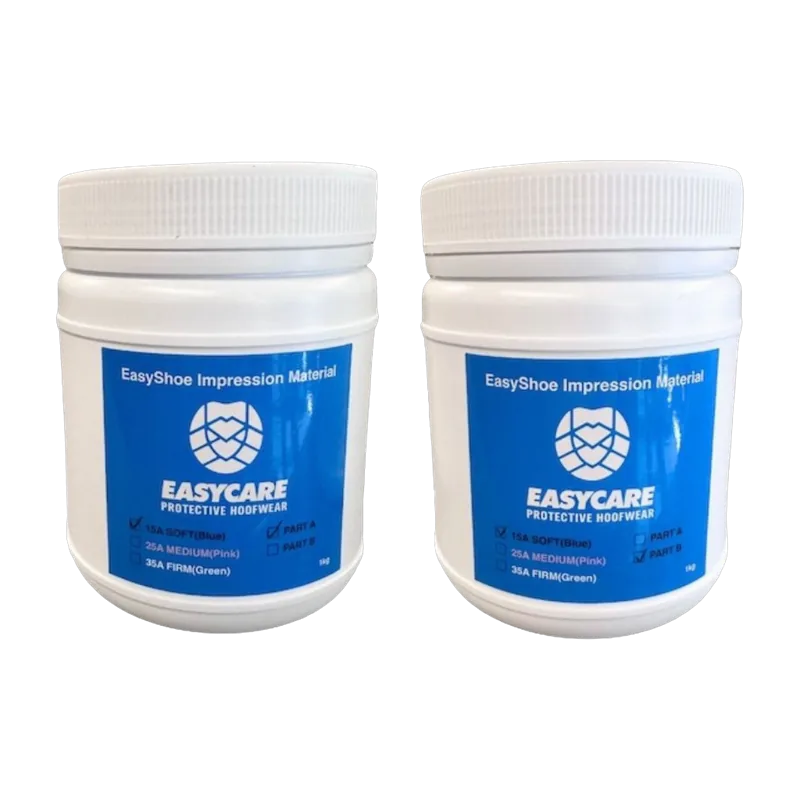




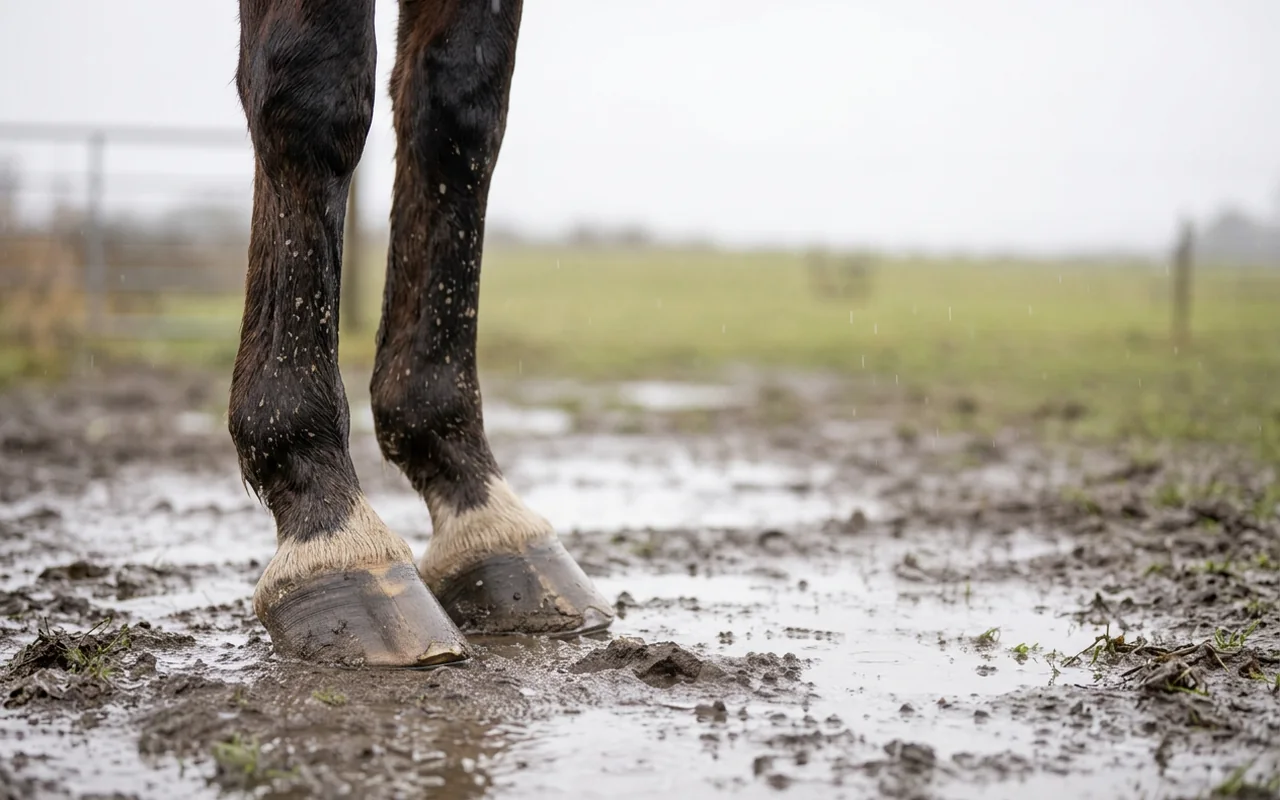
There is a particular kind of post that appears in our community every autumn and again every spring. The horse is in Florida, or Ireland, or somewhere with a bad winter. The casts will not hold through the summer wet. The impression material washes out every cycle. The heels have gone underrun after a soft summer and the first proper rain has brought an infection with it.
Different countries, same problem. Water changes what a hoof is, and most of the frustration people feel through a wet season comes from expecting a saturated foot to behave like a dry one.
What water actually does to horn
Hoof horn is hygroscopic. It takes up water and it gives it back, and its mechanical properties change as it does.
A saturated hoof is softer. It flexes more, holds a nail or a bond less well, and wears faster on abrasive ground while somehow also spreading and flattening on soft ground. The wall becomes more prone to flaring and separating at the white line. The sole gets soft enough that a stone which would have bounced off in August leaves a bruise in November.
Then it dries out, hard and fast, and everything that softened and stretched now shrinks and cracks.
That cycle (wet, dry, wet, dry) is harder on a foot than either state on its own. Horses that stand in a muddy gateway all day and a dry stable all night get the worst of both.
Why your glue is not the problem
I have written about adhesion in detail elsewhere on this journal, but the wet-weather version deserves saying on its own because it is the single most common cause of failure I see.
You cannot bond to a wet foot.
A hoof that has stood in a wet field overnight is saturated well below the surface. A torch dries the outermost fraction of a millimeter. As the adhesive cures, moisture from deeper in the horn migrates back out and straight into your bond line. You may get it to stick that day. You will not get it to last the cycle.
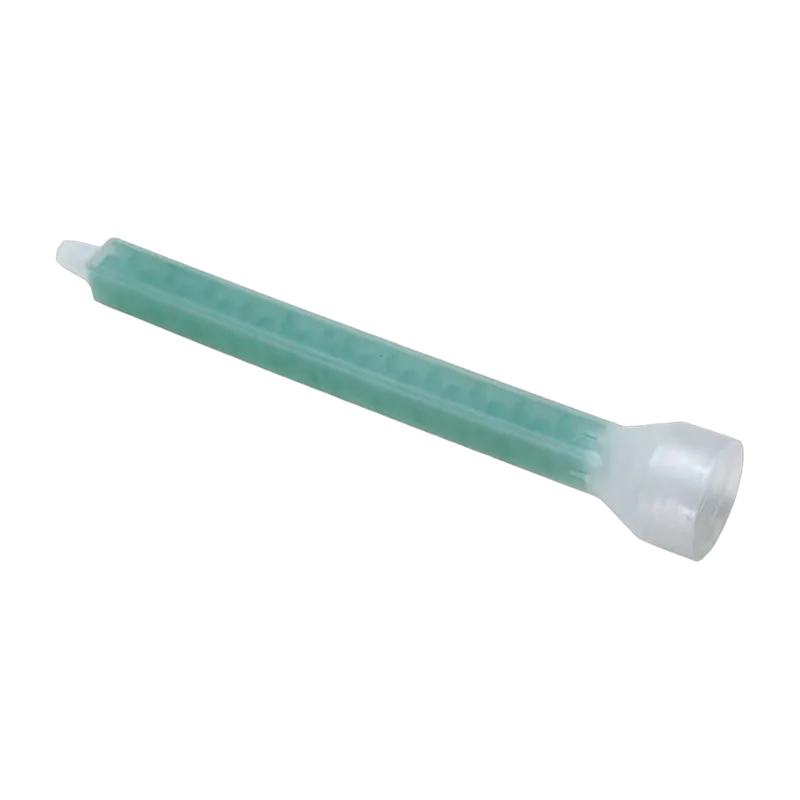
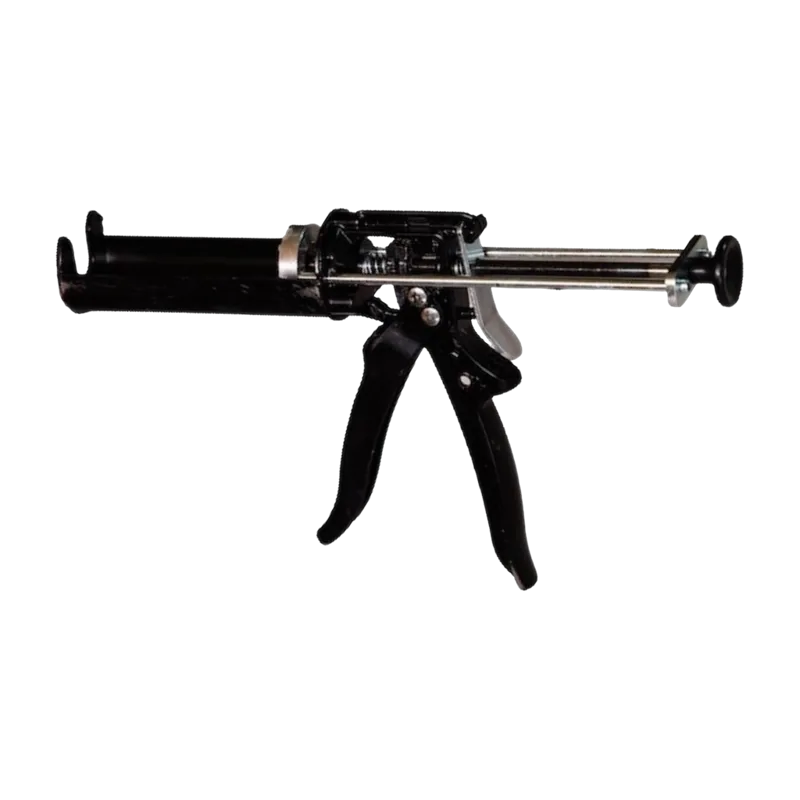
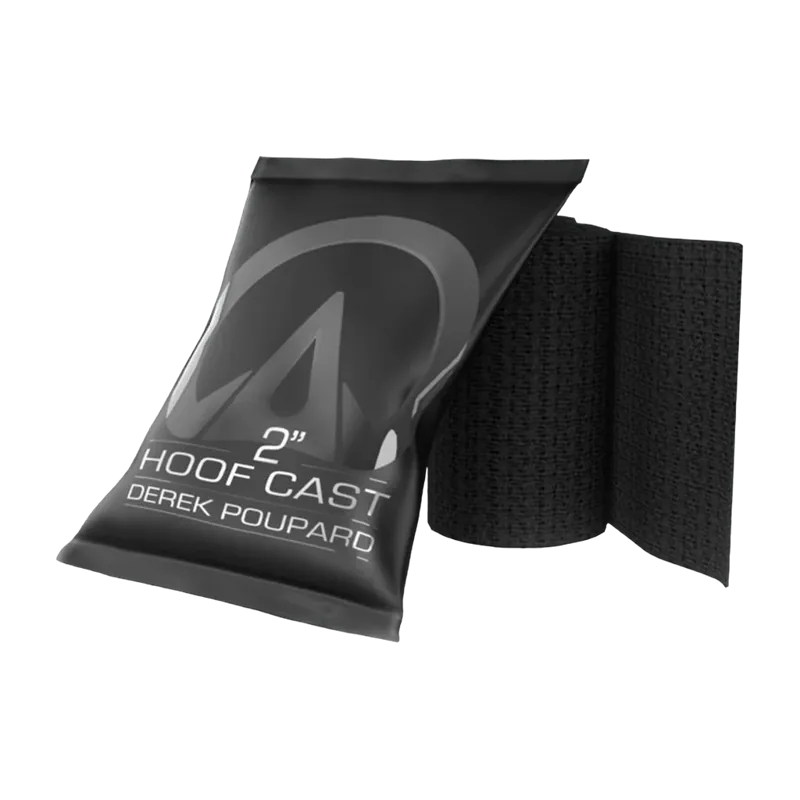
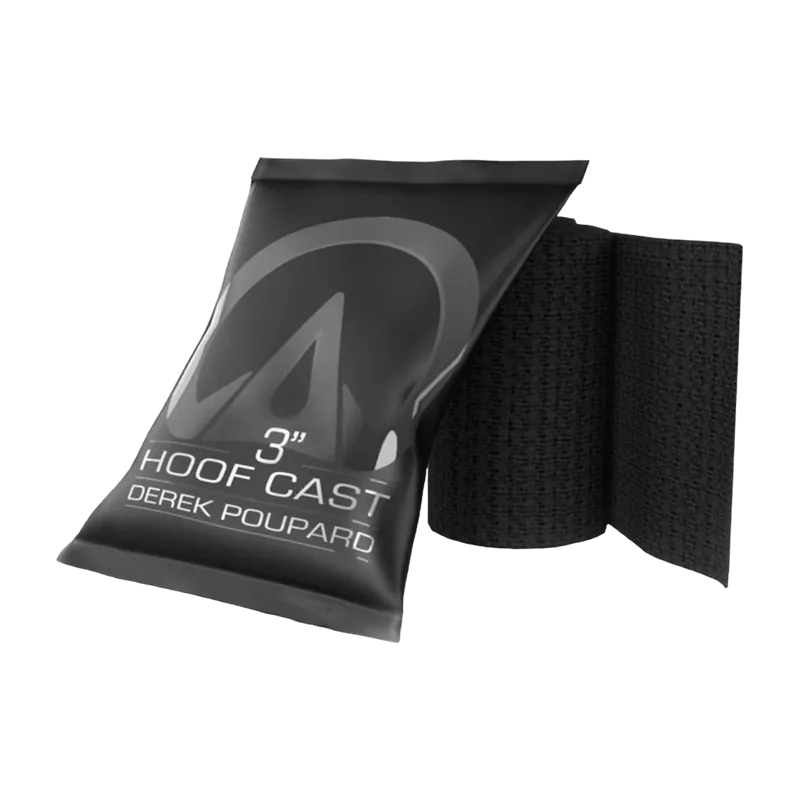
The best summary of this I have seen came from a farrier supply account in the group, and it was blunt: fail to prepare, prepare to fail. You can have your composite shoes ready, your glue at perfect temperature, your nozzles purged, your gloves and degreaser and accelerator and wrap all laid out, and if the hooves have been out in a wet field all night, none of it will save you.
The fix is not chemical. It is scheduling.
Book wet-season appointments so the foot has dried. A horse stabled overnight for a morning appointment. A horse brought in from early morning for an afternoon one. Even a few hours on a dry surface changes what you are working with.
Have the conversation when you book, not when you arrive. Owners will nearly always accommodate this if they understand why. If they think the shoe fell off because the product was poor, they will change product and get the same result.
Seal the top edge. In wet environments, finishing the dorsal wall with super glue to about five to ten millimeters below the hairline closes the route water uses to track into the application.
Casts in a wet climate
Casting material and standing water are difficult companions, and this comes up constantly among people in Florida and the Gulf states.
One owner in the group described a setup her horse had been put in during training that worked beautifully, and her concern was entirely that the wet season was coming and the casts would not survive it. That is a realistic concern, not a pessimistic one.
What tends to help: applying to a properly dry foot as above, sealing the top edge, and being honest about the interval you will get rather than the interval you would like. If a cast is going to give you four weeks in the wet where it gives you eight in the dry, plan for four.
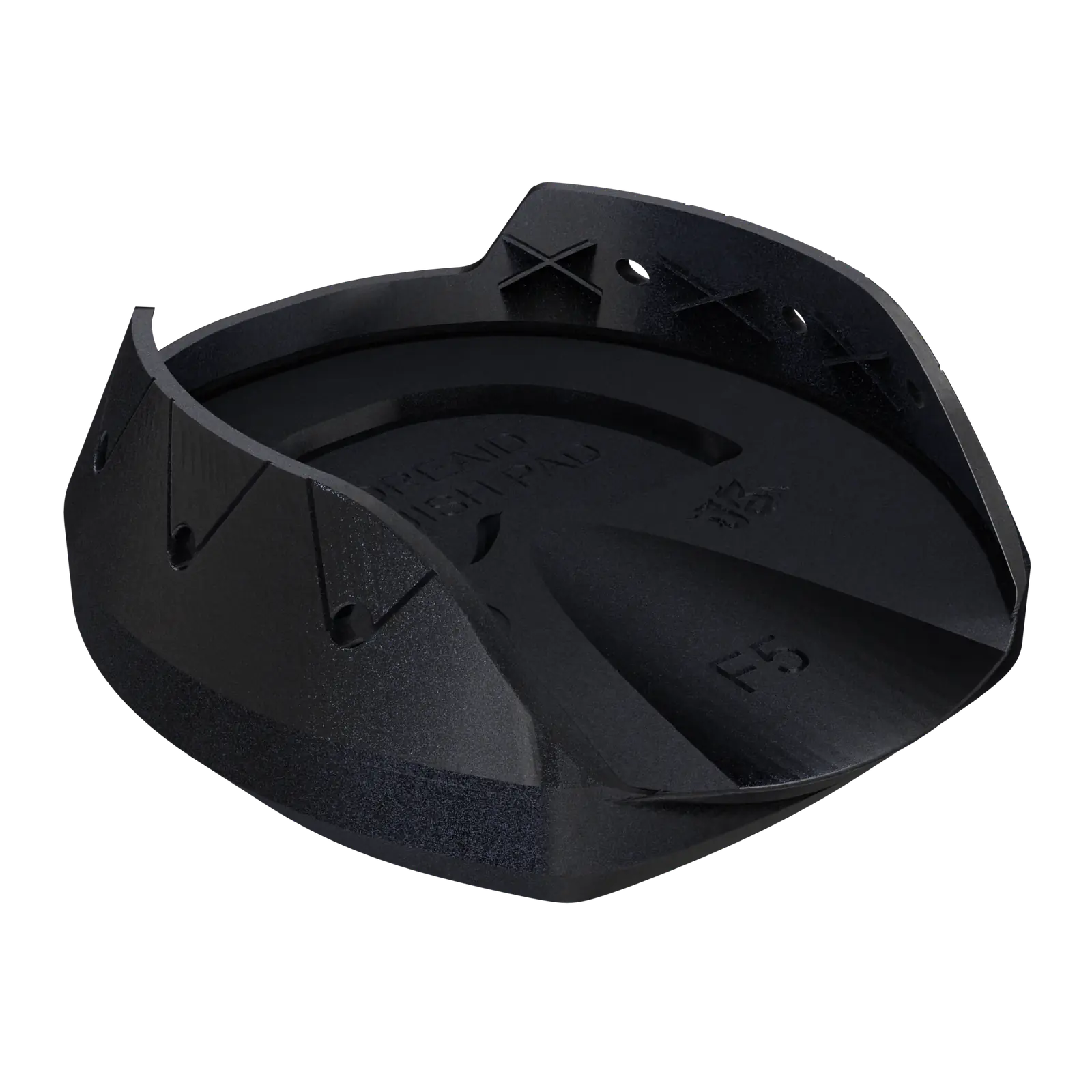
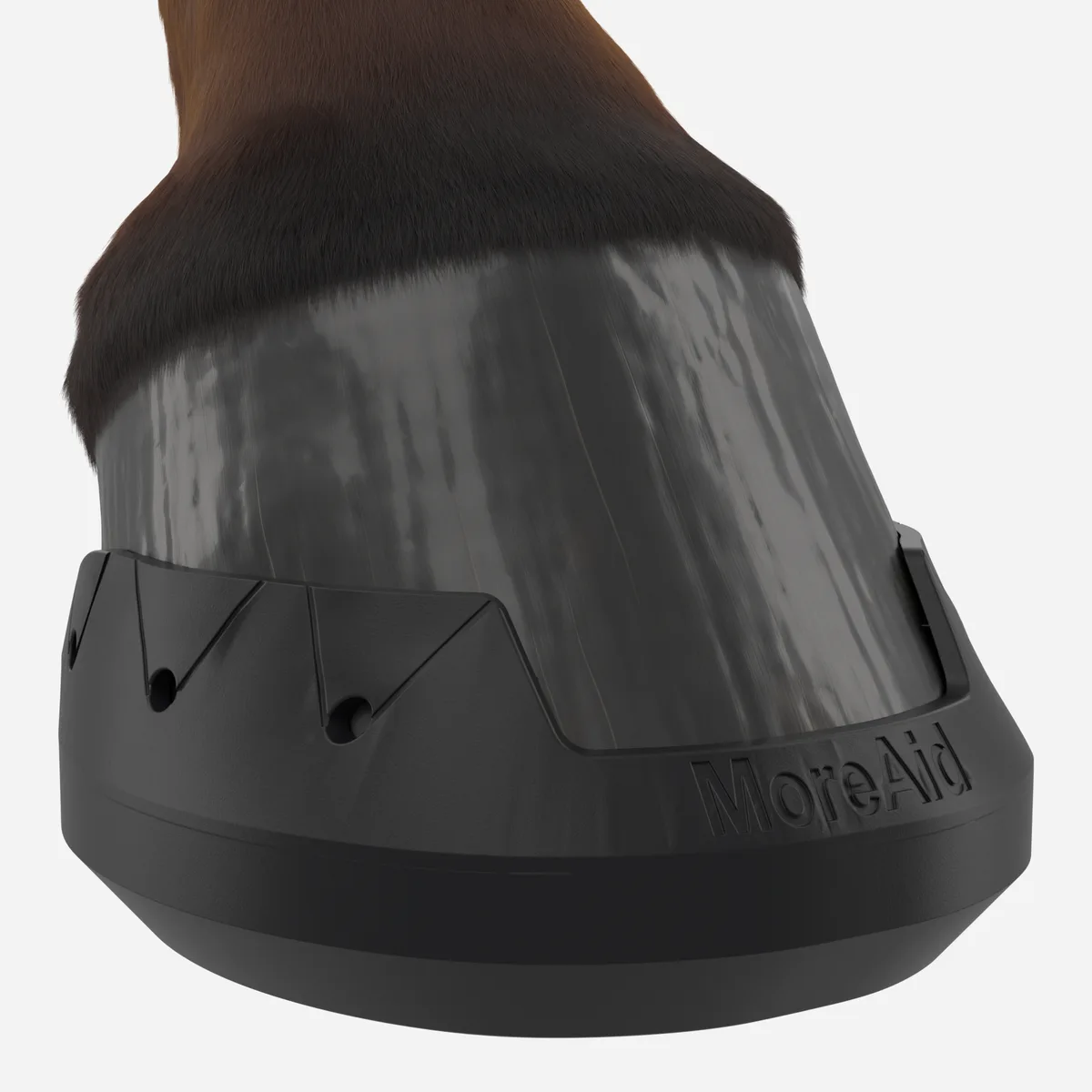
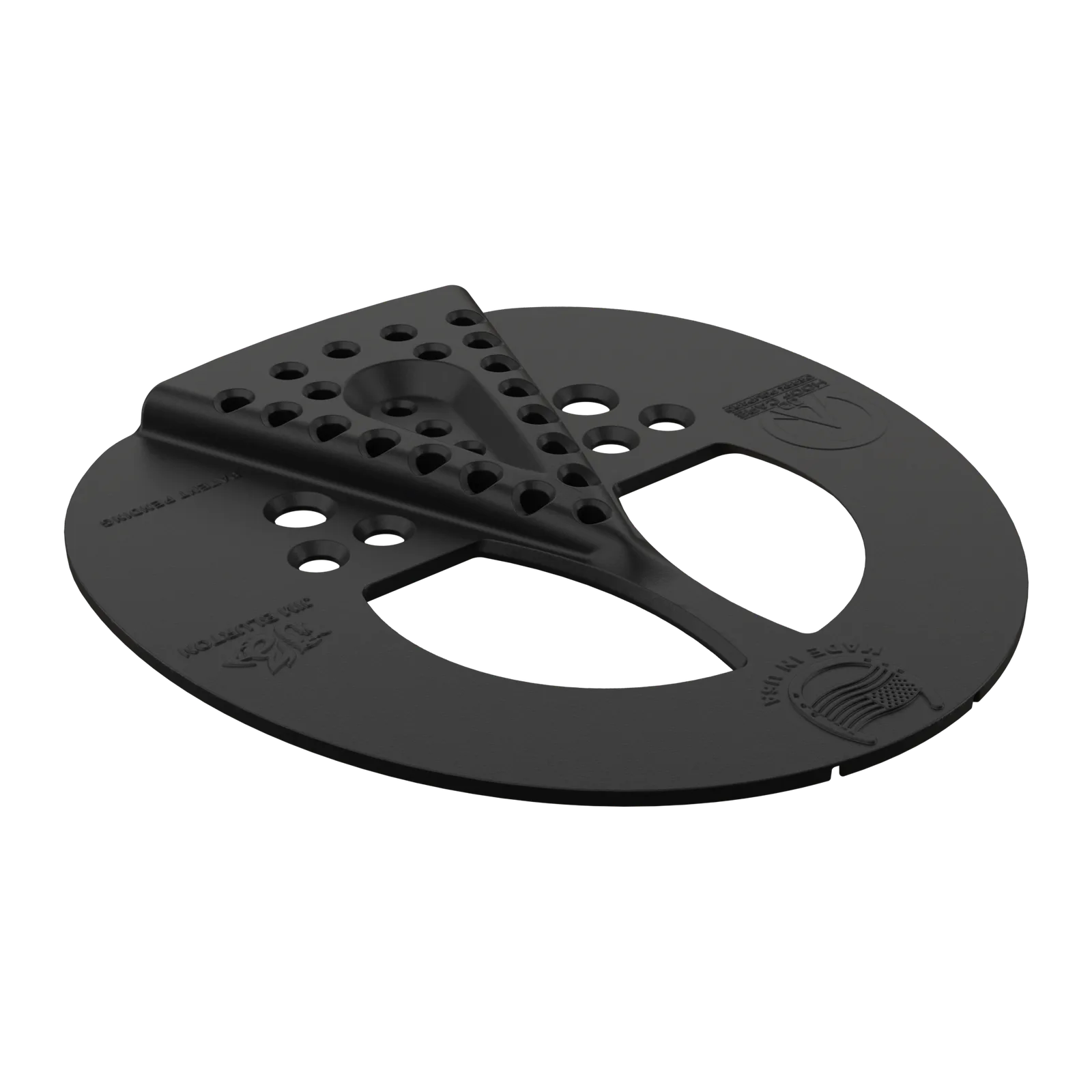
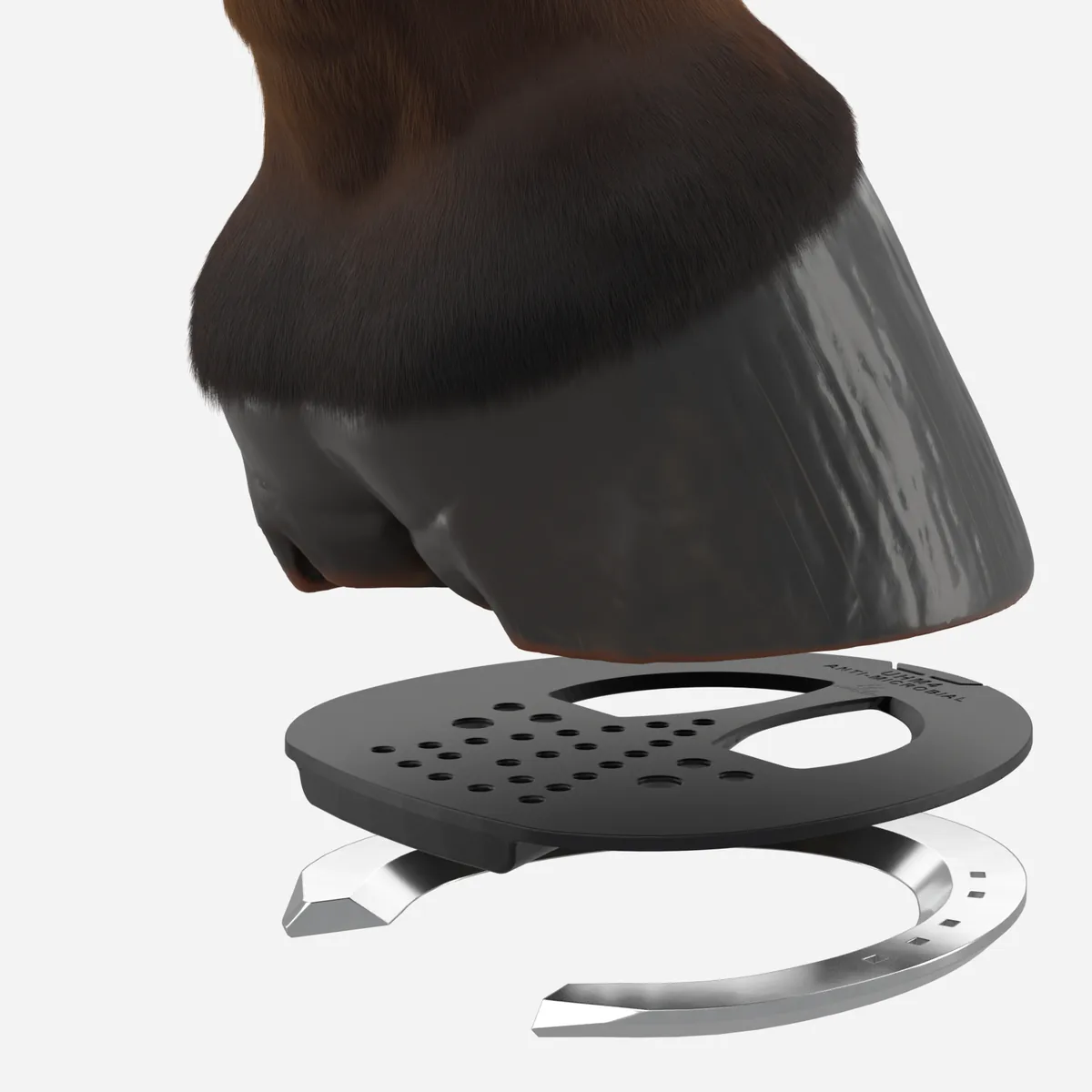
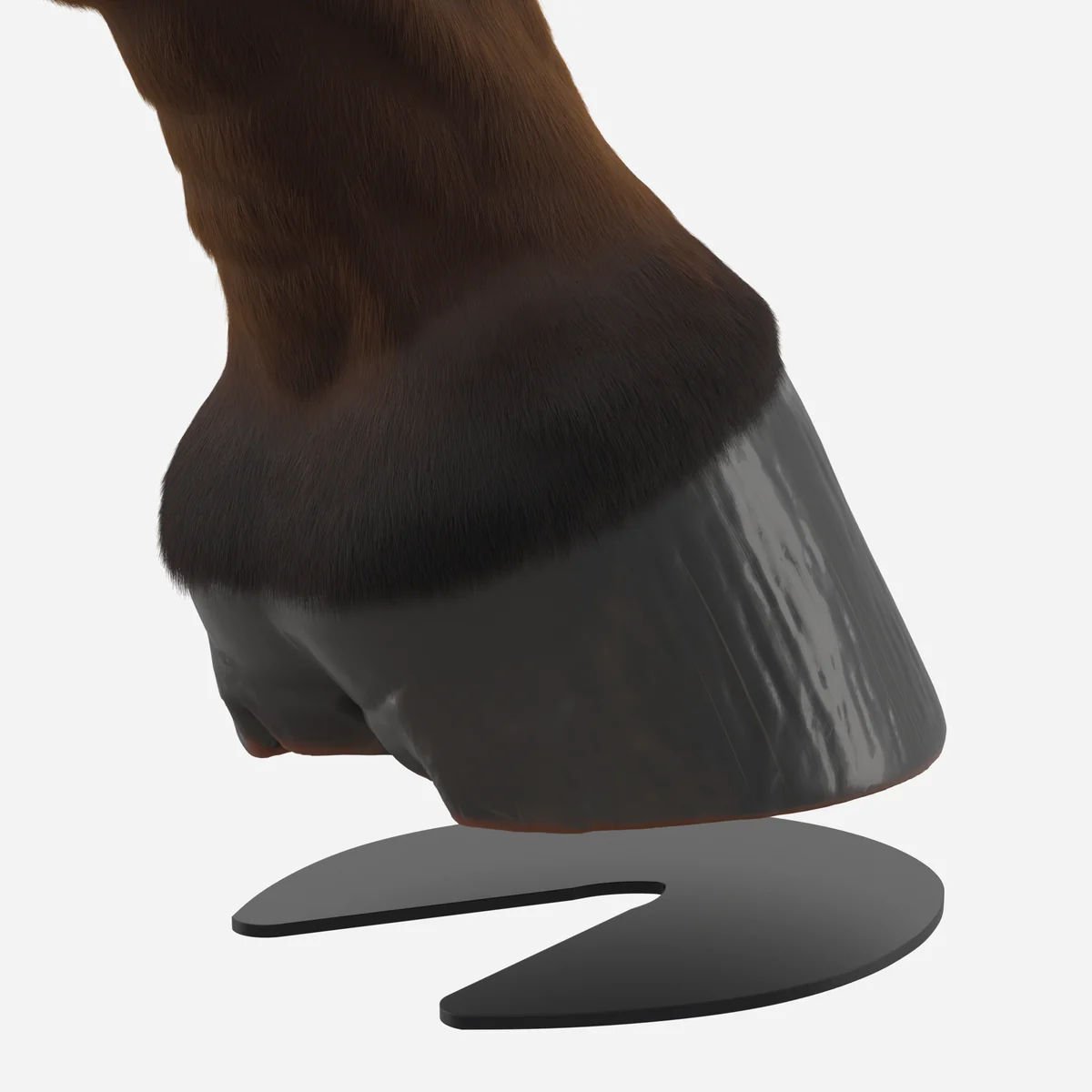
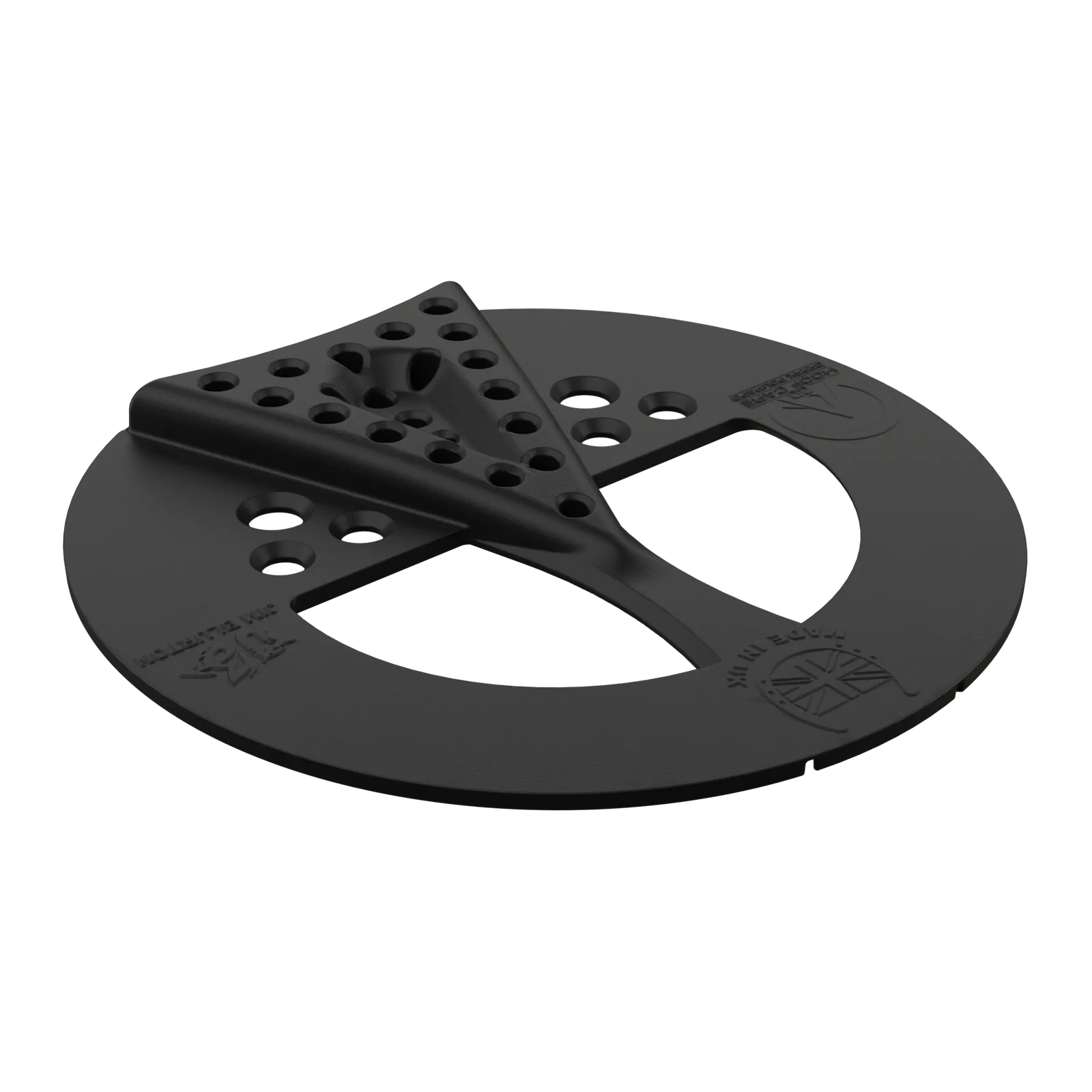
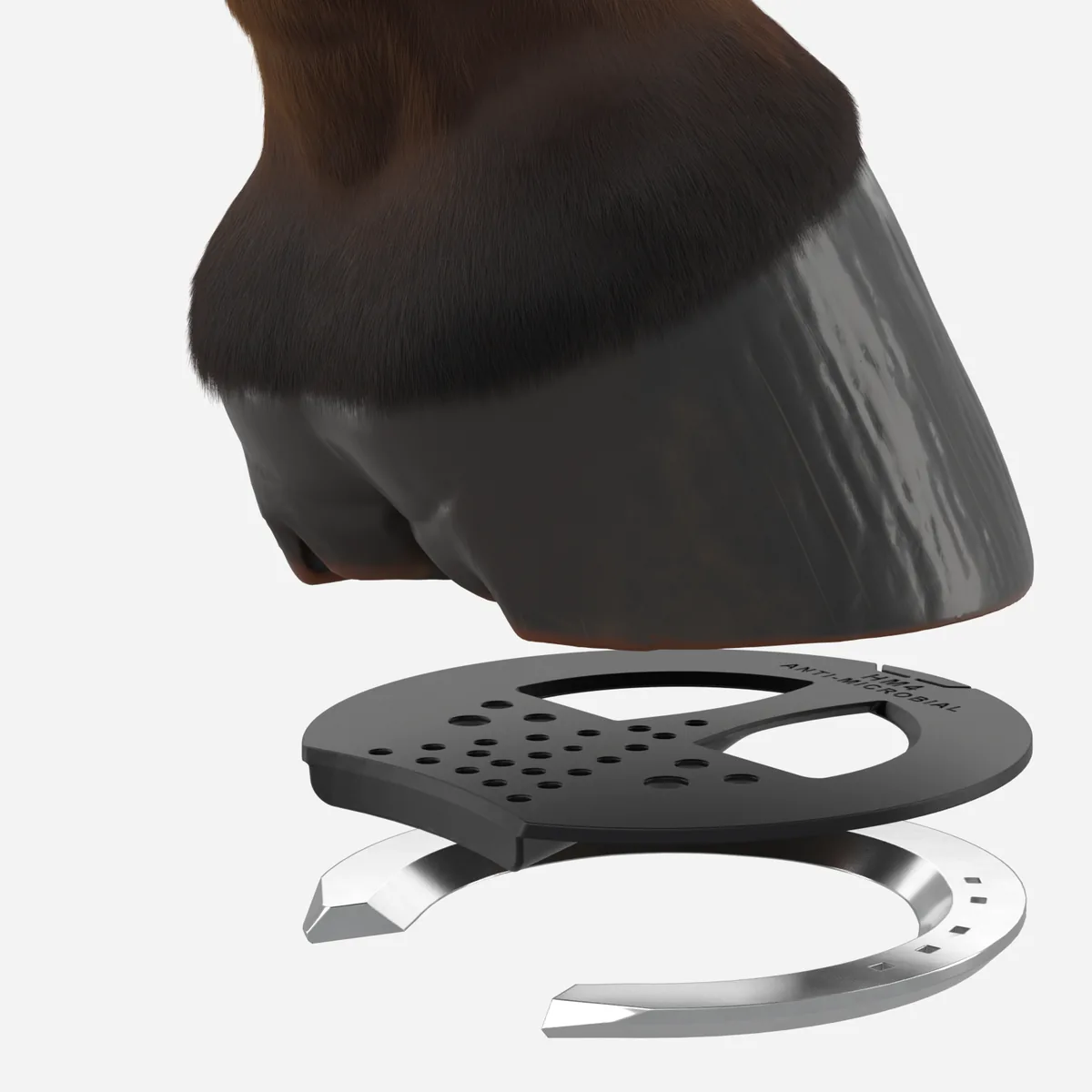
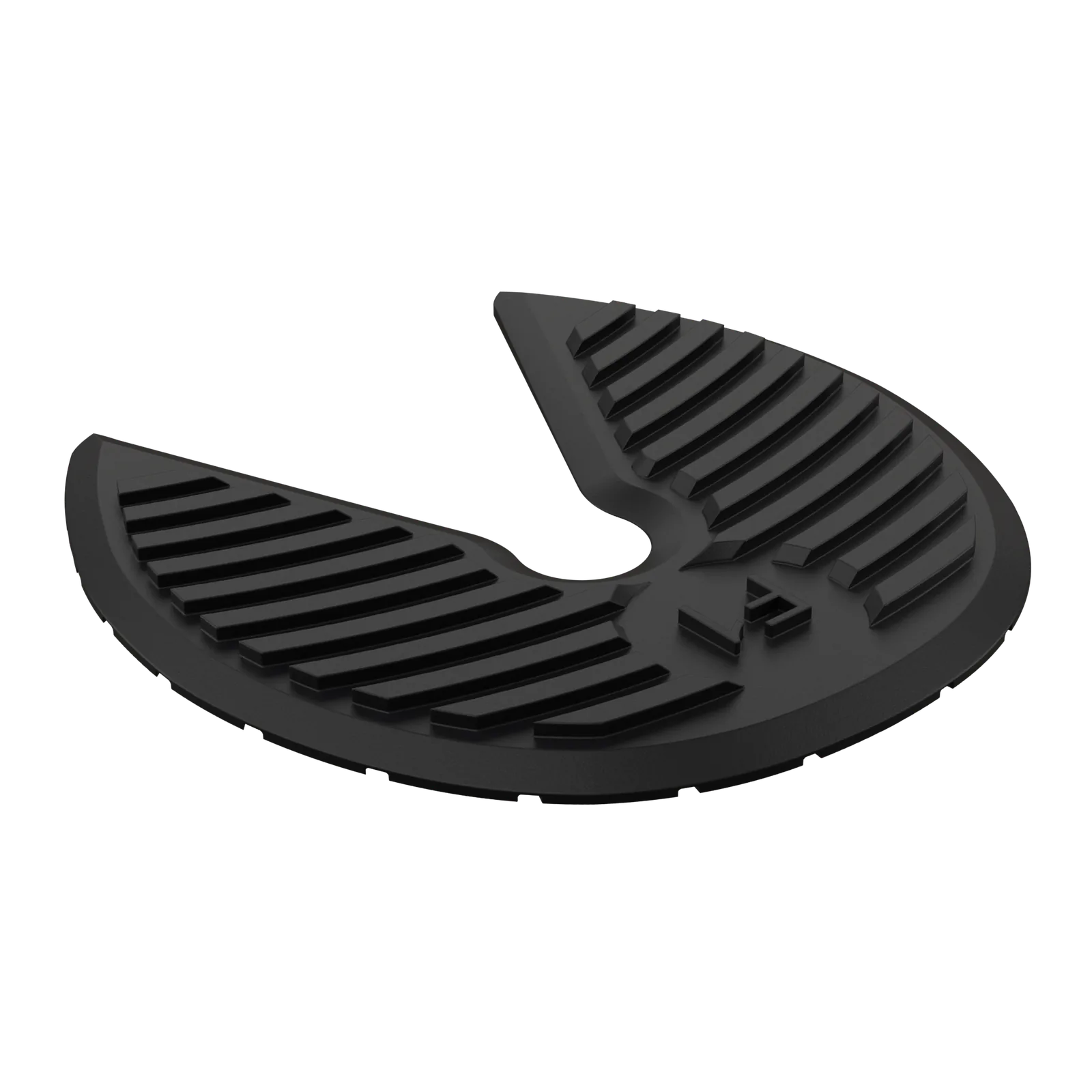
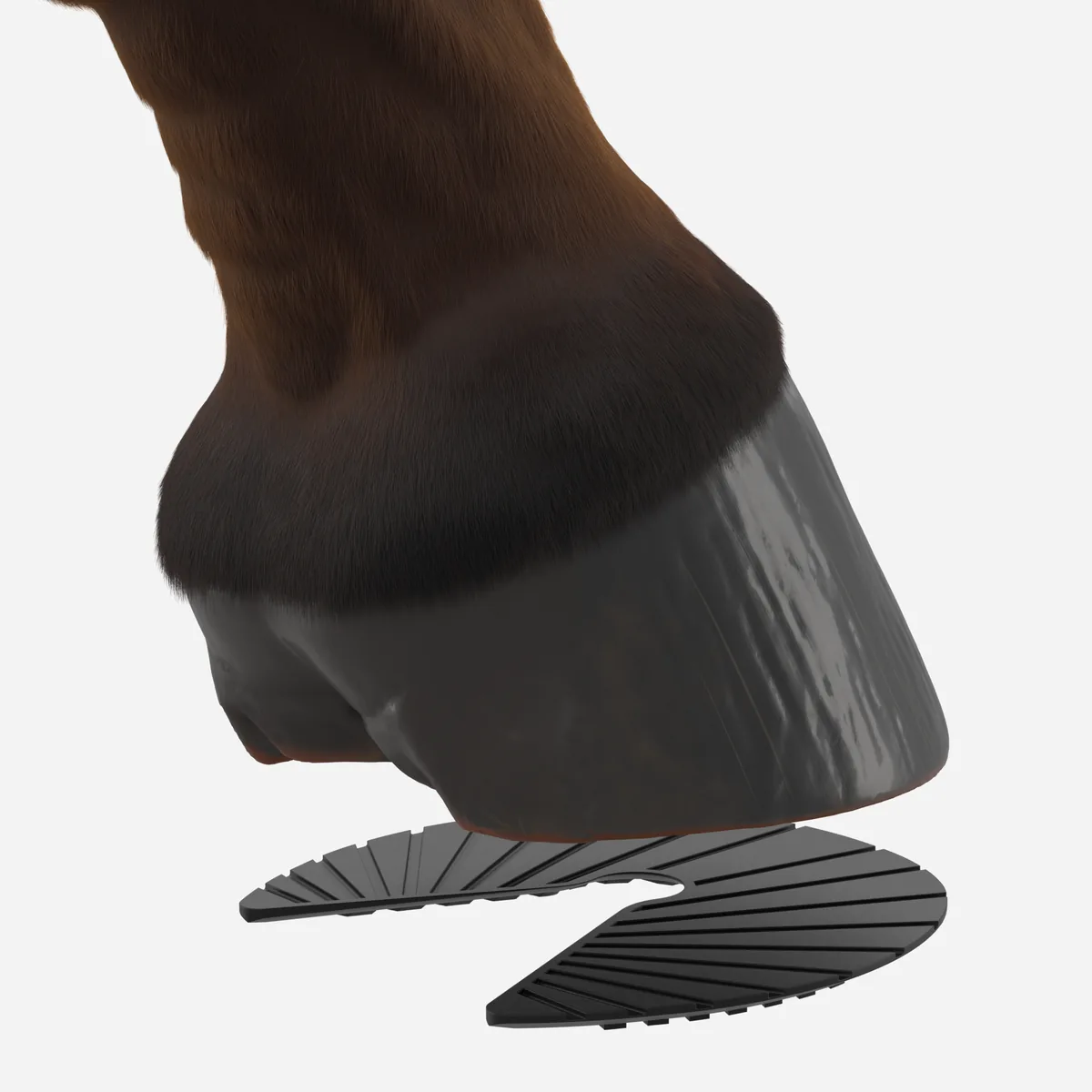
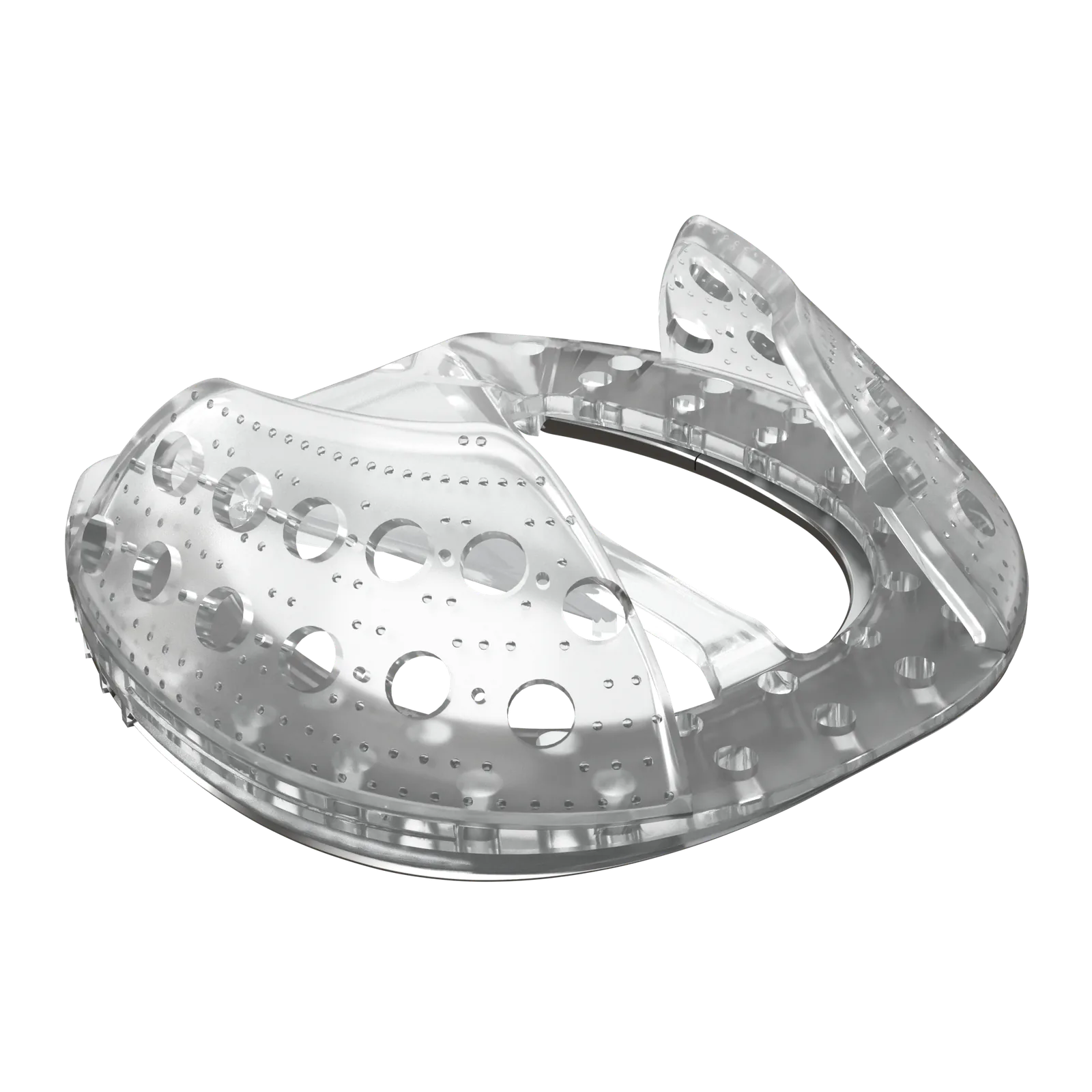
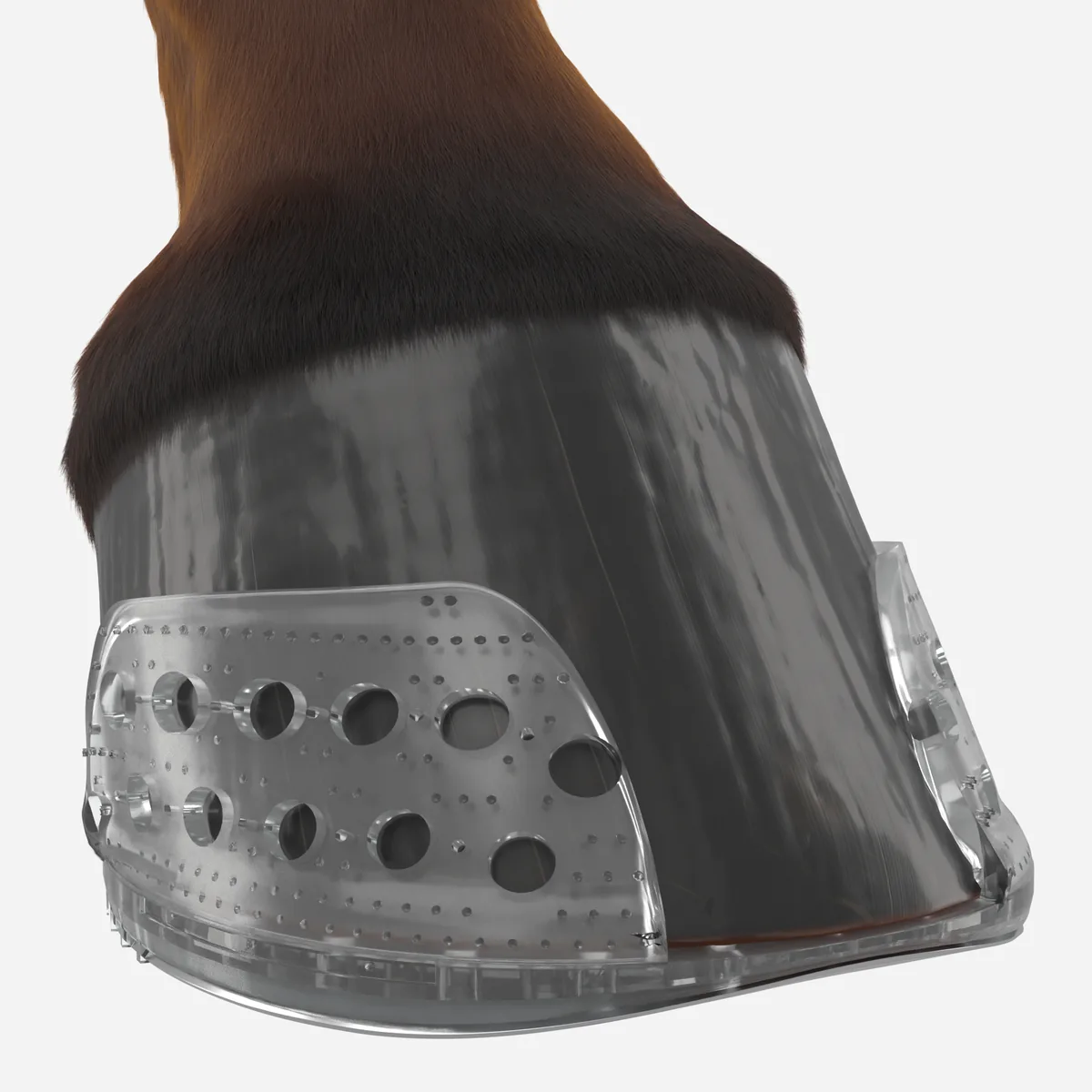
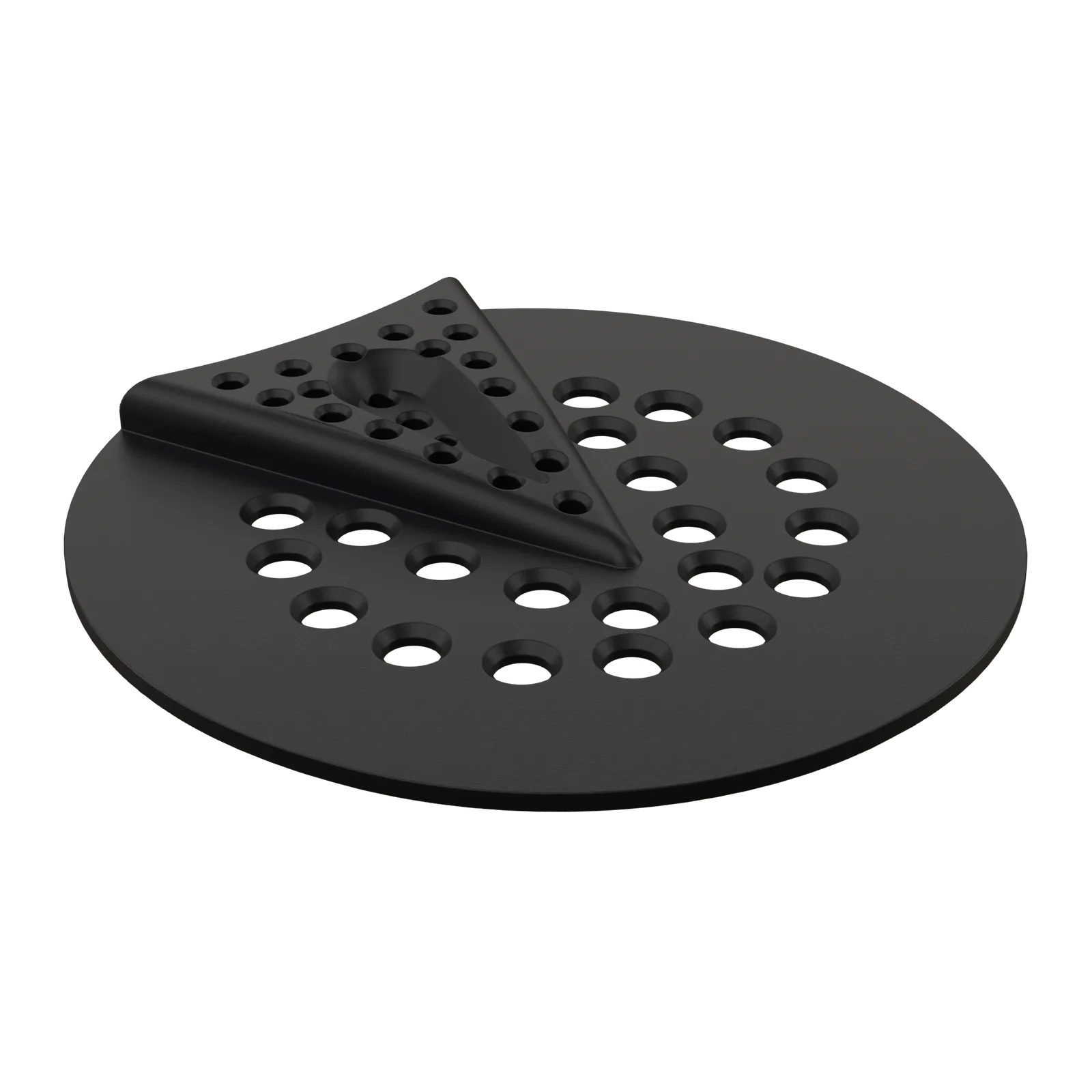
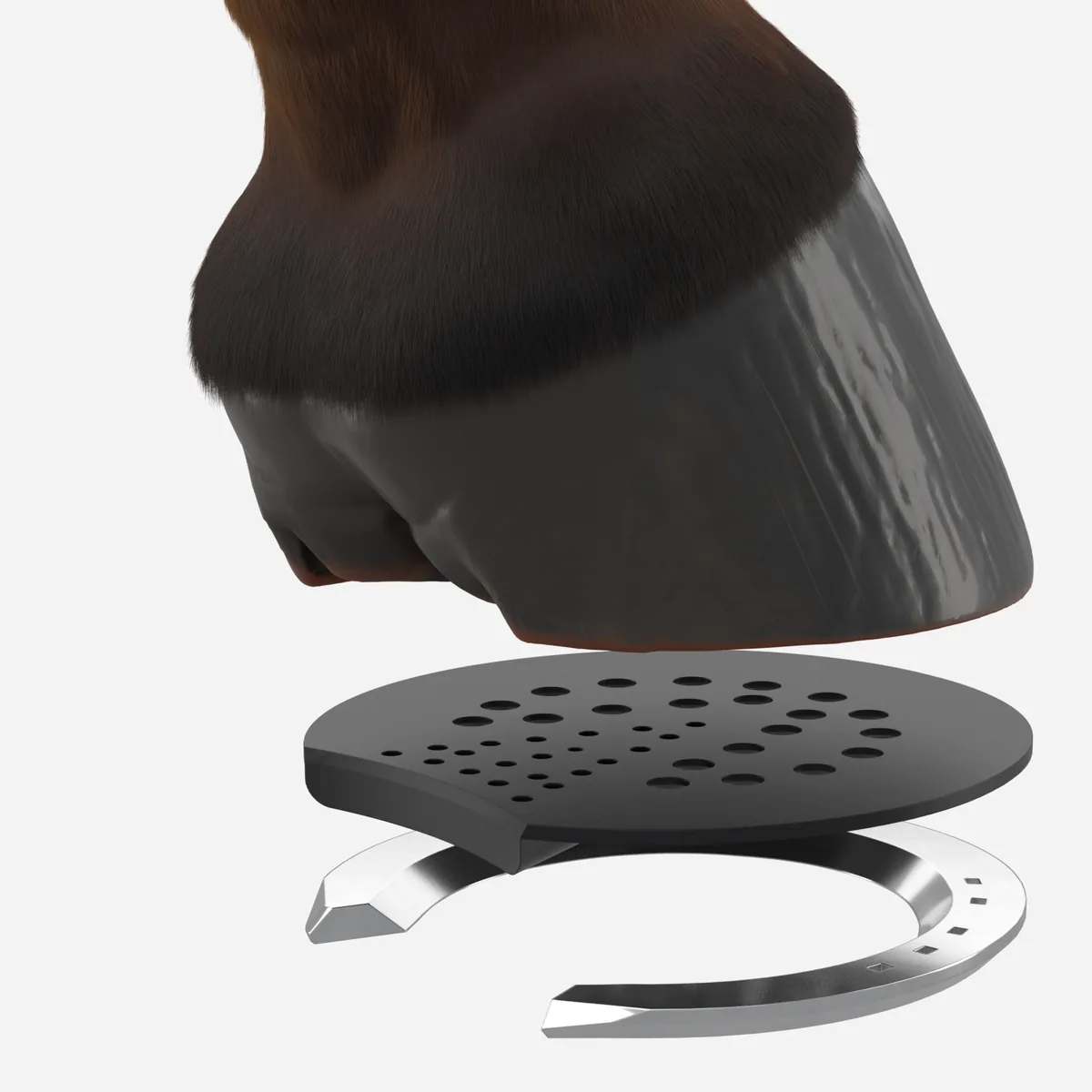
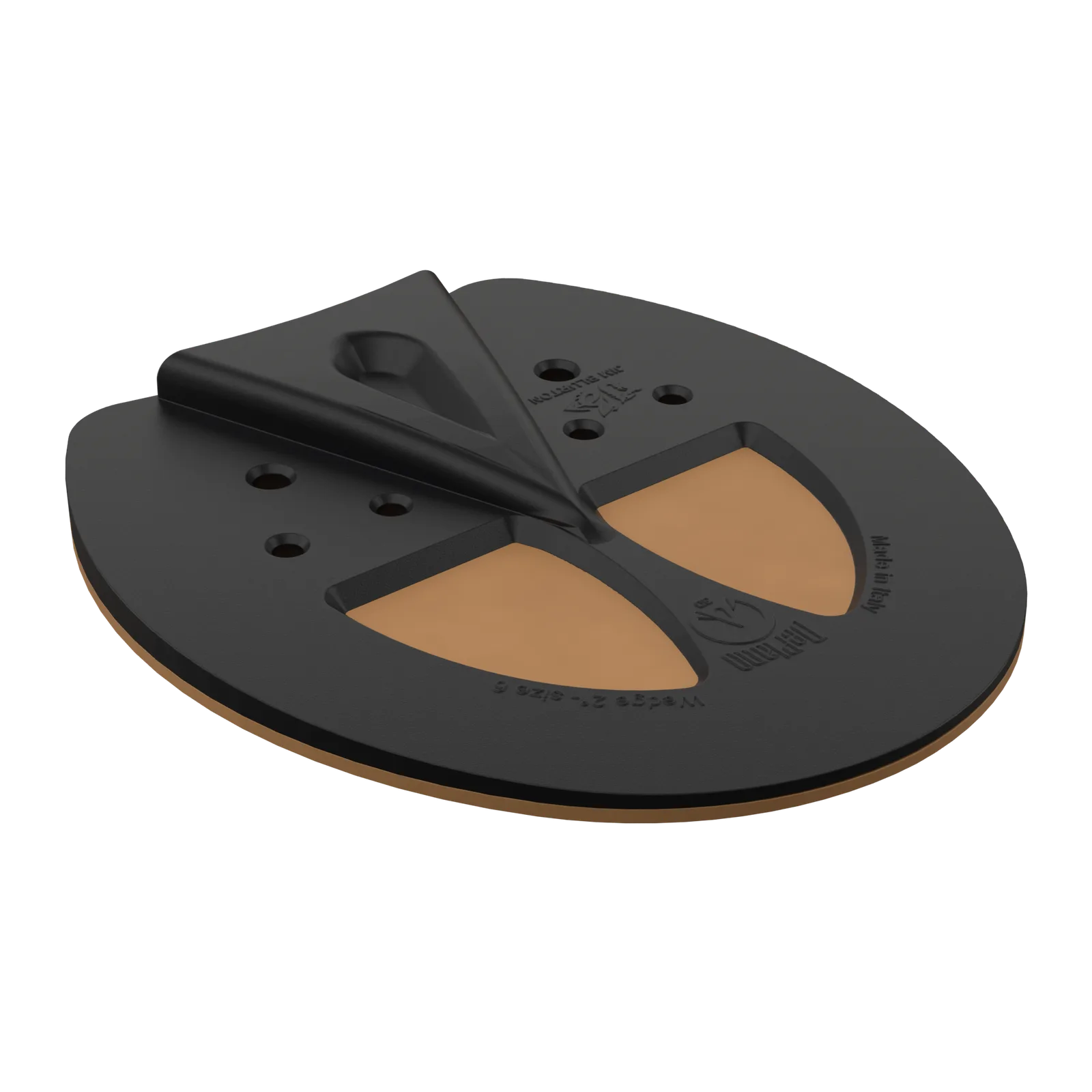
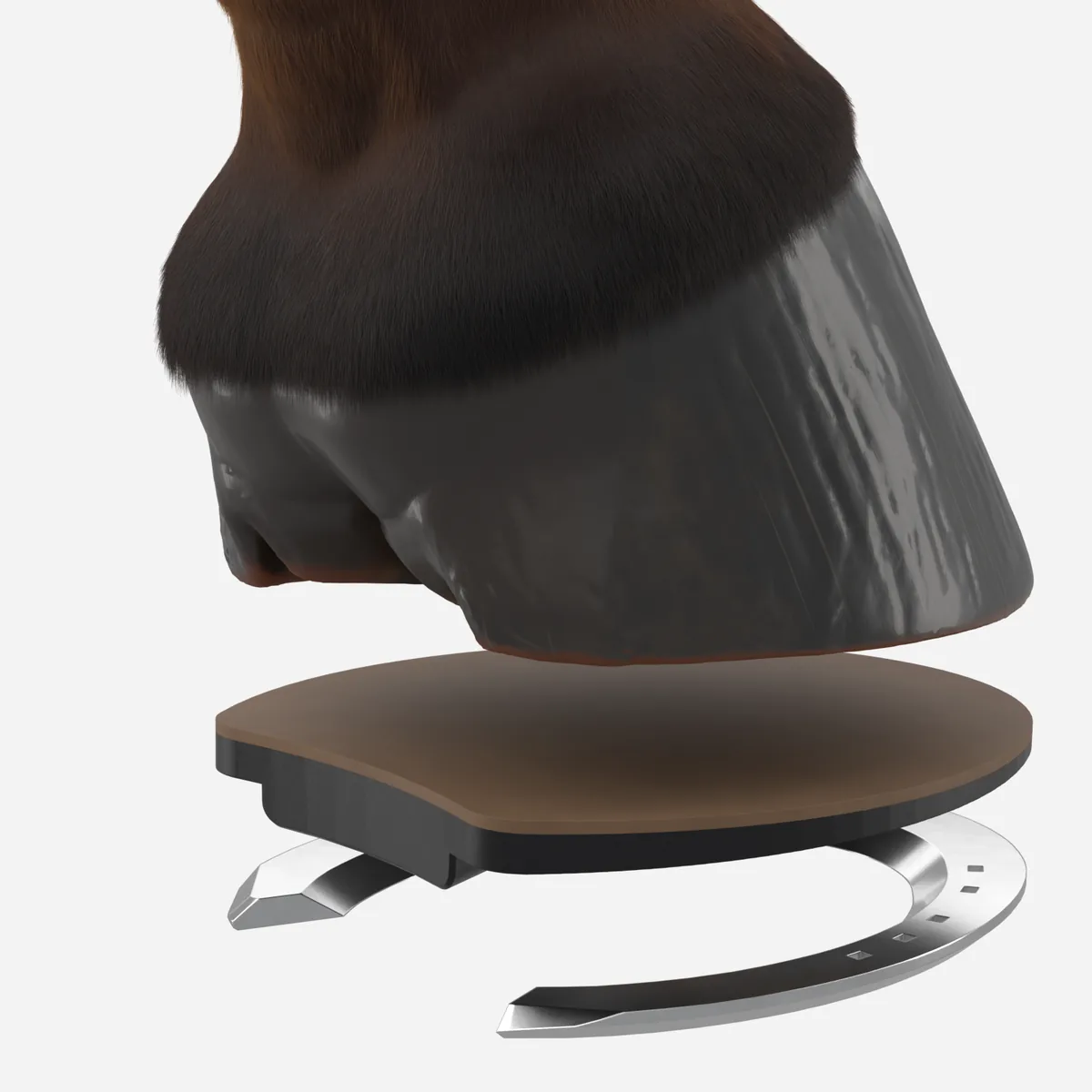
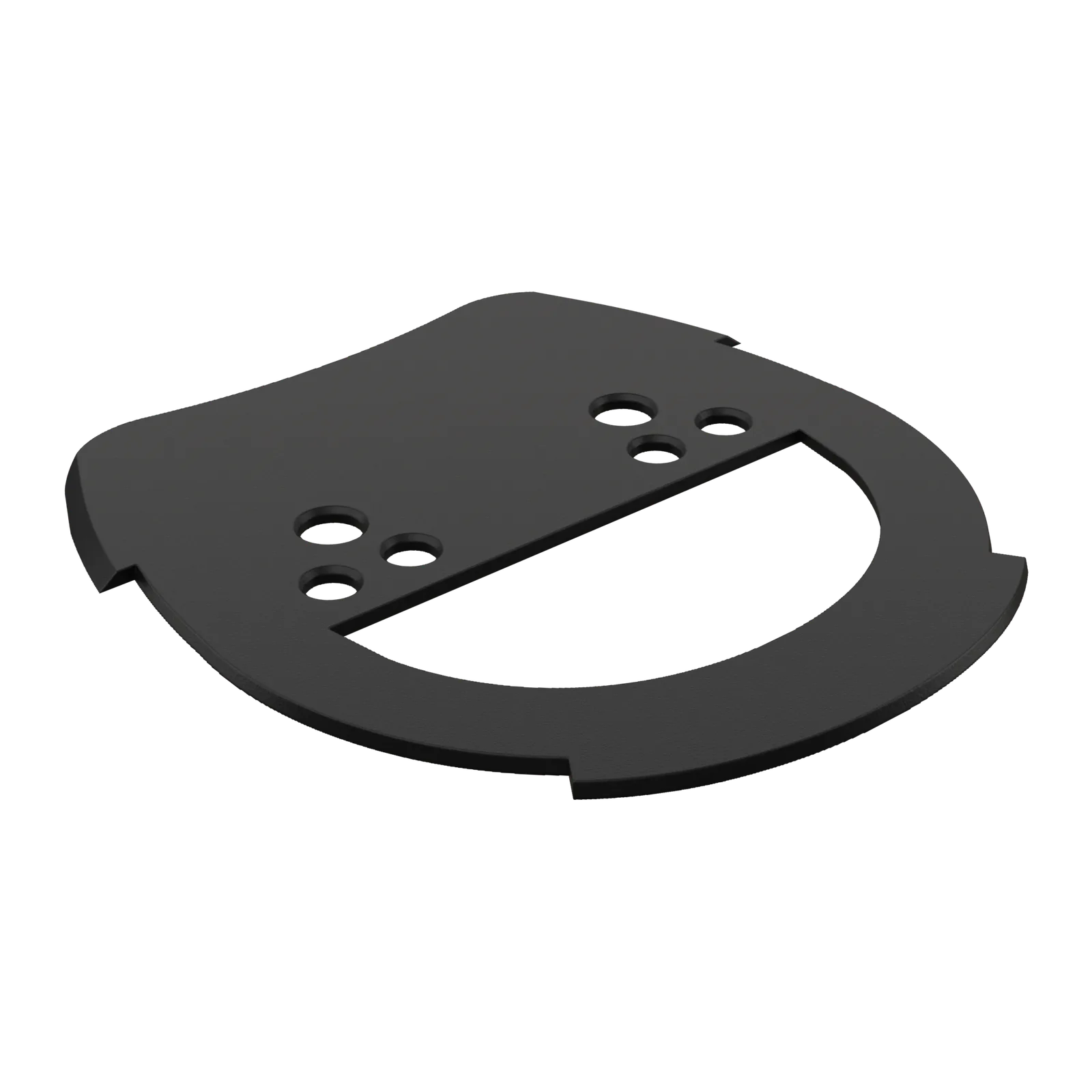
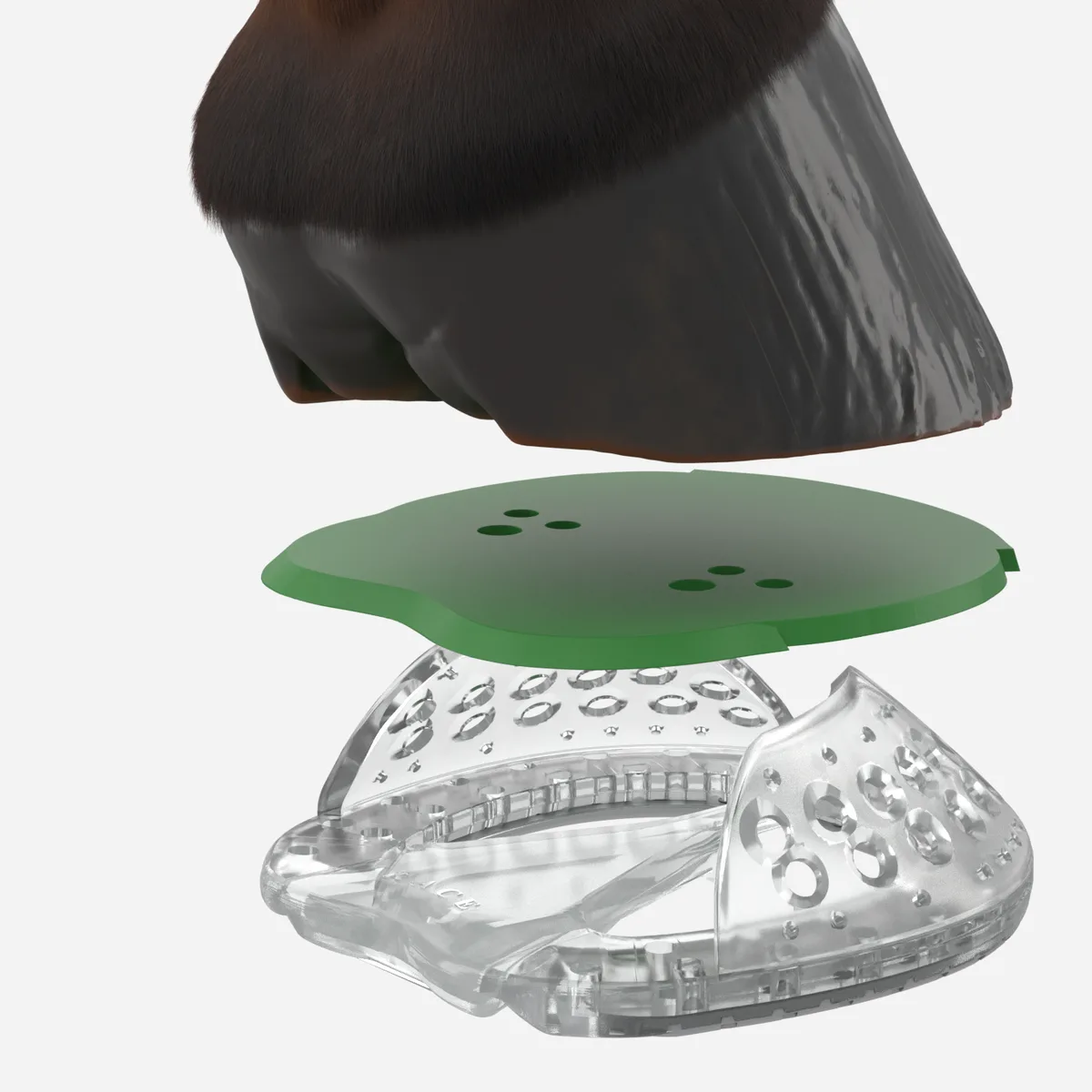
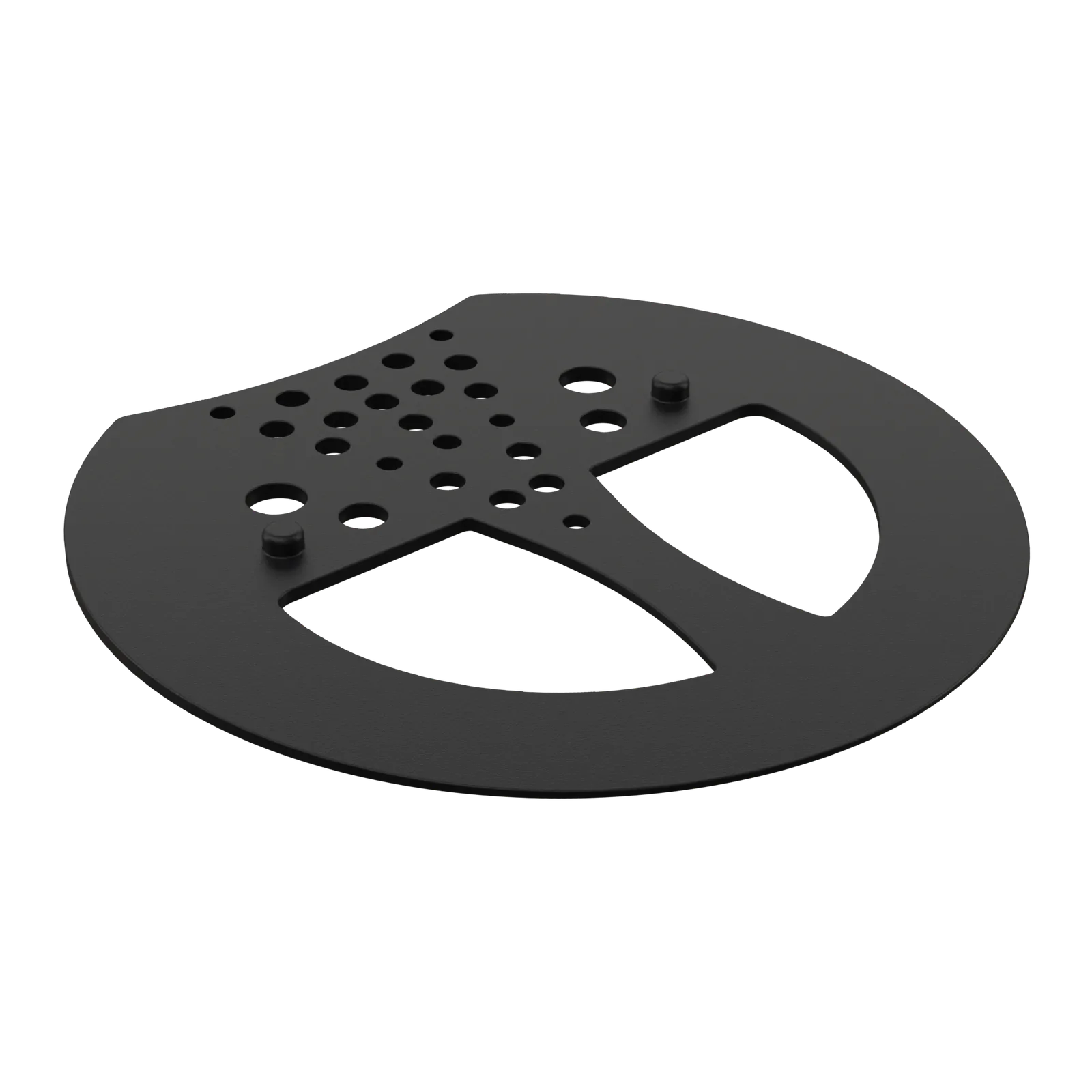
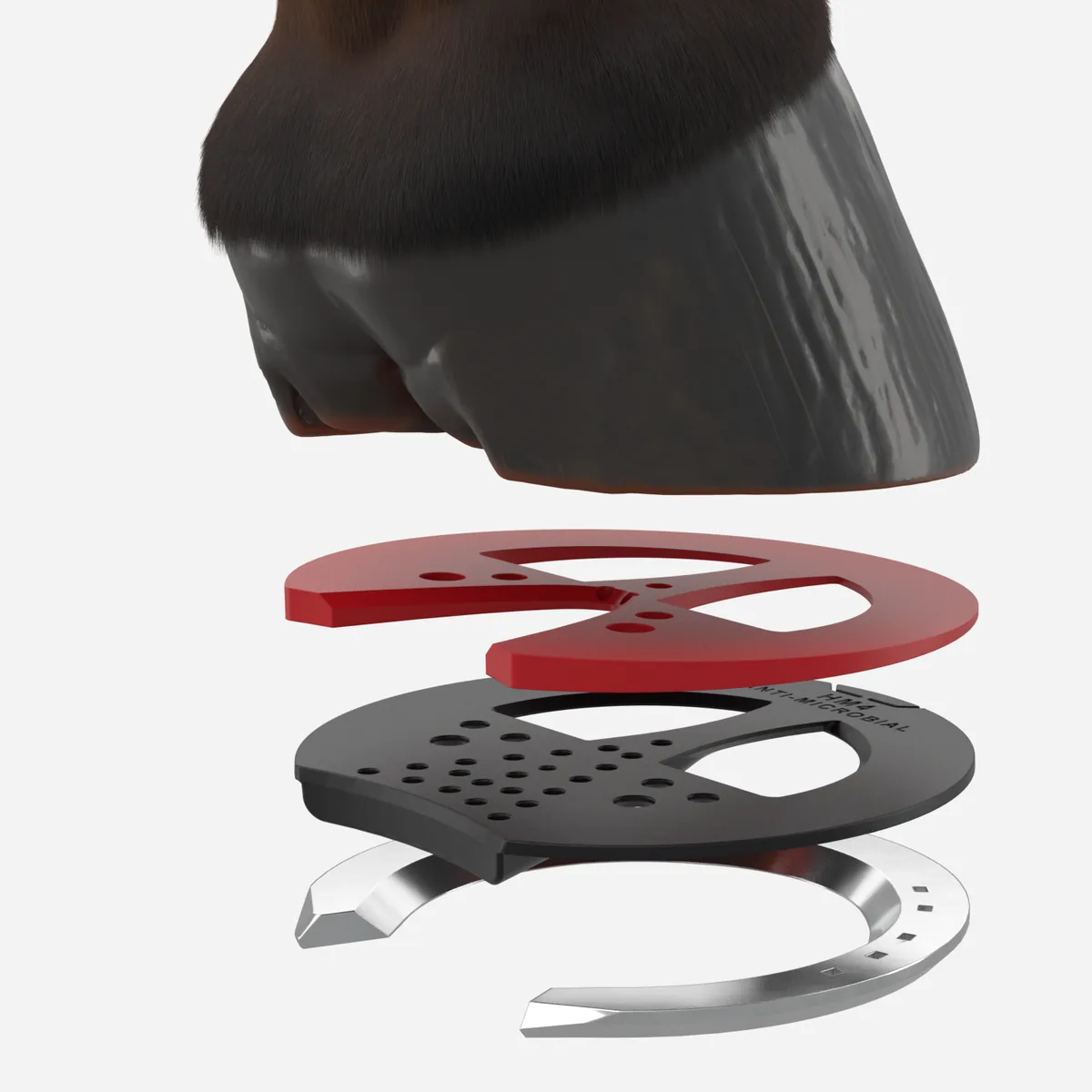
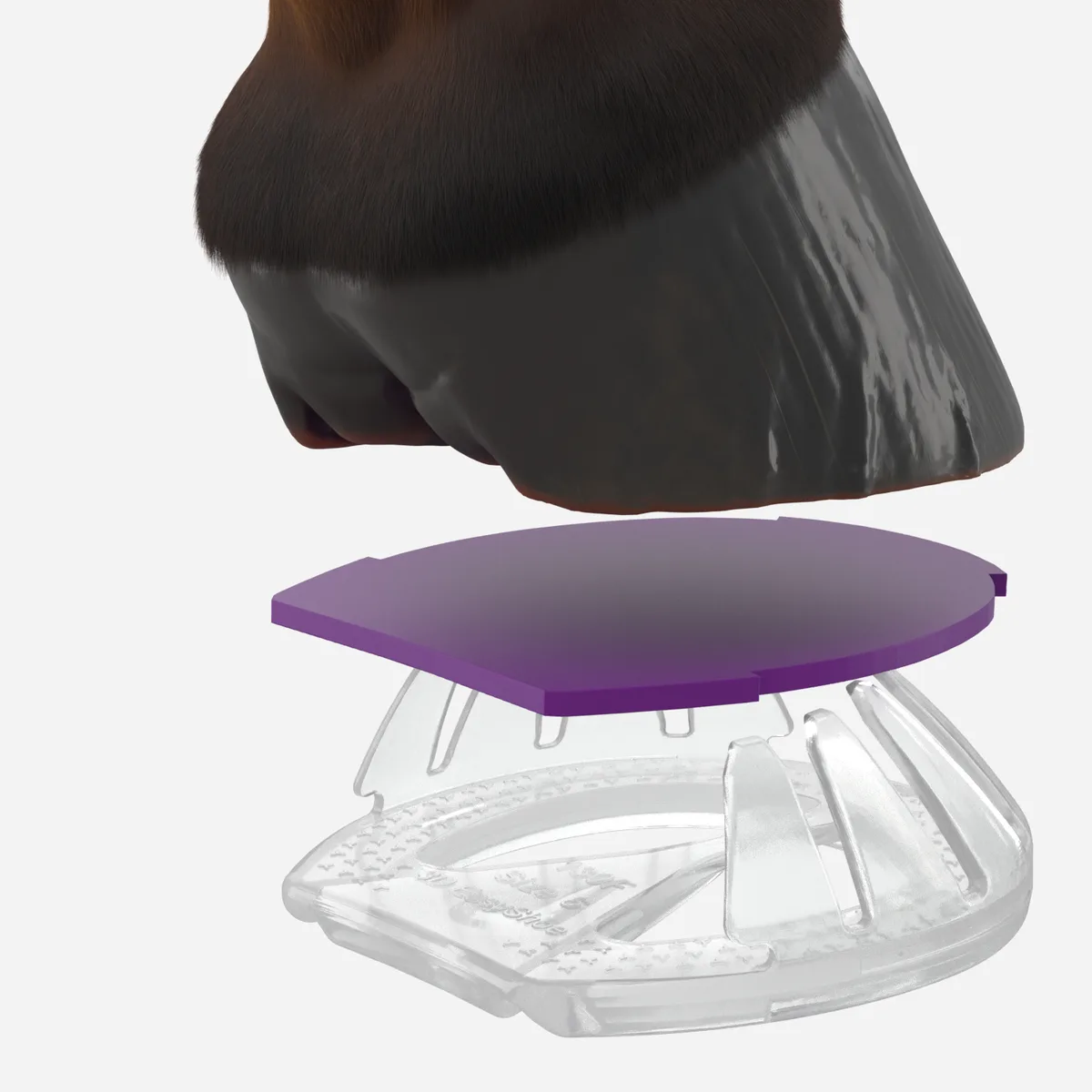
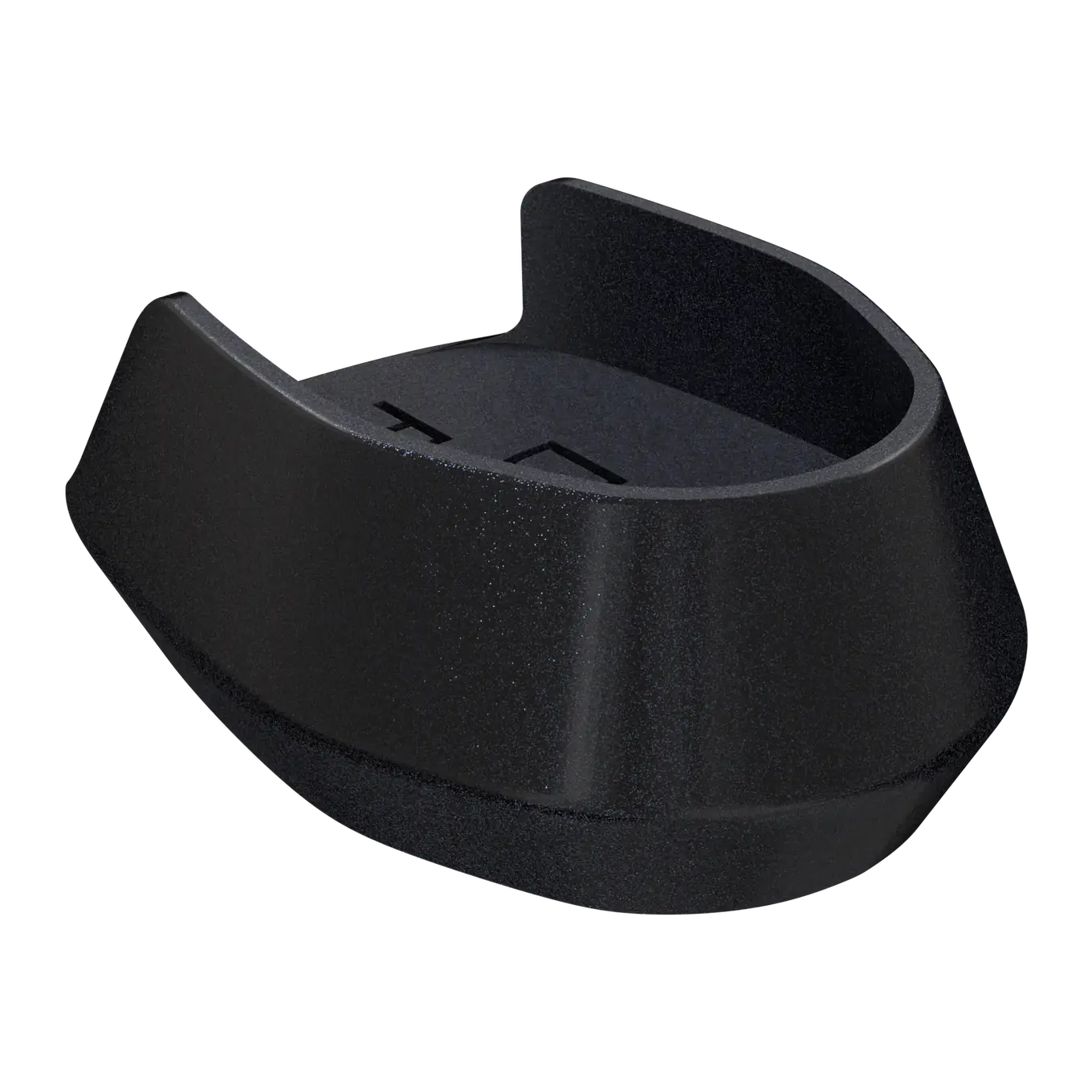
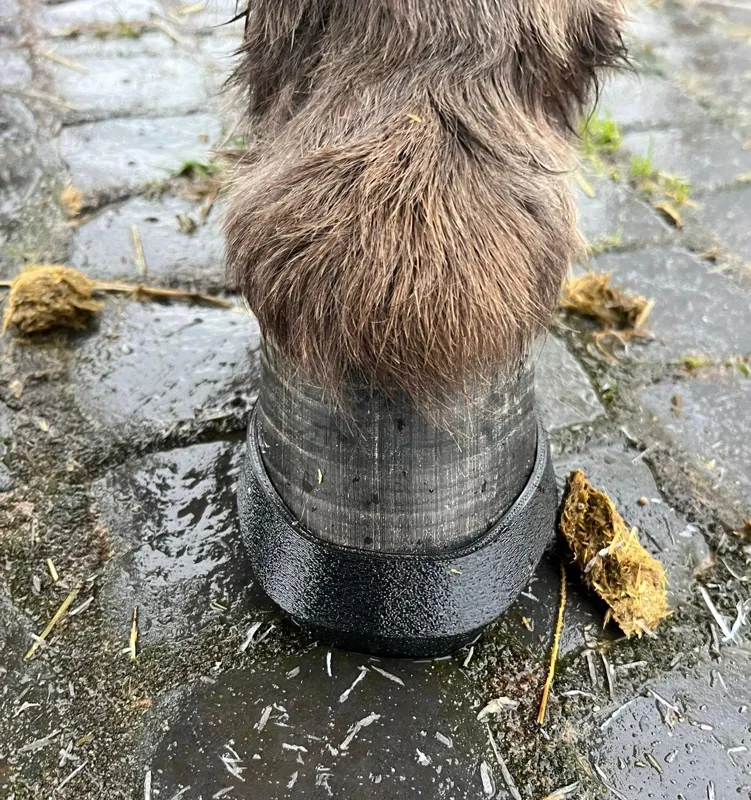
Where casting is fighting the environment, a pad system that does not depend on a continuous seal around the whole capsule may be the more sensible route through the worst months, going back to casting when the ground firms up.
Infection follows water
Wet ground is where thrush, white line disease and abscesses come from, and the pattern is predictable enough that you can get ahead of it.
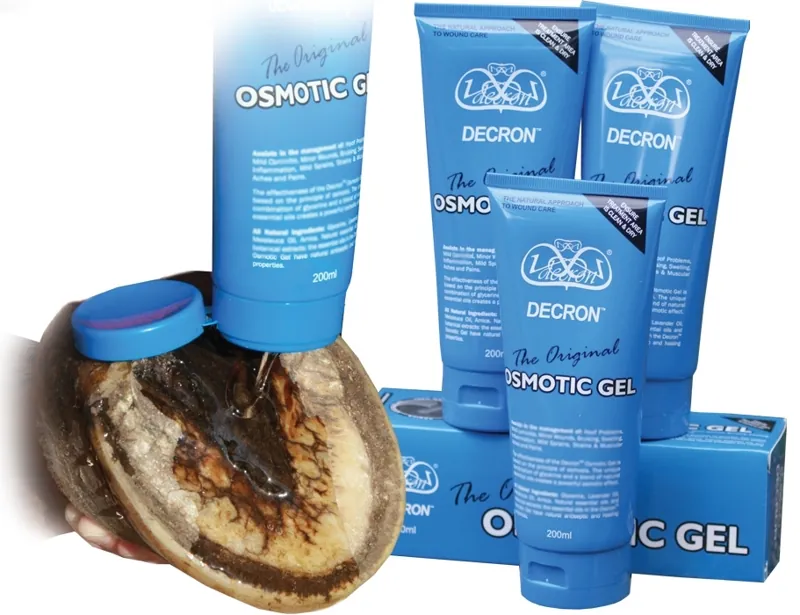
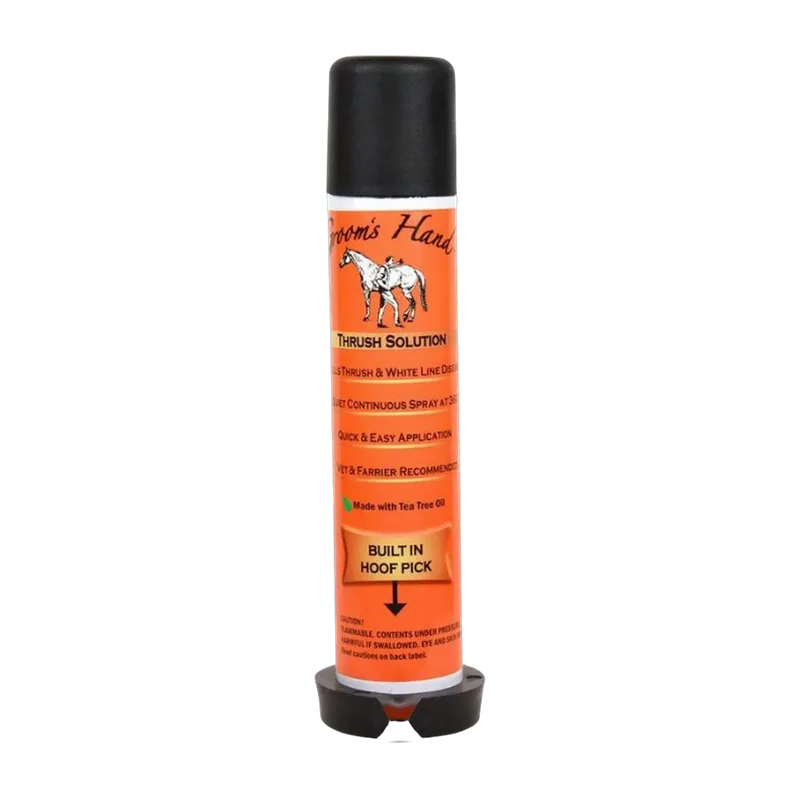
Thrush is the one people spot. Black, foul-smelling material in the collateral grooves and central sulcus of the frog. It thrives in mud and manure and low oxygen. Picking feet out daily, in wet weather specifically, does more than any topical product.
White line disease is the one people miss. It is an infection at the junction of the hoof wall and the sole, and whether it is fungal, bacterial or both is still unsettled. What is agreed is that it takes hold where there is already separation (long toes, flares, concussion damage, poor stable conditions, wet environments), and that soil organisms get in through those cracks.
The tell is crumbly or powdery gray-black material at the white line when you trim, layers separating upward when you pare, and a hollow sound when you tap the wall. Horses are often sound early on, which is exactly why it is missed.
Treatment is unglamorous and there are no shortcuts: remove all the infected tissue, treat topically, expose it to air, keep it dry, and protect the foot while it grows out. Regrowth takes several months to a year, with the farrier back every five to six weeks. One farrier in our community documented a white line case from 2024 that made a full recovery using copper sulfate, casts and full frog support pads to protect P3 and limit rotation while it grew out. A year, start to finish.
If left, white line disease can progress far enough to cause coffin bone rotation. It is not a cosmetic problem.
Underrun heels after a soft summer
Another seasonal pattern worth naming. A horse comes through a soft summer with heels that have run forward and flattened, and the first hard or wet spell exposes it.
The instinct is to reach for a wedge. Sometimes that is right. But a heel that has run forward needs the toe brought back and the breakover addressed as much as it needs elevation, and a wedge on an unaddressed long toe is treating a symptom.
Get the trim right first, then decide what support the foot needs on top of it.
What you can actually control
Some of this is weather and none of us controls that. What you can influence:
- Turnout rotation so horses are not standing in the same churned gateway every day
- A dry standing area they will actually use. One owner noted her mare refused to go under cover because the rain on the roof frightened her, which is a real and common problem worth solving with a different shelter rather than assuming the horse will adapt
- Daily picking out, which matters far more in wet months than dry
- Scheduling farrier visits around drying rather than around convenience
- Realistic intervals during the worst of it
None of that is exciting. All of it works better than changing product.
Derek Poupard CJF DipWCF has shod horses through South African summers and British winters. This article covers general management; infections and lameness warrant veterinary involvement.
Sources: White Line Disease, Kentucky Equine Research · EasyCare Glue-On Best Practices, American Farriers Journal